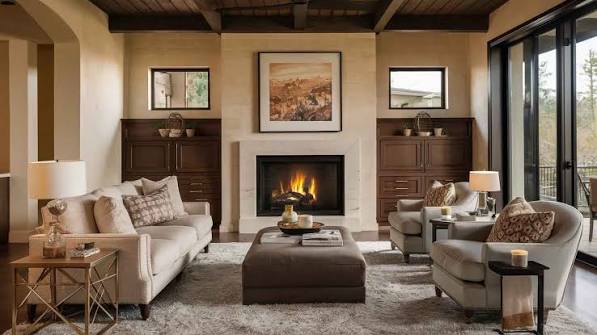
There was a time when a beautifully designed room meant everything matched. The sofa coordinated with the armchair, cushions repeated the colours in the curtains, and every wood finish belonged to roughly the same family.
Now, interiors are becoming a little less predictable.
Rather than trying to make every element agree, more homes are embracing contrast, collected pieces, and combinations that feel as though they’ve developed naturally over time. The result is warmer, more personal, and far less like a furniture showroom.
So, could a home actually be too coordinated?
Why Perfectly Matched Rooms Can Feel Flat
Coordination certainly has its place. Repeating colours and materials can make a room feel calm and considered, especially when decorating an open-plan space.
Problems start when everything matches a little too closely.
A complete furniture set in the same wood, identical metal finishes throughout and soft furnishings bought from the same collection can leave a room without much visual tension. Nothing feels particularly unexpected, which can make even an expensive interior feel slightly generic.
The alternative isn’t clutter or complete mismatch, either. It’s just about introducing enough variation to give the room character.
The Rise of the Collected Interior
One reason overly coordinated interiors are losing their appeal is the growing preference for homes that look collected rather than completed.
Vintage furniture, inherited pieces, and second-hand finds can all sit alongside newer purchases. They don’t necessarily share the same style, era, or finish, but something connects them.
That connection might be colour, proportion, material, or simply the personality of the homeowner.
A contemporary sofa could sit beside an antique side table. Modern artwork might hang above a traditional fireplace. Sleek lighting can work surprisingly well with a rustic wooden dining table.
These contrasts make a space feel layered rather than designed in one go.
Mix Your Wood Tones
Matching every piece of timber used to be considered the safest approach, but mixed wood tones can make a room much more interesting.
A warm wooden floor doesn’t mean every chair, cabinet, and table needs to be the exact same shade. Dark walnut furniture, painted pieces, or lighter woods can create contrast, while complementing the flooring beneath them.
The trick is to look for a common undertone. Warm woods tend to sit comfortably together, even when one is considerably darker than the other.
Flooring can actually be an anchor here. Natural or mid-toned engineered wood, for example, creates a versatile foundation that allows furniture to change over the years without the whole room needing to be redesigned.
Stop Matching Every Fabric
Curtains don’t need to match cushions, which also don’t need to match the lampshade.
Instead, try repeating elements more subtly.
A rust-coloured cushion could pick up a tiny detail within a patterned curtain, while another cushion introduces olive green or soft blue. Different patterns can also work together when they share a similar colour palette or scale.
Texture is particularly useful too. Linen, velvet, boucle, wool, and cotton can all appear within the same room without competing with one another.
Rather than looking mismatched, these small differences help create depth.
Mix Old and New
One of the easiest ways to break away from overly coordinated decorating is to mix different periods.
Rooms filled with brand-new furniture can sometimes lack the imperfections that give older pieces their appeal. A vintage cabinet, weathered mirror, or traditional armchair instantly interrupts that uniformity.
Likewise, period homes don’t need to be decorated exclusively with antiques. Modern furniture can make original architectural features, like parquet flooring, feel even more distinctive.
Contrast is often what allows both elements to stand out.
Let Some Things Clash
Not every combination needs to make sense.
A striped rug beneath a floral armchair, a sculptural modern lamp on an old wooden table, or an unexpected colour introduced through artwork can stop a room feeling too carefully controlled.
Small clashes often create the moments people remember.
The key is restraint. If every object is fighting for attention, the effect becomes chaotic. Give stronger pieces space around them and keep some elements quieter so the room still feels balanced.
Is a Less Coordinated Home Worth It?
For anyone who enjoys changing accessories, collecting furniture, or allowing their style to evolve, this is definitely worthwhile.
A less coordinated approach can also make decorating feel less restrictive. There’s no need to replace a perfectly good table simply because it doesn’t exactly match a new cabinet, and new pieces can be introduced gradually rather than purchased as complete sets.
Most importantly, the room begins to reflect the people using it rather than a single design scheme.