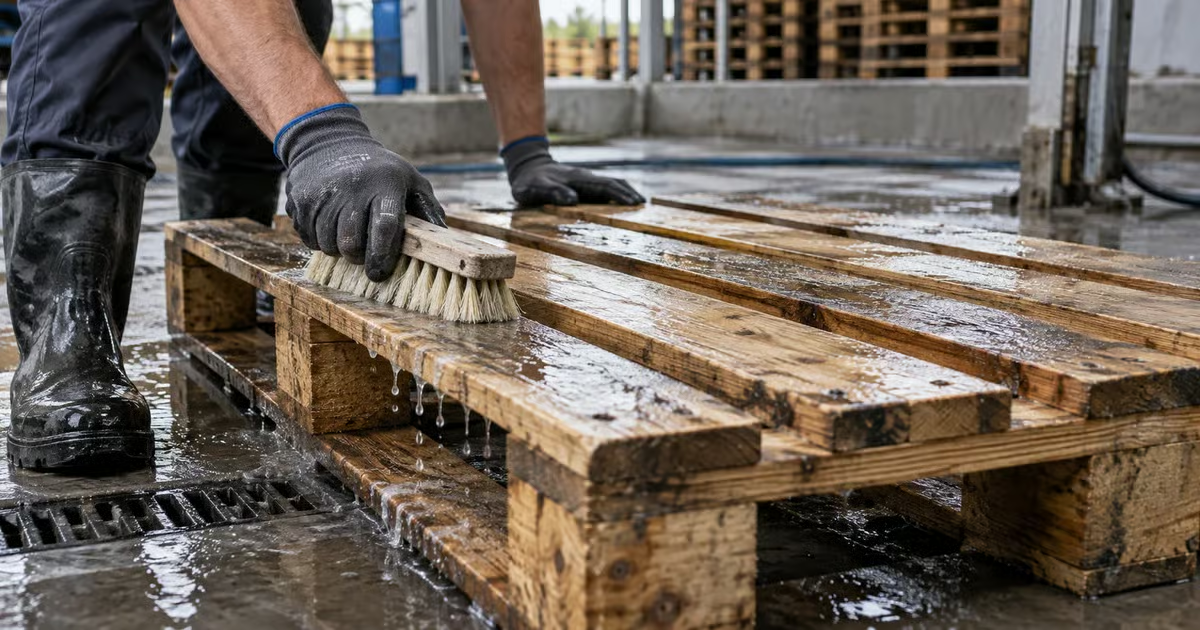
In warehousing, manufacturing, and distribution environments, wood pallets move constantly between facilities, carriers, and storage areas. Over time, they accumulate dirt, chemical residue, biological matter, and moisture damage that most operations either ignore or address inconsistently. That inconsistency creates problems that compound quietly — contaminated product loads, failed audits, worker safety incidents, and accelerated pallet degradation that shortens useful service life. Cleaning wood pallets before reuse is not a secondary concern. It is a basic operational standard that affects product integrity, regulatory standing, and the economics of pallet management over time.
Why Pallet Cleaning Belongs in a Reuse Protocol
Understanding how to clean wood pallets properly starts with recognizing what pallets actually carry beyond their visible load. Even pallets that appear clean after a delivery cycle can harbor bacteria, mold spores, pest residue, or chemical traces absorbed into the wood grain during prior use. Wood is porous, which means surface-level contamination is rarely the whole picture. The material absorbs what it contacts, and standard visual inspection will not reveal what has penetrated below the surface layer.
For operations in food production, pharmaceuticals, or any environment regulated under hygiene or sanitation standards, the condition of incoming pallets is a compliance variable, not just a housekeeping matter. Even outside regulated industries, contaminated pallets introduced into a clean facility can compromise product packaging, trigger customer complaints, or create conditions that attract pests. A formal cleaning protocol addresses this before it becomes a problem rather than after.
There is also a structural dimension to consider. Dirt and moisture that remain trapped in wood accelerate rot, fungal growth, and board weakening. Pallets that are cleaned and allowed to dry properly after each use cycle last measurably longer than those stored with contamination in place. This translates directly into lower replacement frequency and more predictable inventory of usable assets.
Resources that address how to clean wood pallets within a managed reuse program often emphasize that cleaning is most effective when it is built into the handling workflow, not treated as an occasional corrective measure.
Assessing Pallet Condition Before Cleaning Begins
Cleaning a pallet that should be retired instead wastes time and resources. Before any cleaning effort begins, each pallet should be assessed for structural integrity and contamination type, since both factors determine whether the pallet is worth processing and what method is appropriate.
Structural Assessment
A pallet with split deckboards, missing blocks, or broken stringers presents a load-bearing risk regardless of how clean it becomes. Cleaning will not restore strength, and returning a structurally compromised pallet to service creates liability. The assessment should check for broken or missing boards, protruding nails or fasteners, significant warping that affects load stability, and visible rot or soft spots in the wood. Any of these conditions should disqualify the pallet from reuse until repaired, or route it to disposal entirely if repair is not practical.
Contamination Type Matters for Method Selection
Not all contamination responds to the same cleaning approach. Dry debris such as dust, sawdust, and loose particulates requires a different approach than oil-based residue, biological waste, or chemical spills. Misidentifying the contamination type and applying an inappropriate method can spread contamination further into the wood rather than removing it. Biological matter, for instance, requires sanitation steps that go beyond simple washing, while oil residue may require a degreasing agent before water-based cleaning is effective. Taking a few minutes to identify what the pallet was carrying and what residue remains on its surface will determine the correct sequence of steps and avoid wasted effort.
The Cleaning Process: Sequence and Method
Once a pallet has been assessed and deemed suitable for cleaning and continued reuse, the cleaning process itself follows a logical sequence. Each step builds on the one before it, and skipping steps tends to create rework or missed contamination.
Dry Debris Removal First
Before introducing any moisture or cleaning agent, loose surface debris should be removed. This typically involves sweeping, brushing, or using compressed air to clear gaps between deckboards and around the base blocks or stringers. Introducing water before this step traps debris, creates muddy residue that is harder to remove, and potentially drives dry contaminants further into the wood grain. Dry debris removal is a brief but important first step that improves the effectiveness of everything that follows.
Washing and Scrubbing
For pallets with surface contamination that requires moisture to address, washing with appropriate cleaning agents follows dry debris removal. Pressure washing is commonly used in commercial pallet operations because it covers surface area efficiently and removes embedded dirt from wood grain with mechanical force. For operations without pressure washing equipment, hand scrubbing with brushes and an appropriate cleaning solution accomplishes the same goal, though more slowly. The cleaning agent selected should be appropriate to the contamination type. A food-safe, non-residue cleaning solution is appropriate for pallets that will re-enter food supply environments. Stronger degreasers may be appropriate for industrial pallets with oil or chemical contamination.
Sanitation for High-Risk Applications
In environments where pallets contact food, pharmaceuticals, or medical products, washing alone is not sufficient. Sanitation requires a separate step using an approved sanitizing agent applied after washing and rinsing. The FDA’s current Good Manufacturing Practice regulations provide guidance on sanitation standards relevant to product contact surfaces, and pallet cleaning in regulated supply chains should be aligned with those standards. Sanitizing agents should be applied per manufacturer instructions and given appropriate contact time before rinsing to ensure effectiveness rather than just surface application.
Drying Before Return to Service
Drying is the step most often skipped under operational pressure, and it is also one of the most consequential. Wood pallets that return to service while still wet create conditions for mold growth, introduce moisture into packaging and product, and are more prone to structural degradation over time. Depending on climate and facility conditions, pallets may require significant time to dry adequately after washing. In high-volume operations, dedicated drying areas with air circulation are standard practice. Returning a clean but wet pallet to service defeats a significant part of the purpose of cleaning it.
Handling Heat Treatment and Marking Requirements
Pallets moving through international supply chains are subject to phytosanitary requirements under ISPM 15, which sets international standards for treating wood packaging materials to prevent the spread of invasive species and pests. Heat-treated pallets carry an official stamp that certifies this treatment has been performed. Cleaning pallets that carry this certification requires care to avoid removing or obscuring the stamp, since a pallet re-entering an international trade lane without visible certification may be held or rejected at the border.
For operations that regularly move goods internationally, maintaining the integrity of pallet markings through the cleaning process is not a minor administrative detail. It directly affects whether cleaned and reused pallets can legally continue in the same supply chain role. Any cleaning process should account for marking preservation, and pallets whose stamps have been damaged or rendered unreadable through cleaning should be set aside for re-certification or reassigned to domestic use only.
Building Consistency Into Pallet Cleaning Operations
Individual cleaning efforts are useful, but they rarely produce reliable results at scale unless they are built into a defined process. When pallet cleaning depends on individual judgment about method, frequency, or standard, results vary. Contamination gets missed. Steps get skipped under time pressure. Pallets re-enter service in inconsistent condition, which creates unpredictable risk across the operation.
A consistent cleaning protocol assigns clear responsibility, defines which pallets get cleaned before reuse, specifies the method and cleaning agents appropriate to each use case, and sets a standard for what a clean pallet looks like before it is returned to inventory. In larger operations, this may include designated cleaning stations, trained staff, and documentation that supports audit readiness. In smaller operations, it may simply mean a written checklist and a defined location where pallets are processed before redistribution.
Consistency also supports cost control. Operations that track pallet condition through a cleaning and inspection program identify wear patterns earlier, retire damaged pallets before they cause load failures, and extend the average service life of their pallet inventory. The cost of a structured cleaning program is typically lower than the cumulative cost of product damage, lost assets, and audit failures that result from the absence of one.
Conclusion
Wood pallet cleaning is a practical operational discipline, not a one-time task. The right approach begins with honest assessment of each pallet’s condition, selects cleaning methods that match the contamination type, follows a logical sequence from dry removal through sanitation and drying, and maintains certification markings where required. When these steps are applied consistently and built into a reuse protocol rather than performed reactively, the results are measurable: longer pallet life, reduced contamination risk, more predictable inventory, and a stronger foundation for regulatory compliance. For any operation that depends on pallets as a functional asset rather than treating them as disposable, the investment in getting cleaning right pays for itself in avoided losses and operational reliability over time.