Introduction
Silicone has become an important material across many industries because of its flexibility, heat resistance, chemical stability, and versatility. From household accessories and kitchen tools to automotive components, medical devices, and electronic parts, silicone products are used in countless everyday applications. As demand continues to grow, businesses are looking for reliable manufacturing partners who can turn their product ideas into practical, well-designed solutions.
Choosing the right silicone manufacturer is an important step in developing successful products. An experienced manufacturer can help businesses select suitable materials, improve product designs, manage production requirements, and maintain consistent quality. Whether a company needs a simple silicone accessory or a technically complex component, working with a professional supplier makes the development process easier.
Why Silicone Is a Popular Manufacturing Material
Silicone offers several material properties that make it suitable for different product applications. Unlike many conventional plastics and rubber materials, silicone can maintain its performance under a wide range of temperatures while providing excellent flexibility.
Excellent Temperature Resistance
One of the main advantages of silicone is its ability to withstand both high and low temperatures. This makes it suitable for kitchen products, industrial components, automotive applications, and equipment exposed to changing environmental conditions.
Flexibility and Elasticity
Silicone can bend, stretch, and return to its original shape without easily losing its functionality. This property makes it useful for seals, gaskets, protective covers, soft-touch components, and other products requiring flexibility.
Resistance to Environmental Conditions
Silicone generally offers good resistance to moisture, ultraviolet exposure, and many environmental conditions. Depending on the formulation, it can also provide resistance to certain chemicals, making it suitable for demanding applications.
Wide Range of Design Possibilities
Manufacturers can produce silicone products in different shapes, sizes, colors, textures, and hardness levels. This flexibility allows businesses to develop products that match their functional and visual requirements.
What Makes a Professional Silicone Manufacturer Different?
Not every supplier offers the same manufacturing capabilities. A professional silicone manufacturer should provide more than basic production services. Businesses need a partner who understands material selection, product engineering, tooling, and quality management.
Material Selection Expertise
Different silicone applications require different material properties. For example, food-related products may require appropriate food-contact-grade materials, while medical applications require specific material controls and documentation.
An experienced manufacturer can help customers identify the right silicone formulation according to the intended application, operating temperature, hardness, and performance requirements.
Advanced Production Capabilities
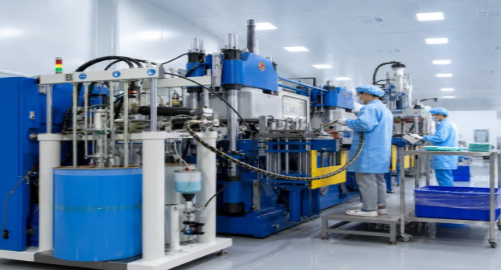
Manufacturing methods play an important role in determining the quality and consistency of finished products. Depending on the product design and production volume, manufacturers may use:
- Liquid Silicone Rubber (LSR) injection molding
- Compression molding
- Rubber injection molding
- Extrusion molding
- Custom silicone fabrication
Each process has its own advantages. Selecting the appropriate method can help improve production efficiency, dimensional accuracy, and product consistency.
Product Development Support
Businesses often approach manufacturers with an initial concept, drawing, or sample. A capable manufacturing partner can review the design, identify possible production challenges, and recommend improvements before mass production begins.
This support helps reduce unnecessary tooling changes and makes the transition from product development to manufacturing more efficient.
How Custom Silicone Products Meet Different Business Needs
Every industry has different product requirements. This is why custom silicone products are becoming increasingly popular among brands, distributors, wholesalers, and industrial businesses.
Instead of purchasing standard products that may not match their requirements, companies can work directly with manufacturers to develop components according to their specifications.
Custom Silicone Kitchen and Household Products
Silicone is widely used in household and kitchen applications. Products include baking molds, spatulas, kitchen brushes, ice cube trays, sink accessories, storage lids, and cleaning tools.
Businesses can customize these products through different colors, dimensions, surface textures, and product shapes. Branding options, including logos and packaging, can also help companies establish a recognizable product identity.
Automotive Silicone Components
The automotive industry requires components that can perform under changing temperatures, vibration, and environmental exposure.
Custom silicone products such as gaskets, seals, protective covers, hoses, and insulation components can support different vehicle systems. Manufacturers must consider material hardness, dimensional tolerances, and operating conditions when developing these parts.
Medical and Healthcare Applications
Silicone is also used in healthcare-related applications, including tubing, seals, protective components, and selected device parts.
For these applications, material selection and manufacturing controls are especially important. Buyers should evaluate the manufacturer’s quality management system, material documentation, and ability to meet applicable regulatory requirements.
Electronics and Industrial Components
Electronic equipment often requires flexible protective components that help manage moisture, dust, vibration, or physical contact.
Custom silicone keypads, insulating covers, rubber buttons, connectors, and sealing components are examples of products developed for these applications.
An experienced manufacturer can adjust the design and material properties to meet the technical requirements of individual projects.
The Custom Silicone Manufacturing Process
Understanding the production process helps businesses communicate more effectively with their manufacturing partners.
1. Product Design and Requirement Review
The process begins with a product concept, technical drawing, sample, or 3D design. The manufacturer reviews dimensions, intended application, material requirements, and expected production quantities.
At this stage, clear communication is essential because even small design details can influence tooling and manufacturing costs.
2. Material and Mold Selection
After reviewing the product requirements, the manufacturer recommends a suitable silicone material and molding process.
A custom mold is developed according to the product design. Mold quality can directly affect surface appearance, dimensional accuracy, and production efficiency.
3. Sampling and Testing
Before starting large-scale production, manufacturers generally produce samples for customer evaluation.
Buyers can check the dimensions, appearance, flexibility, hardness, and overall functionality. Any required adjustments can be discussed before approving the final sample.
4. Mass Production
Once the sample receives approval, manufacturing can move into mass production. Production monitoring helps maintain consistent product specifications throughout the order.
5. Quality Inspection and Packaging
Finished products undergo inspection according to the agreed quality requirements. Depending on the application, inspections may include dimensional checks, visual examinations, and physical performance testing.
Products are then packed according to customer requirements and prepared for shipment.
How to Select the Best Silicone Manufacturer for Your Business
Finding the right supplier requires careful evaluation. Price is important, but it should not be the only factor influencing your decision.
Review Manufacturing Experience
Look for a manufacturer with experience producing products similar to yours. Industry knowledge can help identify suitable materials, production methods, and possible design improvements.
Check Quality Management
Ask about quality control procedures, inspection methods, and relevant certifications. If your project involves food-contact or medical applications, request documentation that supports the specific requirements of your product.
Evaluate Customization Capabilities
A suitable supplier should be able to accommodate your required dimensions, colors, material hardness, surface finishes, and branding specifications.
Consider Communication and Delivery
Clear communication is essential when developing custom products. Your manufacturing partner should provide understandable quotations, realistic production schedules, sample updates, and clear responses to technical questions.
Compare Overall Manufacturing Costs
When comparing suppliers, consider tooling charges, material costs, production quantities, sampling expenses, packaging, and shipping. A lower initial quotation does not always represent the best overall value.
Why Long-Term Manufacturing Partnerships Matter
Developing a relationship with a reliable silicone manufacturer can benefit businesses over time. Once a supplier understands your product specifications and quality expectations, future orders can become easier to manage.
Long-term partnerships may also support product improvements, new designs, production planning, and more efficient inventory management.
For growing brands, wholesalers, and industrial companies, having a dependable manufacturing partner can make it easier to expand product ranges and respond to changing customer demands.
Conclusion
Silicone offers valuable opportunities for businesses across household, automotive, medical, electronics, and industrial markets. However, successful product development depends on choosing the right materials, production methods, and manufacturing partner.
A professional silicone manufacturer can support every stage of the process, from initial design discussions and material selection to sampling, mass production, and final inspection. By working with an experienced supplier, businesses can develop custom silicone products that match their specifications, industry requirements, and customer expectations.
Before selecting a manufacturing partner, take time to evaluate production capabilities, quality procedures, customization options, and communication standards. Making the right decision can help establish a productive partnership and support the long-term growth of your silicone product business.