Hazardous substances are often managed through separate documents: a chemical register, safety data sheets and individual risk assessments. The problem is that exposure happens during real work, not inside a folder. Effective coshh management therefore needs to connect substances with the tasks, people and control measures involved in using them. Dust, fumes, vapours, cleaning chemicals and oils can create different risks depending on how they are handled, how long employees are exposed and whether existing controls continue to perform as intended.
Begin With the Task Employees Actually Perform
A safety data sheet can explain a substance’s hazardous properties, but it cannot describe every workplace use. Spraying a product can create different exposure from brushing it onto a surface. Cutting material may generate airborne dust that does not exist while the same material is being stored. Heating a chemical can also change the way vapours are released.
The assessment therefore needs to examine the task step by step. This makes it easier to identify where exposure occurs and who could be affected.
Consider Every Route of Exposure
Inhalation is an obvious concern for dusts and fumes, but workers may also be exposed through skin contact or accidental ingestion. Cleaning agents, oils, wet cement and other materials can affect the skin where contact is repeated or poorly controlled. Contaminated gloves or work surfaces can also spread exposure beyond the original task.
A strong assessment should consider how the substance reaches the worker rather than focusing only on what is printed on the container label.
Controls Should Follow a Clear Hierarchy
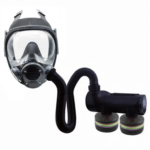
Personal protective equipment is important in some situations, but it should not automatically be the first or only solution. Businesses should first consider whether the hazardous substance can be eliminated or replaced. If that is not practical, enclosure, process changes or local exhaust ventilation may provide better control at source.
PPE can then support these measures where residual risk remains. The purpose is to reduce exposure as effectively as possible instead of relying entirely on the worker to protect themselves.
Exposure Monitoring Can Test Whether Controls Work
Some risks cannot be judged reliably by sight alone. Dust or vapour may be present even when the workplace does not appear obviously contaminated. Occupational exposure monitoring can help determine whether airborne contaminants are adequately controlled and whether further action is required.
Monitoring works best when there is a clear reason for carrying it out. The results should answer a question about exposure or control performance rather than becoming another set of measurements filed without action.
Safety Management Should Connect the Pieces
A health and safety management system can help organisations bring individual risk assessments into one wider management process. HSE’s HSG65 framework uses the Plan, Do, Check, Act approach. It encourages organisations to plan how risks will be managed, implement the controls, check performance and act on weaknesses or changes.
Safety First Group’s HSG65 service similarly focuses on structured health and safety management rather than treating each compliance activity as an isolated task. For COSHH, this means chemical controls should connect with training, maintenance, monitoring, incident reporting and management review.
Maintenance Can Determine Whether Controls Remain Effective
A local exhaust ventilation system may work well when first installed but become less effective as filters clog, ducts are damaged or workstations are altered. Likewise, storage cabinets, dosing systems and protective equipment need ongoing attention.
Managers should know which controls require inspection and who is responsible for maintaining them. If a business depends on an engineering control to protect employees, its performance should not be taken for granted.
Process Changes Should Trigger Review
A COSHH assessment can become outdated even when the substance itself remains unchanged. Production may increase, employees may spend longer on a task or a process may move to an area with poorer ventilation. A supplier may also change the formulation of a product.
Useful triggers for review include new substances, changed work methods, health complaints, monitoring results or control failures.
Make Responsibilities Clear
COSHH works poorly when everyone assumes someone else is responsible. A practical system should make clear who maintains the substance register, who reviews assessments, who organises training and who follows up when controls fail.
Supervisors also need enough authority to stop or modify work if the expected controls are not available. That turns COSHH from an administrative responsibility into part of everyday operational management.
Conclusion
Effective COSHH management depends on understanding how substances are actually used and whether controls continue to protect employees over time. Safety data sheets and assessments are important, but they need to connect with training, monitoring, maintenance and management review.
safetyfirstgroup.co.uk provides COSHH risk assessment, occupational hygiene and HSG65 management-system support for organisations that need a more connected approach to workplace health. Bringing these activities together can help businesses manage exposure as an ongoing operational issue rather than a collection of separate compliance documents.