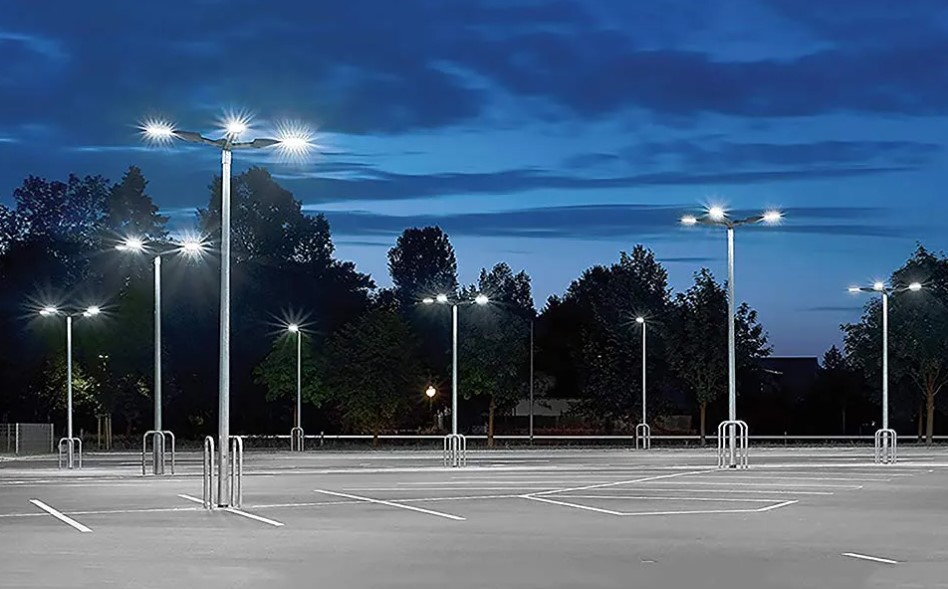
A 15 foot parking lot light pole is a practical option for small parking areas, storefronts, apartment complexes, walkways, and other spaces that need controlled outdoor lighting. Its lower mounting height keeps LED fixtures closer to the ground. This can help illuminate entrances, parking spaces, and pedestrian paths without using tall commercial poles.
The right setup depends on the size of the property, the required brightness, and the LED fixture’s light distribution. Pole material, mounting hardware, wind resistance, and foundation design also affect long-term performance.
What Is a 15 Foot Parking Lot Light Pole?
A 15 foot parking lot light pole is an outdoor support designed to mount one or more lighting fixtures approximately 15 feet above ground level. It is commonly used with LED area lights, shoebox fixtures, and floodlights.
These poles suit compact properties where lighting needs to remain close to the ground. They can also work along building entrances and pedestrian routes where taller poles may look out of place.
Common mounting options include:
- Single-fixture mount: Supports one LED area light.
- Twin-fixture mount: Holds two lights to cover different directions.
- Slip-fitter mount: Connects a compatible fixture to a suitable pole top.
- Tenon mount: Provides a mounting point for compatible fixtures or adapters.
- Bullhorn mount: Supports multiple fixtures using a branching bracket.
Always check the pole’s specifications and the fixture’s mounting requirements before ordering.
Benefits of 15 Foot Parking Lot Light Poles
A 15 foot pole offers several practical advantages for smaller properties. However, the final results depend on fixture selection and the overall lighting layout.
- Controlled Light Distribution
A lower mounting height helps keep light focused on nearby areas. This makes 15 foot poles useful for parking spaces, walkways, building entrances, and small commercial lots.
The correct LED optics can distribute light across the intended area while reducing unnecessary spill beyond property boundaries.
- Reduced Light Spill and Glare
Bright fixtures can disturb nearby residents or create uncomfortable glare for drivers and pedestrians.
A 15 foot pole can help control light around smaller properties. Pair it with shielded or full-cutoff fixtures when suitable. Proper aiming is also important because a low-mounted, poorly aimed light can still produce glare.
- Easier Maintenance Access
Shorter poles can make inspection and fixture replacement easier than installations at greater heights. Depending on the site, maintenance crews may need less specialized access equipment.
However, electrical work must still follow applicable safety procedures. Never service an energized fixture.
- Suitable Appearance for Small Properties
Tall commercial poles can look oversized near small shops, residential buildings, and narrow parking areas.
A 15 foot pole offers a more compact appearance. It can fit naturally into apartment communities, churches, schools, and neighborhood businesses.
Where Are 15 Foot Parking Lot Light Poles Used?
The best applications are spaces that need localized lighting rather than coverage across a large, open parking lot.
| Application | Why a 15-Foot Pole Can Work |
| Small retail parking lots | Lights nearby parking spaces and entrances |
| Storefronts | Provides area lighting near buildings |
| Apartment complexes | Supports parking and pedestrian visibility |
| Churches and schools | Suits smaller parking areas and pathways |
| Walkways and courtyards | Keeps light closer to pedestrian level |
| Parks and community spaces | Can illuminate selected paths and gathering areas |
Large shopping centers, truck parking facilities, and wide commercial lots may need taller poles. The final choice should be based on the lighting design, not pole height alone.
Which LED Light Works Best on a 15 Foot Pole?
The correct LED fixture must provide enough light at ground level without creating excessive brightness directly beneath the pole.
Many 15 foot pole installations use LED fixtures in the 100W to 150W range. This is a starting point, not a universal requirement. The necessary output depends on the site dimensions, required illuminance, fixture efficiency, and beam distribution.
Consider these factors when selecting a light.
Lumens and Wattage
Wattage measures electricity consumption. Lumens measure the total visible light produced by a fixture.
Two fixtures with the same wattage can produce different amounts of light. Compare verified lumen output and photometric data rather than choosing a light based on watts alone.
Light Distribution
LED parking lot fixtures use different optical patterns to direct light across the ground.
A suitable distribution pattern helps illuminate parking spaces and drive lanes. It also reduces dark gaps and unnecessary light beyond the property.
Weather Resistance
Outdoor fixtures must withstand rain, dust, temperature changes, and other environmental conditions.
Check the fixture’s IP rating, operating temperature range, corrosion resistance, and suitability for the installation location.
Photocells and Lighting Controls
A compatible photocell can switch the lights on at dusk and off at dawn. Dimming and scheduling controls may also reduce energy use when full output is unnecessary.
Check electrical compatibility before connecting controls to the fixture.
How Far Apart Should 15 Foot Light Poles Be?
Pole spacing determines how evenly light covers the parking area. If poles are too far apart, dark gaps may form between fixtures. If they are too close, the installation may cost more than necessary.
For 15 foot parking lot light poles, spacing of approximately 30 to 50 feet can serve as an initial planning range. The correct distance depends on fixture output, mounting configuration, beam pattern, and the required light level.
Before setting the poles, consider:
- Parking layout: Account for parking rows, drive lanes, entrances, and pedestrian paths.
- Fixture output: Confirm that enough light reaches the ground between poles.
- Light uniformity: Avoid bright spots beneath fixtures and dark areas between them.
- Property boundaries: Prevent unnecessary light from reaching neighboring buildings.
- Obstructions: Consider trees, signs, building corners, and parked vehicles.
A photometric study uses fixture data and site measurements to estimate light levels across the property. It is the best way to confirm pole spacing and the number of fixtures needed.
Choosing the Right Pole Material and Mounting System
Pole construction affects durability, installation, and maintenance.
Steel poles are commonly used for commercial lighting. They provide structural strength, but their protective coating must be maintained to limit corrosion. Aluminum poles resist corrosion and weigh less, which can simplify handling. The best material depends on the environment, structural requirements, and budget.
Also check the mounting system before purchasing.
An anchor-base pole generally attaches to anchor bolts embedded in a properly designed concrete foundation. Direct-burial poles are installed into the ground according to the manufacturer’s specifications. These methods are not interchangeable for every pole.
The foundation, anchor bolts, and pole must be designed for the fixture load, wind exposure, soil conditions, and local building requirements.
Installation Tips for 15 Foot Parking Lot Light Poles
Good installation begins before the pole arrives. Planning helps prevent costly changes to wiring, foundations, and fixture placement.
- Measure the site. Record the parking area’s dimensions, entrances, walkways, and property boundaries.
- Choose fixture locations. Place poles where they can illuminate the required areas without obstructing vehicles or pedestrian movement.
- Confirm the foundation. Follow the pole manufacturer’s engineering requirements and local building codes.
- Check electrical requirements. Confirm voltage, wiring, grounding, circuit protection, and control compatibility.
- Aim the fixtures. Direct light toward the intended areas and limit glare and light spill.
- Test the finished layout. Measure illuminance at several points to identify dark spots and uneven coverage.
Use a qualified electrician and an appropriately experienced installer for electrical connections and structural work.
How Much Does a 15 Foot Parking Lot Light Pole Cost?
The total cost depends on the pole material, fixture quantity, mounting hardware, foundation, wiring, and installation labor.
Buying a pole alone usually costs less than purchasing a complete lighting package. A package may include LED fixtures, brackets, adapters, anchor bolts, and other hardware.
Before comparing prices, confirm exactly what each quote includes. Check the pole’s specifications, fixture output, warranty, shipping, and installation requirements. A lower purchase price does not always mean a lower total project cost.
Conclusion
A 15 foot parking lot light pole is well suited to many small commercial properties, storefronts, apartment communities, and pedestrian areas. Its compact height can provide controlled lighting without the visual impact of taller poles.
For the best result, match the pole with a suitable LED fixture, verify the mounting hardware, and plan spacing using photometric data. Proper foundations, safe electrical installation, and glare control are equally important.
Choose the complete lighting system based on the site’s needs rather than pole height or wattage alone.