Technology is advancing; we are currently in the information age, and artificial intelligence appears to be the most significant technological development of the moment. However, if we approach it mindfully, we can harness it to our advantage. RateSelf is one such example. If you aren’t getting matches or likes on dating apps, the issue might lie with your profile. RateSelf utilizes AI technology to objectively evaluate your profile and provide you with results, and even offers solutions.
Most people assume the problem is their bio. They rewrite it, test different jokes, ask friends for opinions, and nothing changes. The bio is rarely the issue, because most people never read it. When someone opens a profile, the decision happens in about a second, before a single word is registered. Bad lighting, a cluttered background, a phone covering half the face, and the swipe is already gone.
The harder problem is that you cannot judge your own photos. You know the story behind each one. You remember the trip, the night out, the way you felt that day. A stranger sees none of that. They see a badly lit room and a face they cannot read clearly, and they move on. You are the only person who will ever look at your photos with all that context attached, which makes you the worst possible judge of them.
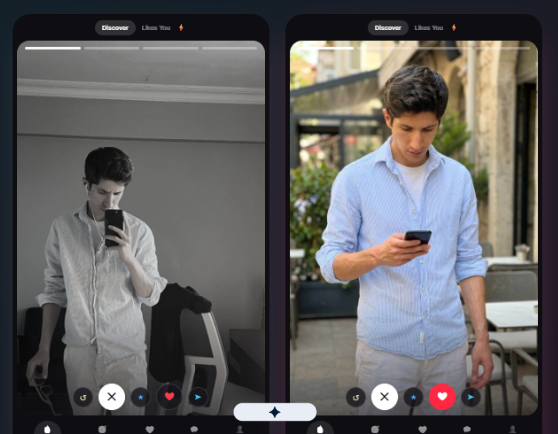
The specific failures repeat constantly. Photos taken in a dark room where the face loses definition. Group shots where nobody can tell which person you are. Mirror selfies where a phone blocks the centre of the frame. Sunglasses in the first photo. Backgrounds so busy that the eye never settles on the person. None of these are about how you look. They are about whether the photo lets anyone see you at all.
That is the problem I built RateSelf for. You upload a dating profile photo and it tells you what is working against you, lighting, framing, background, whether your face is actually visible, and then generates an improved version, so you see the difference instead of reading about it.
I tested it on my own profile first. My main photo, the one I had been using for a long time, scored badly: dark room, mirror selfie, phone in front of my face. Here is the before and after:
Two things surprised me while building it. The first is that a score on its own is useless. The earliest version only returned a number, and nobody knows what to do with a number. Telling someone their photo is a six changes nothing. Showing a corrected version of the same photo is what made it click, because the difference is immediately obvious once you see the two side by side.
The second is that feedback works better than polite feedback. I softened the wording early on so nobody would feel bad, and it performed worse. People do not open a tool like this for reassurance. They come specifically to hear what is wrong with their photo, and they want it said plainly.
It will not magically guarantee more matches. It helps you present your best photo, and that is all it claims. But if you have been rewriting your bio for weeks and nothing has changed, the photo is the more likely place to start looking.