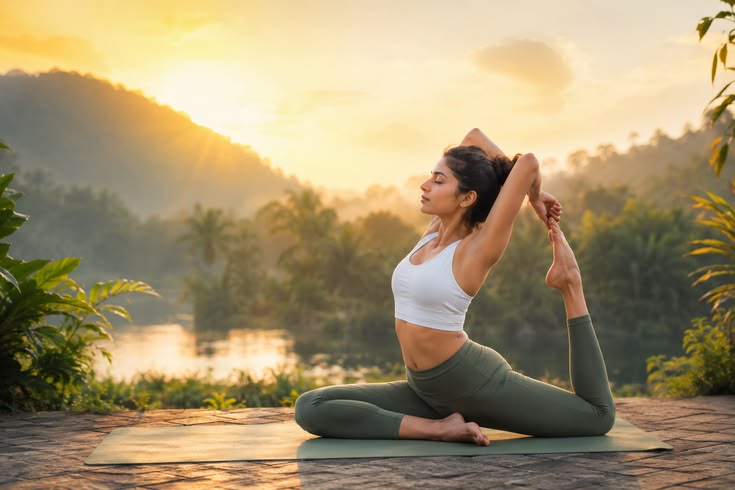
Many people practise yoga in studios, living rooms, or on screens. These settings work, but they often lack one element that can deepen the effects of the practice: regular time outdoors in natural surroundings. When yoga is paired with forests, hills, or open landscapes, the benefits for stress, sleep, mood, and overall recovery tend to increase.
This combination is not new. Traditional yoga systems developed in outdoor or semi-outdoor environments, and modern research on both yoga and nature exposure points in the same direction. For people looking for a practical way to reset, a structured week that includes daily practice plus unstructured time in nature offers a clear and accessible option.
How yoga and nature support each other
Yoga works on the body and nervous system through movement, breath, and sustained attention. Nature exposure works through different but complementary pathways. Studies on time spent in green spaces show reductions in cortisol, improvements in attention, and better mood regulation. When the two are combined, each can amplify the other.
In a forest or rural setting, external stimulation drops. There is less traffic noise, fewer screens, and fewer decisions. This lower sensory load makes it easier to notice breath and body sensations during practice. At the same time, the physical and mental effects of yoga — steadier breathing, reduced muscle tension, quieter mental chatter — make it easier to enjoy and benefit from simply being outside.
The result is often a faster shift into a more rested state than either practice or nature time tends to produce on its own in everyday life.
What the research and experience show
Research on forest bathing (shinrin-yoku) and green exercise has repeatedly found lower stress markers, improved sleep quality, and better cognitive recovery after time in woodland environments. Yoga studies show similar outcomes for stress, anxiety, and sleep, particularly when practice is consistent rather than occasional.
People who combine the two often report:
- Falling asleep more easily and waking less during the night
- A noticeable drop in background mental noise within a few days
- Less muscle tension, especially in the neck, shoulders, and lower back
- A clearer sense of energy that is steady rather than wired or flat
- Greater ease in simply sitting or walking without needing distraction
These changes are not guaranteed, and individual results vary. They are, however, commonly described by people who spend several consecutive days practising yoga while also spending unscheduled time on trails, by water, or simply sitting outside.
What a typical combined week looks like
A practical way to experience the combination is a residential retreat that builds both elements into the schedule rather than leaving them to chance. In the forests of central Portugal, for example, centres offering a yoga retreat in portugal structure weeks around two yoga sessions a day plus generous free time outdoors. More details on available weeks can also be found at Yoga Evolution Retreats.
A typical rhythm includes:
- A morning practice (often more dynamic or strengthening)
- A second session later in the day (frequently slower yin, restorative, or gentle flow)
- Short periods of meditation or breathwork
- Three vegetarian or vegan meals
- Several hours of unscheduled time for forest walks, swimming, reading, or resting
The location itself supports the outdoor component. Trails start near the accommodation, and there is usually a saltwater pool with open valley views. Because the setting is already quiet, people do not need to travel elsewhere to find nature. They can step outside between sessions or after meals and immediately be among trees.
This structure matters. Two practices a day create consistency. The free time prevents the week from becoming another form of busyness. Together they give both the body and the nervous system repeated opportunities to downshift.
Who tends to benefit most
The combination suits a wide range of people, including those new to yoga. It is particularly useful for anyone who:
- Feels chronically overstimulated or mentally busy
- Sleeps poorly despite feeling tired
- Finds it hard to switch off during ordinary holidays
- Prefers quieter environments to crowded beaches or cities
- Wants the benefits of regular practice without having to organise everything themselves
It is less ideal for people whose main goal is high-intensity training, nightlife, or constant sightseeing. The value lies in the reduction of input as much as in the yoga itself.
Practical advantages of a nature-based setting
Choosing a forest or rural location rather than a distant tropical destination brings additional practical benefits. Travel time is usually shorter, which means less jet lag and a higher chance of arriving already able to rest. Costs and carbon emissions are typically lower, making it easier to repeat the experience. In central Portugal the climate is mild for much of the year, and the landscape offers walking options without requiring specialist equipment or fitness.
For those who want to go deeper, the same environments sometimes host longer programmes. The 100-hour Yin Yoga Teacher Training is one example that keeps the forest setting while adding more intensive study and practice.
Making the combination work at home
Not everyone can take a full week away. Elements of the same approach can still be used locally:
- Practise outside when weather and space allow, even if only for 20–30 minutes
- Follow a yoga session with a walk in a park or woodland rather than immediately returning to screens
- Schedule longer nature time on days when you also practise
- Reduce other stimulation (notifications, background media) around practice so the nervous system has less to process
These smaller steps do not fully replicate a residential week, but they move in the same direction.
A straightforward option for recovery
Combining yoga with time in nature is not complicated. It requires a place where practice can happen regularly and where the surroundings themselves are quiet and green. When those two conditions are met for several days in a row, many people experience improvements in sleep, stress levels, and mental clarity that are harder to achieve amid ordinary routines.
For anyone considering a structured break, a forest-based yoga week in a location such as central Portugal offers a practical way to test the combination. The practices provide the framework; the landscape supplies the conditions that help the effects settle in.