Red oak wood is one of the most popular hardwood materials used in furniture, flooring, cabinetry, and interior woodworking. Known for its attractive grain patterns, strength, and versatility, this wood offers a balance of durability and natural beauty. Homeowners, furniture makers, and professional woodworkers frequently choose red oak for projects that require dependable performance and a traditional appearance.
One reason red oak remains popular is its ability to complement different interior design styles. Its warm colors and distinctive grain patterns work well in classic, rustic, and contemporary spaces. The wood also responds well to many stains and finishing products, allowing manufacturers and homeowners to achieve a variety of decorative appearances.
Understanding red oak wood properties, applications, benefits, and limitations can help you decide whether it is suitable for your next project. This guide explores its physical characteristics, durability, maintenance requirements, common uses, and differences from other hardwood species.
What Is Red Oak Wood?
Red oak wood is a hardwood obtained from several oak tree species belonging to the red oak group. Northern red oak, scientifically known as Quercus rubra, is one of the most widely recognized commercial species. These trees grow naturally across eastern North America and are valued for producing strong timber suitable for furniture manufacturing, flooring, and structural woodworking applications.
The wood usually features a light reddish-brown color with visible grain patterns and a relatively coarse texture. Its natural appearance makes it recognizable in hardwood flooring, cabinets, and furniture. Although the name suggests a consistently red color, the actual wood can range from pale pinkish tones to medium brown, depending on the tree and finishing treatment.
Red oak has been widely used in woodworking for generations because it is relatively accessible and suitable for different manufacturing processes. Its combination of strength, workability, and attractive grain makes it useful for both decorative and functional projects. However, proper finishing and suitable environmental conditions are important for maintaining its appearance and long-term performance.
Key Characteristics of Red Oak Wood
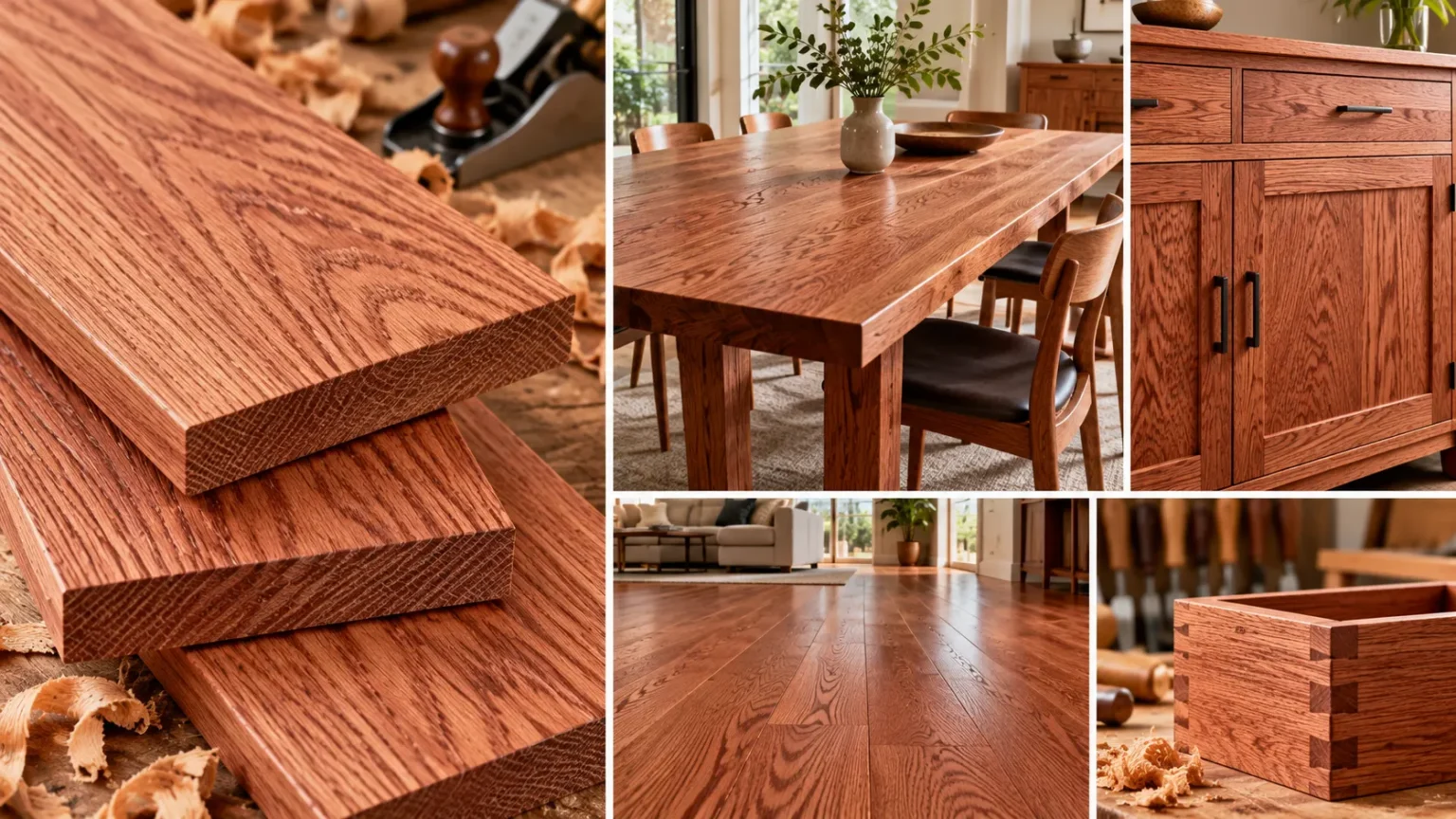
One of the defining characteristics of red oak wood is its pronounced grain pattern. The wood commonly displays open pores, visible growth rings, and attractive natural variations that create a distinctive appearance. These features make red oak particularly appealing for furniture and flooring where the natural texture of hardwood is an important design element.
Red oak is also known for its hardness and ability to withstand regular household use. Northern red oak has a Janka hardness rating of approximately 1,290 pounds-force, making it suitable for many residential flooring applications. Although it is considered a durable hardwood, scratches and dents can still occur when surfaces experience heavy impacts or repeated abrasion.
Another important characteristic is its relatively good workability when appropriate woodworking tools and methods are used. Red oak can be cut, shaped, sanded, and finished for different applications. Its open grain absorbs stains readily, although proper preparation is necessary to prevent uneven coloration or unwanted surface texture.
Red Oak Wood Color and Grain Patterns
Red oak wood typically features warm, natural colors that range from light tan to reddish-brown. Freshly processed wood may display subtle pink undertones, while older or finished surfaces can develop deeper, warmer shades. The exact appearance depends on the tree species, growing conditions, board selection, and finishing products applied during manufacturing.
The grain pattern is usually straight, although individual boards can contain attractive variations and distinctive growth features. Large open pores give the wood a relatively coarse texture compared with some fine-grained hardwoods. Quarter-sawn red oak may also display prominent ray patterns, creating decorative effects that appeal to traditional furniture makers and interior designers.
Different stains and finishes can significantly change the appearance of red oak without completely hiding its natural character. Light finishes emphasize the wood’s original color, while darker stains create a richer appearance. Because the grain is highly visible, red oak works especially well in interiors where natural wood texture is part of the overall design.
How Strong and Durable Is Red Oak Wood?
Red oak is considered a strong hardwood suitable for many interior applications that require dependable structural performance. Its combination of hardness, stiffness, and resistance to ordinary wear makes it useful for furniture, cabinetry, and flooring. However, durability depends on factors such as wood quality, construction methods, surface protection, and the environmental conditions where the material is installed.
Northern red oak has an average dried weight of approximately 44 pounds per cubic foot, making it a relatively dense hardwood. This density contributes to its solid feel and mechanical strength. The wood also offers good bending properties, which can be useful for furniture components and other projects requiring reliable performance under normal household conditions.
Despite its strength, red oak is not naturally resistant to prolonged moisture exposure or decay. Its open pore structure can allow water to move through the wood, increasing the risk of damage in unsuitable environments. For this reason, red oak is generally recommended for interior applications rather than outdoor structures exposed to frequent rain or high moisture levels.
Common Uses of Red Oak Wood
Red oak wood is widely used in furniture manufacturing because it offers attractive grain patterns and dependable strength. Dining tables, chairs, bed frames, desks, and storage cabinets are common examples of red oak furniture. Its solid construction and traditional appearance make it suitable for products intended to remain functional and visually appealing for many years.
Hardwood flooring is another major application because red oak provides a durable walking surface with a recognizable natural texture. The material can be manufactured into solid hardwood planks or used as a decorative layer in engineered flooring. Its ability to accept different stains allows homeowners to coordinate flooring colors with surrounding furniture and interior finishes.
Red oak is also used for interior doors, wall paneling, stair components, decorative moldings, and kitchen cabinetry. Woodworkers appreciate its versatility when creating custom-built features for residential and commercial interiors. However, moisture-prone installations require careful material selection and appropriate surface protection to reduce the risk of swelling, staining, and premature deterioration.
Red Oak Wood for Hardwood Flooring
Red oak hardwood flooring is a popular choice for residential interiors because it combines durability with attractive natural grain. Its warm appearance complements traditional, transitional, and many modern decorating styles. The wood is available in different plank widths, grades, and finishes, providing flexibility for homeowners who want a natural flooring material.
One advantage of solid red oak flooring is that it can often be sanded and refinished when the surface becomes worn. This ability can extend the useful life of the floor when enough wood thickness remains. However, refinishing possibilities depend on the flooring construction, previous sanding, installation conditions, and the manufacturer’s recommendations.
Red oak flooring performs best in environments with reasonably stable indoor humidity levels. Excessive moisture can cause wood movement, while very dry conditions may contribute to gaps between boards. Regular cleaning, suitable protective finishes, and indoor climate management help maintain the flooring’s appearance and reduce problems associated with seasonal expansion and contraction.
Red Oak Wood for Furniture Making
Furniture makers frequently choose red oak because it provides a useful combination of strength, availability, and decorative appeal. Its relatively hard surface makes it suitable for tables, chairs, bookshelves, and cabinets that experience regular household use. The distinctive grain also gives finished furniture a natural appearance that remains attractive across different design trends.
Red oak can support several furniture styles, including farmhouse, rustic, traditional, and contemporary designs. Its warm coloring works well with painted interiors, natural fabrics, and contrasting decorative materials. Furniture manufacturers can use clear finishes to highlight the grain or apply stains that complement the surrounding interior color scheme.
Although red oak is durable, furniture surfaces still require protection from spills, excessive heat, and prolonged moisture exposure. Protective coatings help reduce staining and surface wear, particularly on dining tables and frequently used desks. Appropriate cleaning methods and stable indoor conditions can preserve both the appearance and structural integrity of red oak furniture.
Advantages of Red Oak Wood
One of the biggest advantages of red oak wood is its balance between durability and affordability compared with many premium hardwood options. It provides a strong, attractive material for flooring, furniture, and interior construction. Because red oak is widely produced in North America, it is often more accessible than certain imported or specialty hardwood species.
Another important benefit is its versatility in design and finishing applications. The open grain accepts many wood stains, allowing homeowners and manufacturers to create light, medium, or dark finishes. Red oak also works with different interior styles, making it suitable for renovation projects where long-term appearance and design flexibility matter.
Red oak is additionally valued for its mechanical strength and potential longevity in suitable indoor environments. Properly maintained flooring and furniture can remain functional for decades. Its ability to be repaired, refinished, and incorporated into custom woodworking projects further contributes to its appeal among homeowners, interior designers, and professional craftspeople.
Disadvantages of Red Oak Wood
Although red oak has several advantages, its sensitivity to moisture is an important limitation. The wood contains open pores that can allow liquids to penetrate when surfaces are not adequately protected. As a result, prolonged exposure to water can contribute to swelling, discoloration, and deterioration, making red oak less suitable for unprotected outdoor environments.
Another disadvantage is that red oak’s pronounced grain pattern may not appeal to everyone. Some homeowners prefer the smoother appearance of maple, birch, or other hardwoods with finer textures. The open grain can also require additional surface preparation when achieving a very smooth painted or filled finish, increasing the work involved in certain decorative applications.
Red oak can also experience dimensional changes as surrounding humidity levels fluctuate. Seasonal expansion and contraction are natural characteristics of wood, but excessive changes may create gaps, warping, or other problems. Correct installation, suitable finishing materials, and proper indoor environmental conditions are therefore essential for achieving dependable long-term performance.
Red Oak Wood vs White Oak Wood
Red oak and white oak are closely related hardwood groups, but they have several important differences. Red oak generally has a warmer, slightly pinkish appearance, while white oak commonly displays light brown or yellowish tones. Both materials feature attractive grain patterns, although their pore structures and natural color variations can create noticeably different visual effects.
One of the most significant differences involves moisture resistance. White oak contains structures called tyloses that block many of its vessels, making it generally more resistant to liquid penetration than red oak. This characteristic contributes to white oak’s traditional use in applications such as barrels, where resistance to liquid movement is especially important.
Both types of oak are commonly used for flooring, furniture, and cabinetry, but their performance depends on the particular species and grade. Red oak is often more affordable in markets where it is widely available. White oak may be preferred when greater natural moisture resistance or a different grain appearance is important, although neither material should be considered maintenance-free.
Red Oak Wood vs Maple Wood
Red oak and maple are popular hardwood choices for furniture, flooring, and interior woodworking, but their appearances differ considerably. Red oak has a pronounced, open grain with warm reddish tones. Hard maple generally features a finer, more uniform grain pattern and lighter coloring, making it appealing for contemporary interiors that emphasize smooth wooden surfaces.
Hard maple is also harder than northern red oak on the Janka hardness scale, with a typical rating around 1,450 pounds-force. This can provide additional resistance to certain types of surface indentation. However, hardness alone does not determine overall durability, because finishing systems, usage conditions, and maintenance practices also influence long-term performance.
Red oak often absorbs stains more readily because of its open grain, while maple can require additional attention to avoid uneven stain absorption. Both woods are suitable for different decorative applications depending on the desired appearance. Red oak is often chosen for visible wood texture, while maple appeals to people who prefer a smoother, more understated grain.
Red Oak Wood vs Pine Wood
Red oak and pine differ significantly in their botanical classification, hardness, appearance, and common applications. Red oak is a hardwood, while pine belongs to the softwood category. Although both materials are useful for interior woodworking, red oak generally provides greater resistance to everyday dents and surface wear than many commonly available pine species.
Pine wood is often lighter and easier to work with, making it popular for shelving, decorative projects, and certain furniture designs. It frequently contains visible knots and color variations that create a rustic appearance. Red oak, by comparison, offers a denser structure and more pronounced grain, making it attractive for durable furniture and hardwood flooring.
Price is another factor that can influence the choice between these materials. Common construction-grade pine is often less expensive than red oak, although costs vary according to quality, region, and product type. Buyers should consider the intended use, desired appearance, surface durability, and maintenance requirements when comparing red oak with pine.
Is Red Oak Wood Waterproof?
Red oak wood is not waterproof, and its natural structure allows moisture to enter under certain conditions. The open vessels found in red oak can permit liquid movement through the material. Without appropriate protection, repeated water exposure may cause swelling, staining, or other damage that affects both the appearance and performance of finished wood products.
Protective finishes can improve resistance to ordinary spills and surface moisture, but they do not make the wood completely waterproof. Polyurethane and other suitable wood coatings create protective barriers that help reduce liquid absorption. The effectiveness of these finishes depends on proper product selection, application quality, maintenance, and the severity of moisture exposure.
For bathrooms, kitchens, and other spaces where moisture levels may change, red oak requires careful installation and regular maintenance. Promptly cleaning spills and maintaining appropriate indoor humidity can reduce the likelihood of damage. However, areas exposed to standing water or frequent saturation may be better suited to materials specifically designed for wet environments.
How to Clean and Maintain Red Oak Wood
Proper maintenance helps preserve the appearance and useful life of red oak flooring, furniture, and interior woodwork. Routine cleaning removes dust, dirt, and abrasive particles that can gradually affect protective finishes. Using soft cleaning materials and products recommended for the specific finish is generally preferable to harsh chemicals that may damage the surface.
For red oak flooring, regular sweeping or vacuuming with a suitable hardwood floor attachment can reduce surface abrasion. Spills should be cleaned promptly to prevent moisture from remaining on the wood. Excessive water, steam cleaning, and incompatible cleaning products should generally be avoided unless the flooring manufacturer specifically approves their use.
Furniture made from red oak benefits from protective pads, coasters, and careful placement away from excessive heat or direct moisture. Maintaining reasonably stable indoor humidity can also help minimize seasonal wood movement. When protective finishes become worn, professional assessment or appropriate refinishing may restore the surface and extend the furniture’s lifespan.
How Much Does Red Oak Wood Cost?
The cost of red oak wood varies according to lumber grade, board dimensions, processing methods, geographic location, and market demand. Rough-sawn lumber typically has a different price structure from finished flooring or ready-made furniture. Buyers should therefore compare products within the same category rather than assuming all red oak materials have similar costs.
Red oak is often considered a relatively affordable domestic hardwood in North American markets. However, premium grades, specialty cuts, wide boards, and professionally finished products can be considerably more expensive. Transportation expenses, installation requirements, waste allowances, and finishing materials may also influence the total cost of a woodworking or renovation project.
When budgeting for red oak, long-term value is just as important as the initial purchase price. High-quality material that is properly installed and maintained can provide many years of useful service. Comparing wood grades, supplier reliability, product specifications, and maintenance expectations helps buyers identify options that balance appearance, performance, and overall cost.
Is Red Oak Wood a Good Choice for Your Home?
Red oak wood is an excellent option for many homeowners who want durable, attractive, and versatile interior materials. Its recognizable grain patterns add warmth and natural character to living rooms, bedrooms, dining areas, and home offices. Furniture and flooring made from red oak can complement different decorating styles while providing dependable performance under normal household conditions.
The material is particularly suitable for projects where natural hardwood appearance and the possibility of future refinishing are important considerations. Its widespread availability also makes it practical for matching existing flooring, cabinets, or furniture in many markets. However, homes with frequent moisture exposure may require additional precautions or alternative materials for specific areas.
Choosing red oak ultimately depends on your budget, design preferences, and intended application. If you appreciate visible wood grain, traditional coloring, and strong interior hardwood, red oak is worth considering. Understanding its moisture sensitivity and maintenance requirements will help you make a more informed decision about where and how to use it.
Conclusion
Red oak wood remains a popular choice for furniture, hardwood flooring, cabinetry, and interior construction because of its strength, attractive grain, and versatility. Its warm natural colors work with many design styles, while its durability makes it suitable for regular household use. The material also offers good finishing flexibility and opportunities for long-term maintenance.
Although red oak provides several practical advantages, it is important to understand its limitations before selecting it for a project. Its open pore structure makes it more vulnerable to prolonged moisture exposure than certain other hardwoods. Proper finishing, cleaning, and humidity management can help maintain its appearance and reduce the risk of damage.
Whether you are renovating your home, choosing hardwood flooring, or purchasing wooden furniture, red oak offers an appealing balance of appearance and performance. Comparing its properties with white oak, maple, and pine can help clarify which material best suits your needs. With appropriate care, red oak products can provide lasting beauty and functionality.
Frequently Asked Questions
Is red oak wood good for furniture?
Yes, red oak wood is an excellent material for furniture because of its strength, attractive grain, and durability. It is commonly used for dining tables, chairs, cabinets, bed frames, and other interior furniture.
Is red oak wood expensive?
Red oak is generally more affordable than many premium hardwoods, although prices vary by grade, location, and product type. Finished furniture and flooring usually cost more than rough lumber because of additional processing.
What is the difference between red oak and white oak?
Red oak typically features warmer reddish tones and open pores, while white oak often has more neutral coloring and greater natural resistance to liquid penetration. Both are durable hardwoods used in furniture and flooring.
Can red oak wood be used outdoors?
Red oak is generally not recommended for unprotected outdoor use because it has limited natural resistance to moisture and decay. Exterior projects usually require more weather-resistant materials or specially engineered and protected wood products.
How long does red oak wood last?
Red oak furniture and flooring can last for decades when properly installed, protected, and maintained. Actual lifespan depends on construction quality, environmental conditions, exposure to moisture, frequency of use, and regular maintenance.