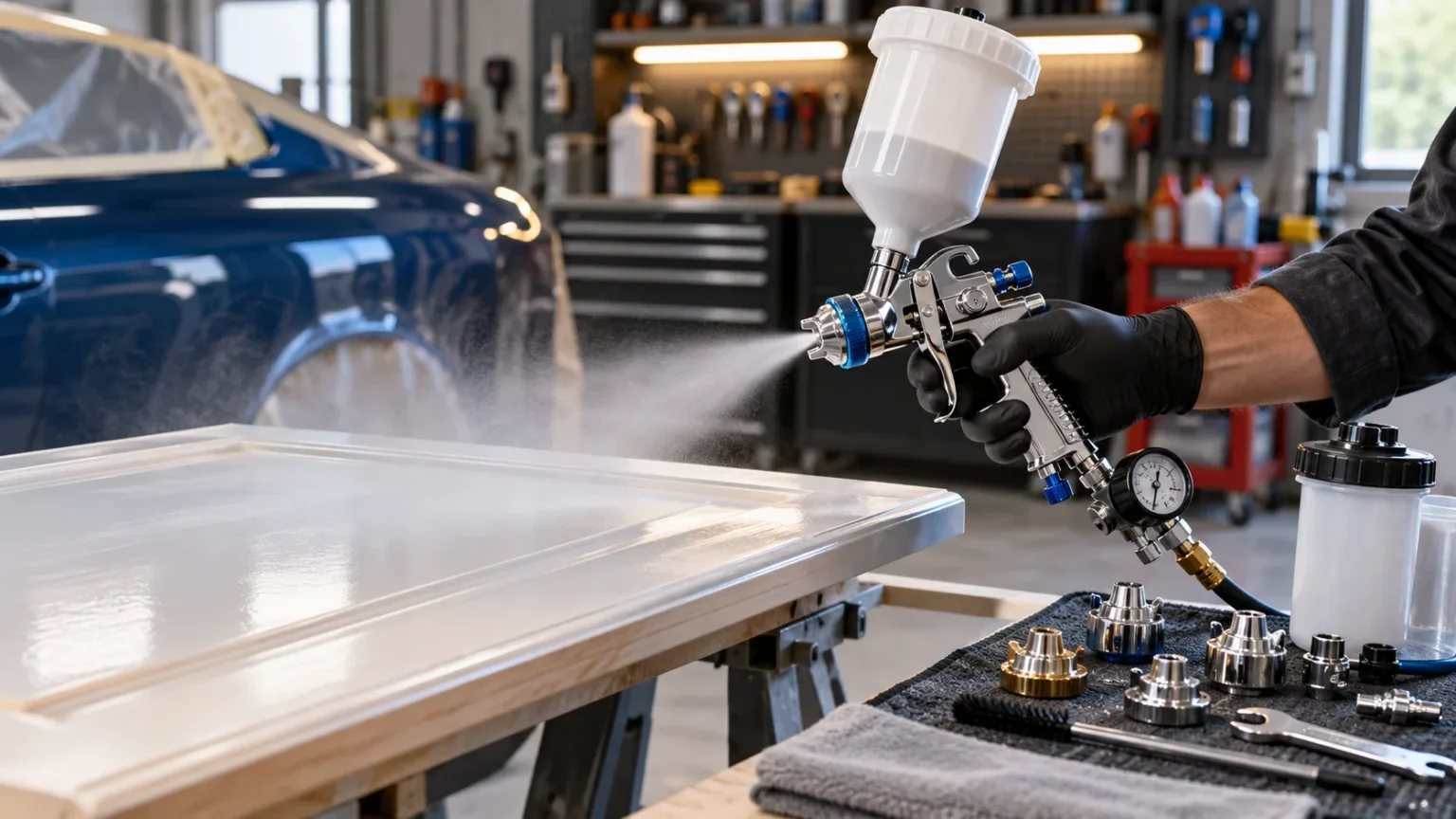
An HVLP spray gun is a popular painting tool used to achieve smooth, even finishes on different surfaces. Whether you are painting furniture, cabinets, wooden doors, or automotive parts, this equipment helps distribute coatings with greater control than many conventional spraying methods. Its efficient paint application makes it useful for DIY enthusiasts and professional painters.
HVLP stands for High Volume, Low Pressure, which describes how the spray gun uses a large amount of air at relatively low pressure to atomize paint. This approach helps reduce overspray and improve transfer efficiency when the equipment is properly adjusted. As a result, users can achieve consistent coverage while reducing unnecessary material waste.
Choosing the right HVLP spray gun requires understanding its features, applications, operating requirements, and maintenance needs. This guide explains how HVLP spray guns work, their advantages and limitations, and the important factors to consider before buying one for your painting projects.
What Is an HVLP Spray Gun?
An HVLP spray gun is a painting device designed to atomize liquid coatings using high air volume and relatively low air pressure. Unlike traditional high-pressure spray guns, HVLP systems are designed to transfer more coating onto the target surface under suitable conditions. This controlled application helps produce smoother finishes while reducing excessive overspray during painting projects.
HVLP spray guns are commonly used for applying paints, stains, primers, sealers, and clear coats. They are especially popular in woodworking, furniture restoration, cabinet finishing, and automotive refinishing. However, their performance depends on factors such as coating viscosity, spray tip size, air supply, and the operator’s ability to maintain consistent spraying techniques.
Several types of HVLP spray systems are available, including turbine-powered units and spray guns connected to air compressors. Each system has different operating requirements, portability characteristics, and performance capabilities. Understanding these differences helps buyers identify equipment suited to their specific projects instead of choosing a spray gun based entirely on price or appearance.
How Does an HVLP Spray Gun Work?
An HVLP spray gun works by combining compressed or turbine-generated air with liquid paint to create a controlled spray pattern. As air moves through the spray gun, it helps break the coating into fine droplets. These droplets travel toward the target surface, creating a relatively even layer when the equipment is correctly adjusted and operated.
The spray gun usually contains a paint container, fluid nozzle, needle, air cap, trigger, and adjustment controls. When the trigger is pressed, paint flows toward the nozzle and mixes with moving air. The air cap shapes the spray pattern, while adjustable controls help regulate paint flow and, on certain models, the amount of air supplied.
Successful paint application depends on balancing air delivery, coating thickness, and fluid flow. Excessively thick paint may produce uneven atomization, while incorrect settings can lead to runs, rough surfaces, or unnecessary overspray. Following the coating manufacturer’s instructions and testing the spray pattern before painting helps achieve more consistent results.
Different Types of HVLP Spray Guns
HVLP spray guns are available in several configurations designed for different painting requirements. The main differences involve how air is supplied, how paint enters the gun, and the size of the overall system. Understanding these variations makes it easier to compare equipment based on performance, convenience, and suitability for particular coating applications.
Turbine HVLP systems generate airflow through an electric turbine, eliminating the need for a separate workshop air compressor. They are commonly available as portable systems suitable for furniture, woodworking, and home improvement projects. Depending on their specifications, turbine systems may support different coating materials, although some require careful viscosity adjustments for proper atomization.
Compressor-fed HVLP spray guns rely on an external air compressor capable of supplying sufficient airflow. These systems are commonly used in workshops and professional finishing environments where suitable compressors are already available. Gravity-feed and pressure-feed configurations are also available, with each offering different advantages for material handling, capacity, and spraying orientation.
Common Uses of an HVLP Spray Gun
HVLP spray guns are widely used in furniture painting because they provide controlled coating application across detailed wooden surfaces. Chairs, tables, cabinets, shelves, and decorative pieces can benefit from a consistent spray pattern. Their ability to reach corners and shaped components makes them useful for furniture restoration projects that require a clean, attractive finish.
Another common application involves interior woodwork, including doors, trim, molding, and kitchen cabinets. HVLP systems can apply suitable primers, paints, and protective coatings without the visible brush marks associated with some traditional painting techniques. However, proper surface preparation and material selection remain essential for achieving durable results that resist peeling or premature wear.
Automotive refinishing, hobby projects, and specialized workshop applications also use HVLP spray technology. Suitable equipment can apply automotive basecoats, clear coats, and other compatible finishing materials. Because certain coatings release hazardous vapors or contain dangerous chemical components, automotive spraying requires appropriate professional controls, protective equipment, and a suitable spray environment.
Key Features of a Good HVLP Spray Gun
An effective HVLP spray gun should provide adjustable controls that allow users to manage coating delivery and spray pattern characteristics. Fluid adjustment helps regulate the amount of paint released through the nozzle. Pattern adjustment changes the shape or width of the spray, making it easier to work on broad surfaces or narrower sections.
Nozzle and needle quality are also important because these components influence paint atomization and consistency. Different nozzle sizes support different coating viscosities and application requirements. A suitable nozzle helps distribute the material evenly, while durable components can improve equipment reliability and reduce maintenance problems during repeated painting projects.
Ergonomic design, container capacity, and cleaning accessibility are additional features worth examining. A comfortable handle and balanced weight can help reduce fatigue during extended painting sessions. Removable fluid passages and accessible components simplify cleaning, which is important because dried coating material can interfere with spray patterns and shorten the equipment’s useful life.
Benefits of Using an HVLP Spray Gun
One of the main advantages of HVLP spray technology is improved transfer efficiency compared with some conventional high-pressure spraying methods. By delivering coatings at lower atomizing pressure, these systems can reduce the amount of paint that misses the target surface. Actual efficiency depends on equipment design, coating properties, spray settings, and operator technique.
HVLP spray guns can also produce smooth, attractive finishes when paired with suitable coating materials. Their controlled spray patterns make them useful for cabinets, furniture, trim, and detailed surfaces that require consistent coverage. Compared with brushing or rolling, spraying can reduce visible application marks, although surface preparation and technique significantly influence final appearance.
Another benefit is the versatility offered by compatible HVLP equipment and accessories. Many systems support a range of coating products, including selected stains, lacquers, primers, and paints. Nevertheless, compatibility varies between models, and not every spray gun can handle thick materials without adjustments or manufacturer-approved thinning procedures.
HVLP Spray Gun vs Conventional Spray Gun
HVLP and conventional spray guns differ mainly in their atomizing air pressure and coating transfer characteristics. Conventional spray guns often use higher air pressure to break paint into fine droplets. HVLP systems operate with lower atomizing pressure and substantial airflow, which can improve transfer efficiency and reduce overspray under appropriate operating conditions.
Conventional spray guns may offer effective atomization and application speed for certain coatings and production requirements. However, their higher-pressure operation can produce greater overspray in some situations. HVLP equipment generally emphasizes controlled application and material efficiency, making it attractive for furniture finishing, detailed work, and environments where reducing wasted coating is important.
Neither technology automatically produces better results in every application because equipment performance depends on the coating and spraying conditions. Some materials require specialized spray systems, particular nozzle arrangements, or different atomization methods. Buyers should compare coating compatibility, airflow requirements, finish quality, and practical operating costs rather than assuming one spray technology suits every project.
HVLP Spray Gun vs Airless Paint Sprayer
HVLP spray guns and airless paint sprayers use different methods to apply coatings. HVLP equipment uses air to atomize paint, while airless sprayers force coating material through a small nozzle at very high fluid pressure. These differences influence application speed, spray control, coating compatibility, and the types of projects each system handles effectively.
Airless paint sprayers are commonly used for large walls, exterior surfaces, fences, and extensive painting projects. Their high material delivery rate can make them efficient when covering broad areas. HVLP spray guns generally provide more controlled application for detailed finishing work, such as cabinets, furniture, trim, and smaller components requiring a refined appearance.
Choosing between these tools depends on the project’s size and finishing requirements. Airless systems can be practical for applying substantial quantities of coating across large surfaces. HVLP systems are often preferable when precise control and minimizing overspray matter, although actual results depend on the specific equipment and its operating settings.
How to Choose the Right HVLP Spray Gun
Choosing the right HVLP spray gun begins with identifying the types of painting projects you expect to complete. Furniture restoration, cabinet finishing, and automotive refinishing may require different equipment specifications. Understanding the surfaces, coating materials, and desired finish quality helps narrow the available options and prevents unnecessary spending on features that may not be useful.
Air supply requirements are particularly important when comparing compressor-powered HVLP spray guns. Some models require substantial airflow, measured in cubic feet per minute, to operate effectively. Buyers should compare the manufacturer’s airflow specifications with their existing compressor’s actual delivery capacity rather than relying only on tank size or maximum pressure ratings.
Budget, maintenance requirements, and replacement part availability also influence long-term value. A moderately priced spray gun with dependable components and accessible spare parts may provide better value than an expensive model with unnecessary features. Comparing warranty coverage, customer support, cleaning requirements, and material compatibility helps buyers make more informed purchasing decisions.
Understanding HVLP Spray Gun Nozzle Sizes
Nozzle size plays an important role in determining how an HVLP spray gun handles different coating materials. Smaller openings generally suit thinner liquids, while larger openings can accommodate materials with higher viscosity. Selecting an unsuitable nozzle may affect atomization, material flow, and finish quality, even when other equipment settings are correctly configured.
Many general-purpose HVLP spray guns offer nozzle sizes around 1.3 mm, 1.4 mm, 1.5 mm, and 1.8 mm. Smaller sizes are commonly associated with fine finishing applications, while larger options may suit selected primers and thicker coatings. These are general categories rather than universal recommendations, because coating manufacturers establish specific equipment requirements for their products.
Interchangeable nozzle systems provide additional versatility for users working with different compatible coatings. Before purchasing a spray gun, check whether replacement nozzles and matching needles are readily available. Manufacturer compatibility information is especially important because similar-looking parts from different equipment brands may not fit correctly or deliver the expected spraying performance.
Gravity Feed vs Siphon Feed HVLP Spray Guns
Gravity-feed HVLP spray guns feature a paint container positioned above the spraying mechanism. Gravity assists the movement of coating material toward the nozzle, which can support consistent fluid delivery. These designs are commonly used for furniture finishing, automotive applications, and smaller painting projects where controlled material application and convenient cleaning are important.
Siphon-feed spray guns typically have a paint container attached beneath the main body. Their design uses pressure differences to draw coating material upward into the spraying mechanism. Bottom-mounted containers may offer greater capacity on certain models, making them practical for applications involving more extensive surfaces or repeated coating sessions.
Both configurations have advantages depending on the user’s working environment and coating requirements. Gravity-feed systems are often appreciated for efficient material handling and their suitability for smaller quantities of paint. Siphon-feed options may appeal to users who prefer larger containers, although weight distribution, cleaning requirements, and available accessories should also influence equipment selection.
Factors That Affect HVLP Spray Gun Performance
Several factors influence the quality of the finish produced by an HVLP spray gun. Coating viscosity, equipment condition, nozzle compatibility, and air supply consistency all affect atomization. Even a high-quality spray gun may produce disappointing results when the selected coating does not match the equipment’s technical specifications or intended application.
Air quality is another important consideration for compressor-powered spray systems. Moisture, oil contamination, or inconsistent airflow can interfere with coating performance and create visible surface imperfections. Professional finishing environments commonly use appropriate air treatment systems to maintain consistent operating conditions and reduce problems associated with contaminated compressed air.
Environmental conditions also influence coating appearance and drying behavior. Temperature, humidity, dust, and ventilation can affect how coatings settle and cure on a surface. Product manufacturers provide technical information about suitable application conditions, and professional painting environments use additional controls to manage exposure, contamination, and finish consistency.
Common HVLP Spray Gun Problems
Uneven spray patterns are among the most common problems associated with HVLP spray equipment. Possible causes include incompatible coating materials, restricted fluid passages, worn components, or insufficient airflow. These issues can result in inconsistent coverage, visible texture differences, and surfaces that do not meet the expected finishing standard.
Paint runs, orange-peel texture, and rough finishes are other problems that may appear during coating applications. Such defects can develop when environmental conditions, material properties, or equipment characteristics are unsuitable. Understanding these potential causes helps buyers appreciate why coating compatibility and equipment specifications matter as much as the spray gun’s purchase price.
Maintenance requirements should also be considered when evaluating potential equipment problems. Dried coating residue, damaged seals, and worn needles can affect long-term performance. Equipment showing persistent problems should be examined according to the manufacturer’s maintenance guidance, with repairs involving pressurized or hazardous materials handled by appropriately trained adults or professionals.
Maintenance and Safety Considerations
Regular maintenance helps preserve the performance and reliability of an HVLP spray gun. Manufacturers generally recommend inspecting components, checking seals, and keeping coating passages free from accumulated residue. Maintenance procedures vary depending on the spray gun design and coating materials, making the equipment manual an important source of information.
Painting also involves safety considerations that should not be overlooked. Spray mists and coating vapors can be harmful, particularly when products contain solvents or other hazardous ingredients. Suitable ventilation, professional respiratory protection where required, and compliance with coating safety documentation are essential; some materials should only be sprayed in properly equipped professional facilities.
Young or inexperienced users should not operate spray equipment involving hazardous coatings, pressurized systems, or unfamiliar chemicals without appropriate adult supervision and professional guidance. Water-based products are not automatically harmless when atomized into airborne droplets. Choosing safer project methods and understanding the manufacturer’s safety restrictions should always take priority over achieving a particular decorative finish.
Is an HVLP Spray Gun Worth Buying?
An HVLP spray gun can be a worthwhile investment for people who regularly complete furniture finishing, cabinet painting, or other detailed coating projects. Its controlled application and potential for reduced overspray offer practical advantages compared with certain conventional spraying systems. However, purchasing equipment is most beneficial when its capabilities closely match the intended work.
Occasional home improvement projects may not justify the expense of a complete HVLP spraying system. Buyers should consider additional costs associated with compatible air supplies, replacement components, maintenance products, and appropriate safety equipment. For small decorative tasks, simpler painting methods may provide acceptable results without requiring specialized machinery or additional workspace arrangements.
For workshops and professional finishing applications, durable HVLP equipment can provide long-term value through consistent results and efficient material use. Buyers should prioritize reliability, coating compatibility, and appropriate safety standards rather than choosing solely by price. Understanding both the advantages and limitations of HVLP technology helps determine whether the equipment is suitable for a particular situation.
Conclusion
An HVLP spray gun is a versatile finishing tool used for furniture, cabinets, woodwork, and selected automotive applications. Its high-volume, low-pressure design supports controlled coating application and can reduce overspray compared with some traditional methods. Different configurations, nozzle sizes, and air supply requirements make equipment selection an important part of achieving satisfactory results.
When comparing HVLP spray guns, consider material compatibility, airflow requirements, adjustability, build quality, and maintenance needs. Gravity-feed and siphon-feed designs offer different advantages, while turbine and compressor-powered systems suit different working environments. Selecting equipment based on real project requirements is generally more useful than focusing exclusively on brand recognition or advertised features.
A suitable HVLP spray gun can provide dependable performance when used in an appropriate professional or supervised environment. Understanding the equipment’s limitations, safety requirements, and maintenance responsibilities helps protect both users and the quality of finished surfaces. Careful comparison of specifications and long-term operating costs will support a more informed purchasing decision.
Frequently Asked Questions
What is an HVLP spray gun used for?
An HVLP spray gun is commonly used for painting furniture, cabinets, wooden doors, trim, and selected automotive surfaces. It distributes compatible coatings through a controlled spray pattern that can create smooth finishes with reduced overspray.
Is an HVLP spray gun better than a regular spray gun?
HVLP spray guns can offer better transfer efficiency and reduced overspray compared with some conventional high-pressure spray guns. However, the best option depends on the coating material, project requirements, equipment specifications, and desired finish.
Can you use regular paint in an HVLP spray gun?
Some ordinary paints are compatible with HVLP spray systems, while others require specialized equipment. Compatibility depends on coating viscosity, nozzle specifications, and manufacturer requirements, so not every paint is suitable for every spray gun.
Do HVLP spray guns need an air compressor?
Not all HVLP spray guns require a separate air compressor. Compressor-powered models use external compressed air, while turbine HVLP systems generate their own airflow through an integrated or separate electric turbine unit.
What should you look for when buying an HVLP spray gun?
Important considerations include nozzle compatibility, airflow requirements, adjustable controls, container capacity, build quality, and replacement part availability. Buyers should also evaluate safety requirements, maintenance costs, warranty coverage, and suitability for their intended coating applications.