PVC pipes are widely used in plumbing, irrigation, drainage, and home improvement projects because they are lightweight, durable, and affordable. However, cutting these pipes accurately requires the right equipment to achieve clean edges and proper fittings. A PVC pipe cutter makes this process easier by providing controlled cuts without requiring complicated machinery or extensive experience.
Choosing the best PVC pipe cutter depends on several factors, including pipe diameter, material thickness, cutting frequency, and available workspace. Different cutters offer unique advantages for homeowners, plumbers, and construction professionals. Understanding the available types, features, and maintenance requirements can help you select a reliable tool for your next project.
What Is a PVC Pipe Cutter?
A PVC pipe cutter is a specialized hand tool or powered device designed to cut polyvinyl chloride pipes accurately. Unlike traditional saws, many dedicated pipe cutters use sharp blades or cutting wheels to produce controlled cuts. These tools are commonly used during plumbing installation, irrigation system repairs, and general construction projects. Their primary purpose is to create properly sized pipe sections that connect securely with compatible fittings.
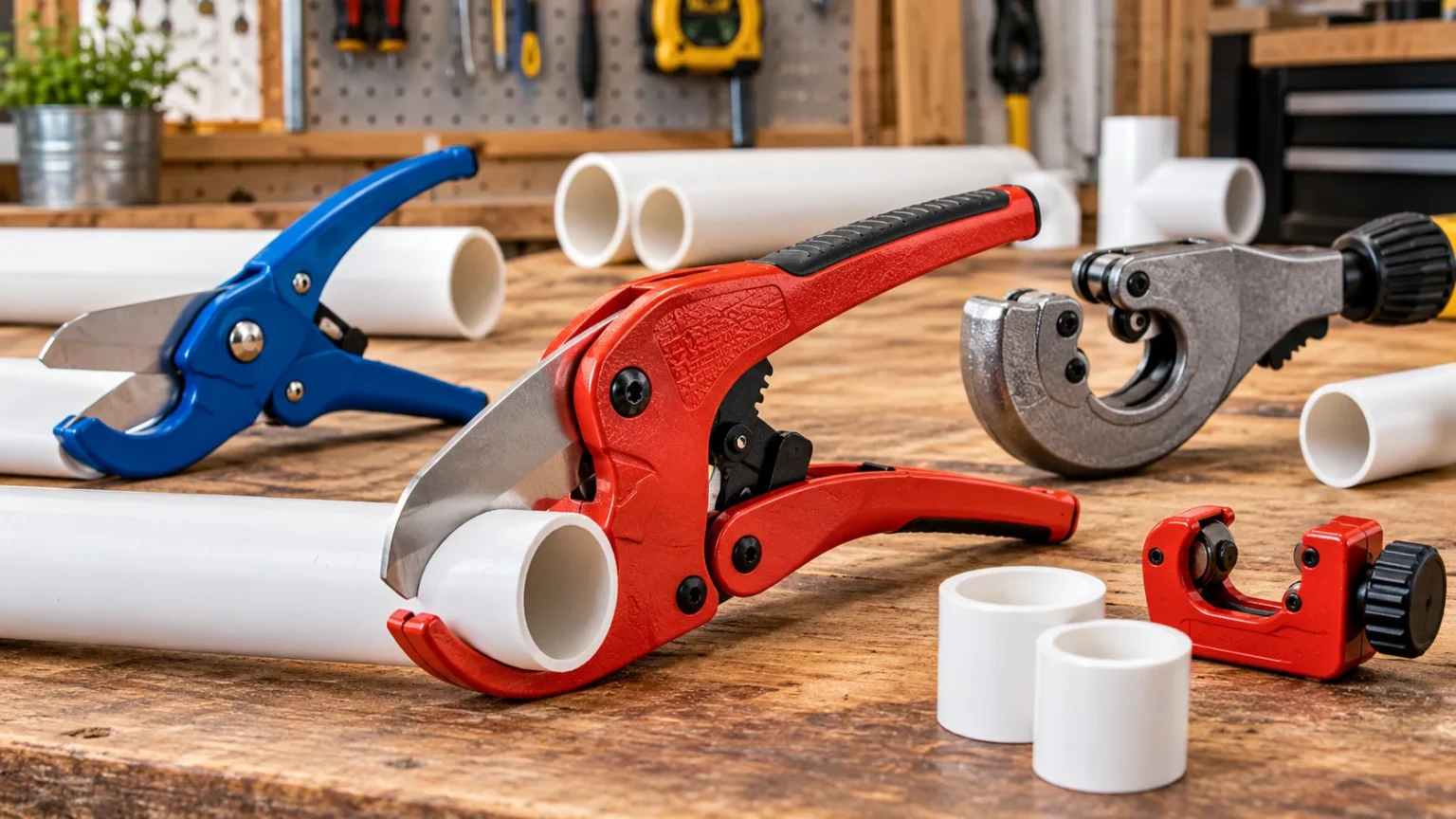
PVC pipe cutters come in different designs to accommodate various pipe diameters and installation requirements. Some models feature ratcheting mechanisms, while others use rotating cutting wheels or powered blades. Compact handheld cutters are suitable for smaller projects, whereas larger tools handle thicker pipes and frequent cutting tasks. Selecting the correct model helps improve cutting accuracy and overall working efficiency.
The effectiveness of a PVC pipe cutter depends on its blade quality, cutting capacity, and compatibility with the pipe material. A tool designed for flexible plastic tubing may not perform well on thick, rigid PVC pipe. Similarly, cutters intended for smaller diameters cannot safely accommodate oversized pipes. Checking manufacturer specifications before purchasing helps ensure that the cutter matches your intended applications.
Types of PVC Pipe Cutters
Several types of PVC pipe cutters are available, each designed for different cutting requirements and working conditions. Ratcheting cutters are popular for smaller rigid plastic pipes because they offer controlled cutting through repeated handle movements. Wheel-style cutters use a rotating mechanism to gradually separate pipe material. Powered cutting tools are often preferred when working with larger diameters or completing numerous cuts.
Scissor-style PVC cutters operate using a sharp blade that closes against a supporting surface. Their simple design makes them convenient for suitable smaller plastic pipes and tubing. Ratcheting models provide additional mechanical advantage, allowing users to cut through compatible materials with less continuous gripping force. Both options are commonly found in household toolboxes and professional plumbing equipment collections.
For larger projects, rotary cutters, dedicated pipe-cutting machines, and suitable saws provide additional cutting options. These tools accommodate different pipe sizes and may offer greater versatility in demanding environments. However, cutting capacity, portability, and finishing requirements vary significantly between designs. Understanding these differences makes it easier to choose equipment that provides accurate results without unnecessary expense.
Ratcheting PVC Pipe Cutters
Ratcheting PVC pipe cutters are among the most commonly used tools for cutting small and medium-sized plastic pipes. They feature a sharp blade connected to a mechanism that advances through repeated handle squeezes. This design provides increased cutting leverage without requiring one continuous movement. Many models are suitable for residential plumbing, irrigation systems, and basic home improvement projects.
One major advantage of ratcheting cutters is their ability to produce controlled cuts with relatively little equipment. Their compact design makes them useful in locations where larger cutting tools would be difficult to position. High-quality models feature comfortable handles, sturdy frames, and replaceable cutting blades. These characteristics can improve convenience when completing repeated pipe installations.
However, ratcheting cutters have limitations depending on the thickness and condition of the pipe. Some models may deform thin-walled materials or struggle with larger rigid pipes. Cutting performance also depends on blade sharpness and proper alignment. Choosing a cutter specifically rated for the pipe’s outside diameter and material helps reduce the risk of damaged or uneven cuts.
Scissor-Style PVC Pipe Cutters
Scissor-style PVC pipe cutters feature two handles that bring a cutting blade toward a supporting jaw. Their straightforward mechanism resembles heavy-duty scissors but is designed for compatible plastic piping. These cutters are usually lightweight, compact, and easy to store. They work particularly well for smaller-diameter tubing and suitable thin-walled plastic pipes.
Homeowners often appreciate scissor-style cutters because they are simple to operate and require minimal setup. Their basic construction may also make them more affordable than advanced ratcheting or powered models. Many designs include ergonomic handles that support controlled hand movements. For occasional household maintenance, a suitable scissor-style cutter can provide an economical solution.
However, these cutters may require greater hand strength when cutting thicker or more rigid materials. Attempting to cut pipes beyond the manufacturer’s recommended capacity can damage the blade or deform the pipe. Smaller handles may also become uncomfortable during repetitive tasks. Comparing cutting specifications and grip comfort is important before selecting this type of tool.
Rotary and Wheel-Type PVC Pipe Cutters
Rotary PVC pipe cutters use a cutting wheel or circular cutting mechanism that travels around the pipe. The user gradually increases cutting pressure as the tool rotates around the pipe’s circumference. This process can produce controlled cuts when the cutter is designed for the material. Certain models are especially useful for larger pipes that exceed the capacity of handheld blade cutters.
One advantage of rotary cutters is that they distribute the cutting action around the pipe rather than pushing a single blade through its entire diameter. Depending on the design, this can reduce certain forms of pipe distortion. However, some cutting-wheel tools create internal ridges that must be removed. Proper finishing remains necessary before installing fittings or connecting pipe sections.
Rotary cutters also require enough clearance around the pipe to complete the cutting movement. This can make them less convenient in narrow spaces or locations close to surrounding structures. Their suitability for PVC should always be confirmed because some wheel cutters are designed specifically for metal pipes. Using a material-compatible model helps achieve better results while protecting the cutting mechanism.
Electric and Powered PVC Pipe Cutters
Electric PVC pipe cutters are designed to reduce manual effort during frequent or demanding cutting tasks. Depending on the model, they may use powered blades, specialized cutting mechanisms, or motor-driven equipment. These tools are commonly associated with professional plumbing, fabrication, and larger construction projects. Their main advantage is the ability to handle repetitive work with greater consistency.
Battery-powered pipe cutters provide portability for professionals working at different installation locations. Corded cutting equipment can also be useful when continuous power is available. Some specialized machines handle larger pipe diameters and thicker materials than ordinary handheld cutters. However, cutting capacity and compatibility vary considerably, making product specifications especially important.
Powered tools are generally more expensive and require additional attention to operating instructions and safety procedures. They may also create plastic debris, sharp edges, or noise during operation. Users should follow manufacturer guidance regarding eye protection, workpiece support, and safe handling. For occasional household projects, a quality manual cutter may be more practical and cost-effective.
How to Choose the Right PVC Pipe Cutter
Choosing the right PVC pipe cutter begins with identifying the pipe sizes and materials you expect to cut. Most manufacturers specify a maximum outside diameter rather than the pipe’s nominal plumbing size. This distinction matters because nominal pipe measurements do not always match actual outside dimensions. Selecting a cutter with sufficient rated capacity helps prevent unnecessary strain and poor cutting performance.
Consider how frequently you will use the cutter and the types of projects you typically complete. A lightweight ratcheting cutter may be suitable for occasional repairs and home irrigation work. Professional plumbers handling repeated installations may benefit from durable tools with replaceable blades and comfortable grips. Larger construction projects may justify specialized equipment capable of processing bigger pipe sections efficiently.
Budget, storage space, maintenance needs, and replacement parts should also influence your decision. An inexpensive cutter may be adequate for occasional use, but frequent work often benefits from stronger construction. Look for clearly stated material compatibility and realistic cutting specifications. Comparing these practical features helps identify a tool that offers dependable performance without paying for unnecessary capabilities.
Choosing a PVC Pipe Cutter Based on Pipe Size
Pipe diameter is one of the most important considerations when selecting a PVC cutter. Small-diameter pipes and compatible plastic tubing can often be handled by compact scissor-style or ratcheting tools. Medium-sized rigid pipes may require stronger ratcheting mechanisms or specialized rotary cutters. Larger pipes commonly require saws or professional cutting equipment designed for their dimensions.
Always check the actual outside diameter of the pipe before selecting a cutting tool. PVC pipes are commonly identified by nominal sizes, which can differ significantly from their measured external dimensions. For example, a nominal 1-inch Schedule 40 PVC pipe typically has an outside diameter of approximately 1.315 inches. A cutter must accommodate this actual measurement to work correctly.
Pipe wall thickness also matters because it influences the amount of resistance encountered during cutting. Schedule 80 PVC generally has thicker walls than Schedule 40 pipe of the same nominal size. A cutter suitable for one may not necessarily perform equally well on the other. Reviewing both diameter capacity and material specifications helps ensure the selected tool is appropriate.
Important Features to Look for in a PVC Pipe Cutter
Blade quality plays a major role in the cutting performance and service life of a PVC pipe cutter. High-quality hardened steel blades are common in many manual cutting tools. Some manufacturers offer coated blades or specialized cutting edges intended to improve durability. Replaceable blades are particularly useful because they allow continued use without purchasing an entirely new cutter.
Handle design and overall construction should also be considered before making a purchase. Comfortable grips can improve control and reduce hand discomfort during repeated cutting tasks. A sturdy frame helps maintain blade alignment when working with compatible rigid pipes. Features such as locking mechanisms and smooth ratcheting action may provide additional convenience during storage and operation.
Other useful features include clearly marked cutting capacities and accessible replacement components. A compact tool may be preferable for working beneath sinks or inside narrow service spaces. Professionals may prioritize durability and ease of maintenance over minimum weight. Evaluating these features alongside the intended application helps narrow down the most suitable options.
PVC Pipe Cutter vs Hacksaw: Which Is Better?
PVC pipe cutters and hacksaws can both cut plastic pipes, but they operate differently. Dedicated cutters use blades or wheels specifically designed for controlled pipe cutting. Hacksaws use a toothed blade that moves back and forth through the material. Each option has advantages depending on pipe diameter, accessibility, cutting volume, and the equipment already available.
A dedicated PVC cutter is often convenient for smaller pipes because it requires relatively little setup. Suitable blade cutters can also produce clean cuts with minimal loose plastic debris. Hacksaws are generally more versatile when cutting larger pipes or shapes that do not fit a conventional cutter. However, saw-cut edges often require additional deburring and surface preparation.
The better choice depends on the specific project rather than one tool being universally superior. Homeowners completing repeated small pipe cuts may prefer a compact ratcheting cutter. People working with oversized or unusually shaped pipes may find a suitable saw more practical. Regardless of the method, accurate measurement and proper edge preparation remain essential for reliable pipe connections.
Common Uses of PVC Pipe Cutters
PVC pipe cutters are frequently used in residential plumbing projects involving water supply, drainage, and other compatible plastic piping systems. They help prepare pipe sections for installation, replacement, or repair. Accurate cuts are important because pipe ends must fit properly into compatible fittings. A suitable cutter can make routine plumbing work more manageable and efficient.
Irrigation and garden watering systems are another common application for PVC cutting tools. Gardeners and landscaping professionals often need pipes of different lengths to accommodate sprinkler layouts and water distribution networks. Compact cutters can be convenient when working outdoors or modifying existing irrigation lines. Their portability makes them useful for projects involving multiple cutting locations.
PVC cutters may also be used for furniture frames, craft projects, storage organizers, and other non-plumbing applications. These projects often involve assembling lightweight structures from plastic pipe sections. A clean cut helps maintain accurate dimensions and improves the finished appearance. Choosing a tool compatible with the specific pipe material remains important even for decorative projects.
How to Cut PVC Pipe Correctly
Accurate cutting begins with measuring the required pipe length and marking the intended cutting position. A clear measurement helps prevent material waste and fitting problems later in the project. Ensure the pipe is properly supported and free from movement before cutting. Always confirm that the selected tool is suitable for the pipe’s diameter, thickness, and material.
Position the cutter squarely against the marked location and follow its recommended operating method. Ratcheting tools generally advance the blade through controlled handle movements, while rotary cutters follow a different cutting process. Avoid forcing the mechanism beyond its intended capacity. Keeping the tool properly aligned helps reduce uneven cuts and unnecessary damage.
After cutting, inspect the pipe end for burrs, sharp edges, or material deformation. Remove burrs using an appropriate deburring tool and follow the fitting manufacturer’s preparation requirements. For solvent-welded joints, proper preparation is especially important for secure connections. Never work on pressurized plumbing, and follow applicable installation and safety requirements throughout the project.
Common PVC Pipe Cutting Mistakes to Avoid
Using the wrong type of cutter is a common mistake that can result in damaged tools or poor-quality pipe ends. Some cutters are intended for flexible tubing rather than rigid PVC. Others have limited cutting capacities that make them unsuitable for larger diameters. Checking compatibility before starting helps reduce avoidable problems and unnecessary replacement costs.
Poor measurement and incorrect cutter alignment can also affect the quality of a finished installation. An angled cut may prevent the pipe from seating correctly inside a fitting. Applying excessive force can deform certain pipes or damage the cutting mechanism. Taking time to align the tool properly supports cleaner, more consistent results.
Another mistake involves overlooking edge preparation after the pipe has been cut. Burrs and rough edges may interfere with fitting installation or contribute to problems in some piping systems. Using damaged or dull blades can also reduce cutting quality. Regular tool inspection and proper finishing techniques help improve reliability across different projects.
How to Maintain a PVC Pipe Cutter
Regular maintenance helps keep PVC pipe cutters functioning properly and extends their useful service life. After use, remove plastic debris and inspect the blade for visible damage or excessive wear. A clean cutting mechanism is less likely to develop operating problems caused by accumulated material. Always follow the manufacturer’s recommended cleaning instructions for the specific cutter design.
Blade sharpness is particularly important for maintaining smooth cutting performance. A dull blade may require greater force and increase the likelihood of pipe deformation. Some cutters feature replaceable blades that can be changed when they become worn. Replacement should follow the manufacturer’s instructions, using components designed for the exact tool model.
Proper storage also protects the cutter from unnecessary damage. Keep the tool in a dry location and use its locking mechanism when provided. Avoid exposing the cutting edge to impacts or storing it loosely among heavy equipment. Routine inspections and careful handling can help maintain accurate operation for future plumbing and home improvement projects.
How Much Does a PVC Pipe Cutter Cost?
PVC pipe cutter prices vary according to tool design, construction quality, cutting capacity, and brand. Basic manual cutters may cost approximately $10 to $20, while many ratcheting models fall within a broader $15 to $50 range. These are illustrative retail estimates rather than fixed market prices. Professional-grade tools and specialized equipment may cost considerably more.
High-capacity rotary cutters and powered cutting systems generally require a larger investment. Depending on specifications, some professional tools may cost $100 or several hundred dollars. Additional expenses can include replacement blades, batteries, chargers, or maintenance components. Comparing these costs with expected usage helps determine whether a premium cutter is financially worthwhile.
For occasional household repairs, a reliable manual cutter often provides sufficient performance at a reasonable price. Frequent professional use may justify paying more for durability, comfort, and convenient blade replacement. Purchasing a tool that matches the actual project requirements can prevent unnecessary spending. The best value usually comes from balancing cost, compatibility, and long-term reliability.
Conclusion
A PVC pipe cutter is a practical tool for preparing plastic pipes used in plumbing, irrigation, construction, and home improvement projects. Different designs, including ratcheting, scissor-style, rotary, and powered cutters, serve different purposes. Understanding how these tools operate helps homeowners and professionals select equipment that matches their specific cutting requirements.
Pipe diameter, material compatibility, blade quality, and cutting frequency should guide the selection process. A compact manual cutter may be sufficient for smaller household projects, while larger installations may require specialized equipment. Proper measuring, cutting alignment, and edge preparation also contribute to successful results. Choosing the correct tool can improve efficiency and reduce avoidable installation problems.
The right PVC pipe cutter should provide reliable performance, comfortable handling, and sufficient capacity for the intended application. Comparing features and following manufacturer instructions can help protect both the tool and the pipe material. With proper use and maintenance, a quality cutter can remain a valuable addition to a home or professional toolbox.
Frequently Asked Questions
What is the best type of PVC pipe cutter?
Ratcheting PVC pipe cutters are a practical choice for many small and medium-sized rigid plastic pipes. However, the best option depends on pipe diameter, wall thickness, cutting frequency, and manufacturer specifications.
Can you cut PVC pipe with a regular pipe cutter?
Some regular pipe cutters can cut PVC when specifically rated for plastic materials. However, cutters designed only for metal pipes may damage plastic surfaces or create unwanted deformation and internal ridges.
What size PVC pipe can a ratcheting cutter cut?
Ratcheting cutter capacities vary by model, with some accommodating pipes around 1 to 2 inches or larger in outside diameter. Always check the manufacturer’s maximum cutting capacity before selecting a tool.
Is a PVC pipe cutter better than a hacksaw?
A dedicated PVC cutter is often more convenient for smaller compatible pipes and can produce clean cuts with less debris. Hacksaws offer greater flexibility for larger pipes but usually require additional edge finishing.
How do you keep a PVC pipe cutter sharp?
Keep the blade clean, protect it from impacts, and avoid cutting unsuitable materials. Many PVC cutters use replaceable blades rather than requiring sharpening, so follow the manufacturer’s maintenance and replacement recommendations.