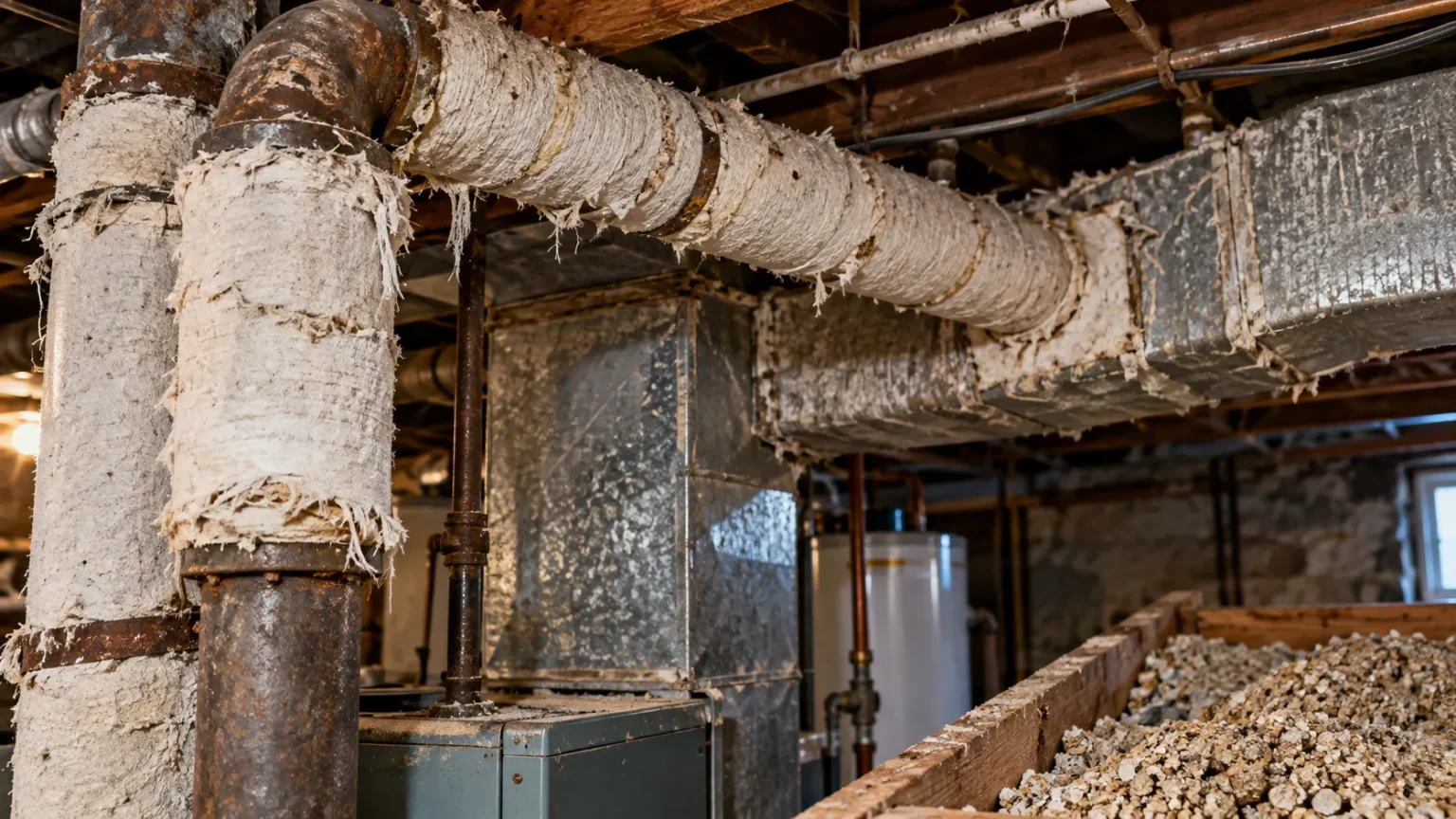
Asbestos insulation was commonly used in older buildings because of its ability to resist heat and provide fire protection. It appeared in homes, factories, schools, and commercial properties, particularly around pipes, boilers, ceilings, and heating equipment. However, identifying asbestos insulation can be difficult because it often resembles ordinary insulation materials.
Understanding what asbestos insulation looks like can help homeowners recognize potentially hazardous materials before beginning renovations or repairs. Its appearance varies depending on the product, location, and age of the building. Most importantly, asbestos cannot be reliably identified by appearance alone, and suspected materials should be left undisturbed until assessed by a qualified professional.
What Is Asbestos Insulation?
Asbestos insulation is a building material that contains naturally occurring mineral fibers known for their heat resistance and durability. Manufacturers historically added asbestos to insulation products because it could withstand high temperatures and resist fire. These properties made asbestos-containing insulation common in older heating systems, industrial facilities, and residential buildings. Its use has since been restricted or prohibited in many applications because of serious health risks.
Different forms of asbestos insulation were manufactured for specific purposes throughout the construction industry. Some products contained loose fibers, while others used asbestos within rigid boards, protective coatings, or pipe coverings. These materials could be installed in walls, ceilings, attics, and mechanical equipment areas. Their appearance depended on the manufacturing process and the other materials mixed with the asbestos fibers.
Asbestos becomes especially concerning when damaged or disturbed materials release microscopic fibers into the surrounding air. Breathing these fibers can increase the risk of serious diseases, including lung cancer, asbestosis, and mesothelioma. The fibers are generally too small to identify individually without specialized equipment. For this reason, professional laboratory testing is necessary to determine whether suspicious insulation actually contains asbestos.
What Does Asbestos Insulation Look Like?
Asbestos insulation can appear white, gray, off-white, brown, or even blue-gray depending on the material and its condition. Some older products have a fluffy or fibrous appearance, while others resemble hardened plaster or cement. Certain types look like thick cardboard, fabric wrapping, or textured boards. Because these appearances overlap with asbestos-free materials, visual characteristics should only raise suspicion rather than establish identification.
Loose asbestos insulation may resemble soft cotton, wool, or other fluffy insulating materials. Pipe insulation can appear as a thick covering wrapped around heating pipes, sometimes protected by painted fabric or a hardened outer layer. Insulating boards generally have flat, rigid surfaces with grayish or cream-colored finishes. Weathering, dust, paint, and previous repairs can make these materials even harder to recognize.
The location and approximate age of a building can provide useful context when evaluating suspicious insulation. Materials installed before asbestos restrictions became widespread deserve particular attention, especially in older mechanical systems. However, neither building age nor color can confirm the presence or absence of asbestos. A trained asbestos inspector can arrange appropriate sampling and laboratory analysis when testing is necessary.
What Does Asbestos Pipe Insulation Look Like?
Asbestos pipe insulation was widely used around older heating pipes, steam systems, and hot-water equipment. It often appears as a thick cylindrical covering surrounding the outside of a pipe. Some installations have a white or gray surface resembling plaster, while others are wrapped in fabric. Aging may cause the outer covering to appear discolored, cracked, or uneven.
Older pipe insulation sometimes contains multiple layers of insulating material beneath an external protective jacket. In certain installations, the covering may resemble corrugated cardboard or hardened cement. Pipe bends and joints can have irregularly shaped insulation that differs from straight sections. These variations make visual identification difficult, particularly when the insulation has been painted or repaired.
Suspected asbestos pipe insulation should never be cut, scraped, drilled, or pulled away for inspection. Damaged coverings may release hazardous fibers when disturbed, especially if the underlying material is friable. Homeowners should keep the area undisturbed and contact a qualified asbestos professional for an assessment. An inspection can determine whether testing, monitoring, encapsulation, or professional removal is appropriate.
What Does Asbestos Attic Insulation Look Like?
Asbestos-containing insulation may be present in some older attics, particularly where loose-fill materials were installed decades ago. Certain loose-fill asbestos products have a fluffy, fibrous appearance that resembles ordinary insulating wool. Other attic insulation materials may look granular, flaky, or lightweight. Their appearance alone cannot establish whether asbestos is present.
Vermiculite insulation is one material that deserves special attention in older homes because some historical vermiculite supplies were contaminated with asbestos. It commonly resembles small, lightweight, layered granules with gray, brown, or golden tones. The particles may appear shiny or accordion-like under ordinary lighting. Not all vermiculite contains asbestos, but suspicious installations should be treated cautiously.
Homeowners should avoid entering or disturbing attic areas containing insulation that may be contaminated with asbestos. Moving stored belongings, walking through insulation, or undertaking renovation work can disturb loose materials. A qualified professional can evaluate the insulation without creating unnecessary exposure. Until the material has been assessed, it is safer to leave it in place rather than attempt cleaning or removal.
What Does Asbestos Wall Insulation Look Like?
Asbestos-containing insulation was sometimes installed inside walls to provide heat resistance or fire protection. Depending on the application, it could appear as loose fibrous material, rigid insulating boards, or textured coatings. Some asbestos-containing boards have smooth gray surfaces, while others look slightly rough or porous. These materials may remain concealed behind plasterboard, decorative panels, or other wall finishes.
Asbestos insulating boards were historically used in partitions, service cupboards, and locations requiring fire-resistant construction materials. Their appearance may resemble ordinary fiber cement boards or other manufactured sheet products. They can have flat surfaces and relatively uniform thicknesses. However, modern asbestos-free products can look nearly identical, making visual comparisons unreliable.
Renovation projects can uncover older wall insulation that has remained hidden for many years. Drilling, demolition, and wall modifications may disturb previously intact asbestos-containing products. Homeowners planning structural changes should arrange a suitable asbestos assessment before work begins when suspicious materials may be affected. Professional identification helps prevent accidental exposure during construction activities.
What Does Asbestos Ceiling Insulation Look Like?
Asbestos-containing ceiling materials can appear in several forms depending on their original purpose. Some older buildings contain sprayed insulating coatings that have a rough, textured surface. These coatings may appear white, gray, or cream-colored and can resemble thick plaster. Their texture may become uneven or damaged as the surrounding building materials deteriorate.
Certain asbestos-containing ceiling boards were manufactured as flat panels for insulation and fire protection. They may resemble ordinary ceiling tiles or rigid building boards. Some products have painted surfaces that conceal their underlying composition. Textured decorative ceiling finishes can also contain asbestos, although many visually similar coatings are completely asbestos-free.
Ceiling materials deserve particular attention during lighting replacements, remodeling, and repair projects. Cutting openings or disturbing older surfaces can release dust from materials containing asbestos. Homeowners should not scrape suspected coatings or remove ceiling panels simply to examine them. A qualified asbestos inspector can determine whether professional testing is appropriate before renovation work continues.
What Color Is Asbestos Insulation?
Asbestos insulation does not have one specific color that makes it easy to recognize. Historically used asbestos minerals included white, brown, and blue varieties, but the finished insulation products often looked different. Manufacturing additives, protective coverings, paint, and aging influenced their appearance. As a result, potentially asbestos-containing insulation may be white, gray, tan, brown, or another color.
White asbestos, also known as chrysotile, was widely used in many historical construction materials. Brown asbestos, called amosite, was used in certain insulating boards and thermal insulation products. Blue asbestos, known as crocidolite, also appeared in some specialized insulation applications. However, these mineral names should not be used as a visual identification guide for manufactured products.
Many asbestos-containing materials have colors created by other ingredients rather than the asbestos fibers themselves. Painted pipe coverings, for example, can appear green, yellow, or another color unrelated to their mineral composition. Exposure to moisture, smoke, and dust may also change surface colors. Laboratory testing remains the dependable method for confirming whether a material contains asbestos.
How to Tell Asbestos Insulation From Regular Insulation
Distinguishing asbestos insulation from modern insulation is difficult because several materials share similar appearances. Fiberglass insulation commonly appears fluffy and may have pink, yellow, or white coloring. Mineral wool can look gray, brown, or fibrous, while cellulose insulation often resembles shredded paper. Older asbestos-containing products can overlap with some of these textures and colors.
Modern insulation materials are manufactured in different forms, including rolls, batts, loose fill, and rigid boards. Some products have labels identifying their manufacturers, materials, or installation specifications. Historical construction records may also provide information about when insulation was installed. However, missing labels and incomplete records make it difficult to identify older materials confidently.
If insulation appears suspicious, avoid touching it or attempting to distinguish it through physical inspection. Breaking a sample apart, rubbing its surface, or checking whether it produces dust can create unnecessary exposure. An accredited asbestos inspector can review the building’s history and determine whether laboratory analysis is needed. Professional testing provides evidence that appearance alone cannot offer.
Where Is Asbestos Insulation Commonly Found?
Asbestos insulation was historically used around boilers, furnaces, steam pipes, and other equipment exposed to high temperatures. These locations often required materials capable of protecting surrounding surfaces from excessive heat. Older mechanical rooms and heating systems may therefore contain asbestos-containing pipe coverings or insulating boards. The presence of similar materials in newer systems does not automatically indicate asbestos.
Some residential buildings also contain potentially asbestos-containing materials in attics, wall cavities, and ceiling spaces. Insulation around fireplaces, electrical equipment, and service areas may require additional attention. In commercial and industrial properties, asbestos-containing insulation was sometimes applied to structural components and large mechanical systems. The exact locations depend on the building’s age, construction methods, and past renovations.
Buildings constructed or renovated before local asbestos restrictions were introduced may have a greater likelihood of containing these materials. However, restrictions developed at different times across countries, and existing asbestos products may remain in place. Renovation histories are therefore important when assessing potential exposure. A professional building survey can help locate suspicious materials before repair or demolition projects begin.
Is Asbestos Insulation Dangerous?
Asbestos insulation can be dangerous when microscopic fibers become airborne and are inhaled. The greatest concern often involves damaged, deteriorating, or disturbed materials that release fibers easily. Long-term exposure is associated with serious respiratory diseases and certain cancers. Health effects may not become apparent until many years after exposure, making prevention especially important.
Not every asbestos-containing material presents the same immediate exposure risk. Intact materials that remain sealed and undisturbed may present a lower risk than loose or damaged insulation. However, this does not mean that homeowners should assume the material is safe to handle. Its condition, location, and likelihood of future disturbance should be evaluated by a qualified professional.
People who suspect asbestos exposure should avoid further contact with the material and seek appropriate professional advice. Anyone concerned about past exposure can discuss their circumstances with a healthcare professional. Medical evaluation may be useful when exposure history or symptoms justify further investigation. Preventing additional exposure remains the most important immediate precaution when suspicious insulation is discovered.
How to Identify Asbestos Insulation Safely
The safest way to identify asbestos insulation begins with recognizing materials that may require professional assessment. Consider the building’s age, previous renovation records, and the insulation’s location without disturbing the suspected material. Older pipe coverings, unusual loose-fill insulation, and certain insulating boards may warrant attention. None of these signs can confirm asbestos without appropriate testing.
A qualified asbestos inspector can evaluate suspicious insulation and determine whether samples should be collected. Professional sampling involves precautions intended to reduce the release of hazardous fibers. Samples are then examined by a qualified laboratory using recognized asbestos identification methods. The resulting analysis can establish whether asbestos is present and help guide decisions about further action.
Homeowners should avoid collecting asbestos samples themselves because improper handling can increase exposure risks. Ordinary household cleaning equipment and protective clothing are not substitutes for professional asbestos procedures. If testing is recommended, choose a properly trained and accredited inspector who understands applicable local regulations. This approach provides more reliable results while reducing the likelihood of unnecessary disturbance.
What to Do If You Find Suspected Asbestos Insulation
If you discover insulation that may contain asbestos, leave the material undisturbed and avoid unnecessary activity nearby. Do not attempt to remove, sweep, vacuum, or repair the suspicious material using household methods. Disturbing deteriorated insulation can release fibers that are difficult to see. Preventing additional disturbance is an important first step while arranging professional advice.
Contact a qualified asbestos inspector or appropriately licensed asbestos contractor to evaluate the situation. Describe where the insulation is located and whether it appears damaged or exposed. The professional can explain whether testing is necessary and identify suitable management options. Local requirements may determine which professionals are authorized to conduct inspections, repairs, or removal.
When asbestos is confirmed, complete removal is not always the only appropriate response. Depending on the material’s condition and location, professional management may involve leaving it undisturbed, enclosing it, or using an approved encapsulation method. Damaged or high-risk insulation may require specialist removal. The final decision should follow a professional risk assessment and applicable safety regulations.
Conclusion
Asbestos insulation can take many forms, including fluffy loose-fill material, thick pipe coverings, rigid boards, and textured ceiling coatings. Its color may range from white and gray to brown or blue-gray. Because ordinary building materials can have similar appearances, identifying asbestos through visual inspection alone is unreliable.
Older buildings are more likely to contain historical asbestos insulation, particularly around heating systems and other areas requiring fire protection. Damaged insulation can create serious health risks if microscopic fibers become airborne. Recognizing suspicious materials is useful, but homeowners should never disturb insulation simply to determine what it contains.
The safest approach is to leave potentially asbestos-containing insulation undisturbed and arrange professional assessment when necessary. Qualified inspectors and laboratory testing can provide reliable identification and guide appropriate management decisions. Understanding what asbestos insulation may look like helps homeowners recognize possible risks while prioritizing safe building maintenance and renovation practices.
Frequently Asked Questions
What does asbestos insulation look like in an old house?
Asbestos insulation in older houses may resemble fluffy white or gray material, thick pipe wrapping, or rigid insulating boards. However, appearance alone cannot confirm asbestos, so professional testing may be necessary.
Can you identify asbestos insulation by its color?
No, asbestos insulation cannot be reliably identified by color. Products may appear white, gray, brown, or other shades depending on manufacturing and aging. Laboratory testing is necessary for confirmation.
Does asbestos insulation look like fiberglass?
Some asbestos-containing insulation can resemble fiberglass or mineral wool because these materials may share fibrous textures. Visual similarities are not reliable evidence, and suspected asbestos should remain undisturbed until professionally assessed.
Is asbestos insulation dangerous if left alone?
Intact asbestos-containing insulation that remains undisturbed may present a lower exposure risk. However, damaged or deteriorating materials require professional assessment, especially when renovations or maintenance could release hazardous fibers.
Should you remove asbestos insulation yourself?
No, homeowners should not attempt to remove suspected asbestos insulation themselves. Improper removal can release hazardous fibers into the air. Qualified asbestos professionals can assess the material and recommend appropriate management or removal procedures.