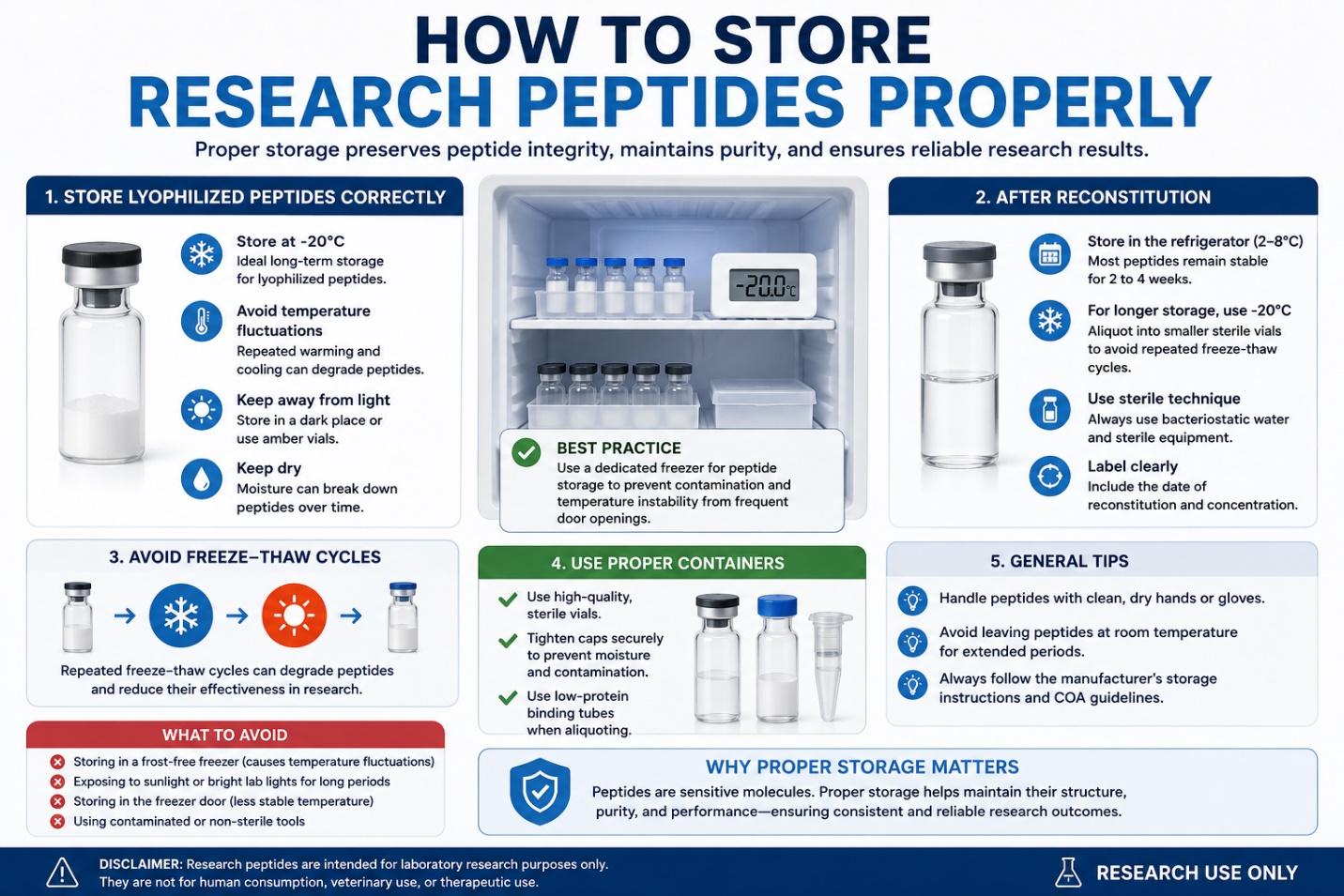
Research peptides are valuable materials used in laboratories across biotechnology, molecular biology, pharmacology, and other scientific fields. Because peptides are complex molecules, proper storage plays a critical role in maintaining their stability and quality. Even high-purity peptides can lose integrity if they are exposed to unsuitable environmental conditions such as excessive heat, moisture, or repeated freeze-thaw cycles.
Understanding the correct storage methods helps laboratories preserve peptide quality, improve experimental consistency, and reduce unnecessary product waste. While storage recommendations may vary depending on the specific peptide and manufacturer, there are several best practices that apply to most research-grade peptides.
In this guide, we’ll explain how to store research peptides properly and highlight the factors researchers should consider to protect their laboratory materials.
Why Proper Storage Matters
Peptides are made up of amino acids linked together by peptide bonds. These bonds can be affected by environmental conditions over time.
Improper storage may lead to:
- Reduced peptide stability
- Moisture absorption
- Chemical degradation
- Oxidation
- Lower experimental consistency
- Increased product waste
By following appropriate storage procedures, researchers can help preserve the integrity of their materials and maintain more reliable laboratory conditions.
Understand the Manufacturer’s Recommendations
Before storing any research peptide, always review the manufacturer’s storage instructions.
Different peptides have different stability characteristics, and storage recommendations may vary depending on:
- Peptide sequence
- Manufacturing process
- Product formulation
- Lyophilized or reconstituted form
- Intended laboratory use
Following the supplier’s guidance is one of the most effective ways to maintain product quality.
Store Lyophilized Peptides Correctly
Many research peptides are supplied as a lyophilized (freeze-dried) powder.
Lyophilization removes water from the product, helping improve long-term stability during storage.
For most lyophilized peptides:
- Keep containers tightly sealed.
- Store in a cool, dry location.
- Protect from humidity.
- Avoid direct sunlight.
- Follow the manufacturer’s recommended temperature range.
Because moisture is one of the biggest threats to peptide stability, minimizing exposure to humid air is essential.
Refrigeration for Short-Term Storage
When peptides will be used within a relatively short period, refrigeration is often recommended.
A laboratory refrigerator provides a stable environment that helps slow degradation while keeping products readily accessible for research activities.
Researchers should avoid frequently removing peptides from refrigerated storage unless necessary, as repeated temperature changes may affect long-term stability.
Freezing for Long-Term Storage
Many research laboratories store peptides in laboratory freezers for extended preservation.
Freezing helps slow many natural degradation processes and can improve long-term stability when performed correctly.
General recommendations include:
- Store at consistent temperatures.
- Minimize unnecessary freezer access.
- Use properly labeled storage containers.
- Avoid repeated thawing and refreezing.
Maintaining stable storage conditions is often more important than the exact storage temperature.
Protect Peptides from Moisture
Moisture is one of the most common causes of peptide degradation.
When moisture enters a peptide container, it may contribute to unwanted chemical changes that reduce product quality.
To minimize moisture exposure:
- Keep containers tightly closed.
- Open vials only when necessary.
- Avoid storing peptides in humid environments.
- Return products to recommended storage promptly after use.
Many laboratories also use desiccants inside storage containers to help control humidity.
Minimize Freeze-Thaw Cycles
Repeated freeze-thaw cycles can negatively affect peptide stability over time.
Every time a peptide is thawed and returned to frozen storage, it experiences environmental changes that may gradually reduce product quality.
To reduce this risk:
- Divide larger quantities into smaller aliquots before storage.
- Remove only the amount needed for each experiment.
- Avoid repeatedly thawing the same container.
Aliquoting is considered a best practice in many research laboratories.
Label Every Sample Clearly
Good laboratory organization helps prevent mistakes.
Every peptide container should be clearly labeled with information such as:
- Product name
- Batch number
- Date received
- Date opened
- Storage conditions
- Expiration or recommended use date (if provided)
Proper labeling supports inventory management and helps researchers track product history throughout long-term projects.
Protect Peptides from Light
Some peptides are sensitive to prolonged light exposure.
Although not every peptide requires special light protection, many laboratories store research materials in opaque containers or dark storage areas whenever recommended by the manufacturer.
Reducing unnecessary light exposure can help preserve product stability.
Use Clean Laboratory Practices
Storage is only one part of maintaining peptide quality.
Researchers should also follow good laboratory practices whenever handling research materials.
This includes:
- Wearing appropriate protective equipment.
- Using clean laboratory tools.
- Preventing cross-contamination.
- Following established laboratory protocols.
- Recording handling procedures when required.
Clean handling supports both product quality and experimental reproducibility.
Monitor Storage Equipment
Reliable storage equipment is essential for maintaining consistent environmental conditions.
Laboratories should regularly monitor:
- Refrigerator temperatures
- Freezer temperatures
- Humidity levels (where applicable)
- Equipment performance
- Backup power systems
Routine monitoring helps identify potential problems before they affect valuable research materials.
Choose a Trusted Research Peptide Supplier
Proper storage begins with receiving high-quality products.
Researchers often evaluate suppliers based on:
- High-purity research peptides
- Batch consistency
- Quality assurance procedures
- Certificates of Analysis (COAs)
- Reliable packaging
- Secure shipping methods
- Transparent product documentation
Working with a reputable supplier helps ensure peptides arrive in excellent condition before storage even begins.
Common Storage Mistakes to Avoid
Researchers should avoid several common storage errors, including:
- Leaving peptide containers open
- Allowing moisture to enter vials
- Frequent temperature fluctuations
- Repeated freeze-thaw cycles
- Improper labeling
- Ignoring manufacturer recommendations
- Storing products near heat or direct sunlight
Avoiding these mistakes helps maintain peptide integrity throughout the life of the product.
Conclusion
Proper storage is one of the simplest yet most important steps in maintaining the quality of research peptides. By protecting products from heat, moisture, light, contamination, and repeated temperature changes, researchers can preserve peptide stability and support more reliable laboratory results.
Whether storing lyophilized peptides for long-term use or preparing materials for ongoing studies, following manufacturer recommendations and established laboratory best practices helps maximize product integrity. Combined with high-quality manufacturing and careful handling, proper storage plays a key role in supporting successful peptide research.
Disclaimer: Research peptides are intended for laboratory research purposes only. They are not intended for human consumption, veterinary use, diagnosis, treatment, cure, or prevention of any disease. All products should be handled by qualified professionals in accordance with laboratory safety guidelines and applicable regulations.