The stiffness that arrives after years at a desk does not feel like an injury. Nothing happened. There was no lift gone wrong, no awkward landing, no moment to point at. There is just a lower back that protests the first thirty seconds of standing, hips that feel shorter than they used to, and an afternoon slump that a fourth coffee does not touch. Most people file this under aging and stop investigating.
That framing is worth challenging, because sedentary stiffness responds to intervention in ways that genuine structural problems often do not. It is also worth being precise about what any device can and cannot address here, since the honest answer includes a real limitation. What follows looks specifically at the desk worker’s version of this problem: what sitting actually does to the tissue involved, why a wearable format fits a workday better than a stationary one, how to place sessions inside a schedule that is already full, and where the equipment stops helping and something else has to take over.
What Sitting Does to the Lower Back and Hips
Prolonged sitting keeps the hip flexors in a shortened position for hours while the muscles along the lumbar spine hold a static load without ever contracting through their range. Neither tissue is being damaged, but both are being asked to do something they are poorly suited to. Circulation through a muscle held still is lower than through one working intermittently, and the sensation people describe as stiffness is largely the accumulated result of that reduced turnover.
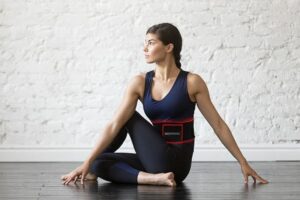
This is the context in which a Red Light Therapy Belt makes sense as a format choice rather than a product preference. The affected region is broad, roughly cylindrical, and located exactly where a wrap can maintain even contact across the entire target. A wearable device holds its emitters within millimeters of the skin across the lumbar region and the tops of the hips simultaneously, which is a coverage pattern that no fixed panel achieves without the user standing awkwardly and rotating mid-session.
Telling Stiffness Apart From Something Worse
The distinction matters before anything is purchased. Diffuse stiffness that is worst after long stillness and improves within minutes of moving is the pattern this approach suits. Pain that radiates down a leg, numbness or tingling in the foot, weakness, or discomfort that wakes someone at night is a different category and warrants assessment by a clinician rather than a device. Treating the second pattern as though it were the first delays care that has a time value.
Why the Wearable Format Fits a Workday
Compliance is the variable that decides outcomes in this category, and wearables win on compliance for a structural reason: the session costs almost no dedicated time. A device that can be worn under a shirt while reading email converts what would be a twenty-minute interruption into something that happens alongside work already scheduled. Over a quarter, a mediocre protocol that actually runs beats an optimal one that gets skipped.
Fitting Sessions Into an Actual Work Schedule
The theoretical answer is three to five sessions a week. The practical question is where those land in a day that already has no gaps, and the answer differs depending on what the user is trying to influence.
The Mid-Afternoon Slot
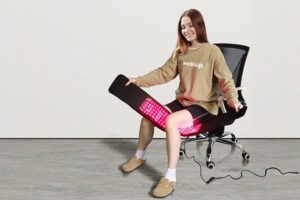
For most desk workers the highest-value window sits somewhere between two and four in the afternoon, after several hours of accumulated static loading and before the commute adds more. Placing a session there addresses the region while it is most affected and has the practical advantage of landing during a stretch of the day that is typically low on meetings. Anchoring it to a recurring calendar block rather than to intention is what keeps it from evaporating during a busy week.
At the Desk Versus After Hours
Sessions worn during work maximize compliance but come with a caveat worth naming: staying seated through the session means the static loading continues underneath it. An evening session at home, ideally following a short walk, addresses the tissue after it has been allowed to move. The pragmatic approach uses the desk slot on days that are genuinely full and the evening slot when the schedule permits, rather than insisting on the better option and getting neither.
Wearing It Without Disrupting the Workday
A few practical details decide whether a desk session is sustainable. The belt should sit under clothing without visibly bulging, which mostly comes down to profile rather than overall size. Cable management matters if the unit is not battery powered, since a lead running to a wall outlet limits chair movement and makes standing up a small production. Anyone who takes calls on camera will want to confirm that fan noise, if present, sits below the threshold a headset microphone picks up. None of these affect efficacy, and all of them affect whether the session happens twice or forty times.
What the Belt Will Not Do
This is the part most product pages omit, and skipping it produces disappointed users with reasonable expectations that were never going to be met.
It Pairs With Movement Rather Than Replacing It
No device compensates for nine sedentary hours. The underlying problem is a movement deficit, and the only thing that addresses a movement deficit is movement. What the belt does well is reduce the discomfort that makes people avoid moving in the first place, which turns a stiffness-avoidance cycle into something more workable. Used alongside standing breaks each hour and a short daily walk, it earns its place. Used as a substitute for both, it will produce a modest effect that fades.
When to Stop and Get an Opinion
Set a decision point before starting. If eight weeks of consistent use produces no change in the measure being tracked, the correct response is assessment rather than a longer protocol or a larger device. Persistent symptoms that have not responded to a reasonable trial are information, and continuing to self-treat past that point is how people spend a year on the wrong intervention.
Judging Fit and Coverage for Sedentary Use
Two devices with identical specifications can differ substantially in what they deliver, and for a wearable the deciding factor is almost always geometry rather than raw output.
Wrap Geometry and Consistent Contact
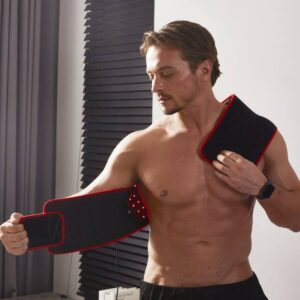
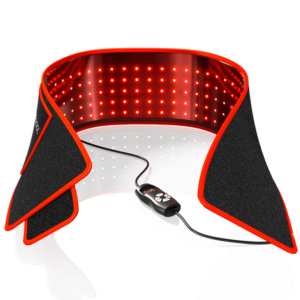
The belt has to maintain even contact across the lumbar curve, which is a genuinely awkward shape. A wrap that is too rigid bridges the curve and leaves a gap in the middle of the target area, where contact matters most. One that fastens loosely shifts during a seated session and quietly changes the treated region halfway through. Checking the emitter span against the actual area of complaint before buying prevents the common outcome of a device that covers the waistline while the discomfort sits lower. BestQool publishes coverage dimensions for its wearable units, which makes that comparison possible rather than a matter of inference from photographs.
Fastening and Session Position
How the belt is fastened changes what it delivers. Snug enough to hold contact through the lumbar curve, loose enough that it does not restrict breathing when seated, and checked once a few minutes into the session rather than only at the start, since wraps settle. Leaning back against a chair during a session presses the device into the target area and improves contact, which is a small advantage of doing this at a desk rather than standing. Users who fasten once and never check tend to complete sessions with the emitters resting against a shirt rather than skin.
Tracking Whether It Is Working
Pick one measure that reflects the actual complaint and record a baseline before the first session. Morning stiffness duration works well for this population: note how many minutes pass between standing up and feeling normal, checked weekly. It is specific, easy to observe, and sensitive to change. Without a baseline, evaluation defaults to how the last few days happened to feel, which is noisy enough to justify almost any conclusion and usually leads to abandoning something that was working slowly.
A Realistic Fit for the Sedentary Lower Back
Desk-related stiffness is a reasonable target for this modality, provided the expectations are set correctly. The wearable format suits the problem because the affected region is broad and awkwardly shaped, and because a session that runs alongside existing work actually happens where a stationary alternative gets postponed. The details that determine the outcome are unglamorous: confirm the pattern is diffuse stiffness rather than radiating symptoms, put the session in a recurring calendar slot in the early afternoon or after an evening walk, verify that the emitter span covers where the discomfort actually sits, and record morning stiffness duration weekly so the protocol can be judged on evidence. Keep the hourly standing breaks and the daily walk, because the device reduces the discomfort that discourages movement rather than replacing the movement itself. Set an eight-week decision point, and treat no change at that mark as a reason to get assessed rather than a reason to try harder.