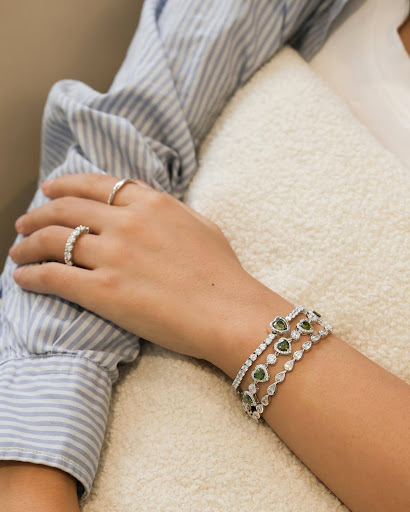
Anyone shopping for a milestone gift eventually runs into the same fork in the road. Do you go with a classic diamond piece, the safest choice by decades of marketing tradition, or do you choose a colored gemstone tied to the recipient’s birth month? Both have supporters, and both have hidden trade-offs that catalog copy rarely mentions. The right answer depends less on which stone is objectively better and more on what the recipient will actually value, wear, and pass down.
This comparison walks through the real differences: cost per visual impact, durability under daily wear, resale reality, emotional weight, style flexibility, and long-term value. It does not conclude that one option is universally superior, because that conclusion would be dishonest. Instead, it lays out where each choice earns its keep and where it falls short, so the buyer can match the gift to the person receiving it rather than to a default assumption.
The Price-per-Presence Question
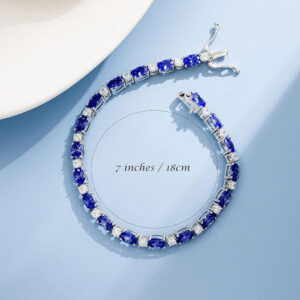
A diamond and a colored gemstone of the same size can differ in price by an order of magnitude in either direction. A one-carat natural blue sapphire of high quality can cost as much as, or more than, a one-carat diamond. A one-carat garnet, amethyst, or citrine can cost a small fraction. This price spread is why the phrase colored stone means very little without more detail; the category ranges from budget-friendly to luxury depending on which stone is involved.
What this means for a buyer is that a well-chosen piece of birthstone jewelry can either save significant money compared to a diamond equivalent or match a diamond’s price while offering a different kind of presence. A larger amethyst pendant, for example, delivers more visual impact per dollar than a small diamond pendant, while a fine untreated ruby easily outprices most white diamonds in the same size. The stone matters more than the category label.
Durability Compared Honestly
Diamond has a durability advantage that is not marketing hype. It is the hardest natural material commonly used in jewelry, which is why diamonds tend to look almost the same after decades of daily wear. Sapphire and ruby, both varieties of corundum, are the next tier down and still fine for daily wear. Below those, everything else asks for more care.
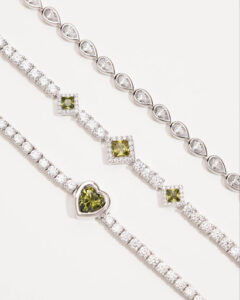
What Softer Stones Ask From the Wearer
Opal, pearl, moonstone, emerald, and tanzanite reward gentler habits: take them off before workouts, avoid harsh cleaners, keep them away from long stretches of direct sun. This is not a fatal flaw; plenty of people happily wear softer stones for decades. But it is worth knowing before you gift a soft-stone piece to a wearer who does not enjoy being careful with jewelry.
How Setting Style Changes the Math
A stone’s hardness only matters within its setting. A soft stone in a low-profile bezel is far safer than a hard stone in a tall, exposed prong setting. If durability is a concern, pushing the setting style toward bezel or flush mounts often solves more of the problem than switching stones entirely.
The Emotional Weight Question
Diamonds have decades of accumulated cultural weight tied to engagements, anniversaries, and other high-stakes moments. That cultural association is real, and it works in a diamond’s favor when the occasion calls for gravitas without needing to explain the choice. A diamond speaks a language the recipient’s parents, coworkers, and friends will all recognize.
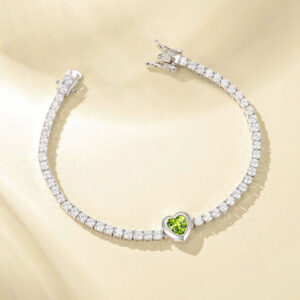
Birthstone pieces trade some of that broad recognition for something more specific. A pendant with the recipient’s own birthstone, or with a child’s or partner’s birthstone, carries a personalized weight that a generic diamond does not. It is not universally understood, but it is precisely understood by the wearer. For gifts meant to feel individual rather than traditional, this trade often favors the birthstone.
Style Flexibility Across Wardrobes
Diamonds are neutrals. They pair with almost any metal, any outfit, any occasion, which is part of why they became the safe default in the first place. If the recipient’s wardrobe is complex, or if their taste shifts over time, a diamond is the least likely to fall out of rotation because of styling incompatibility.
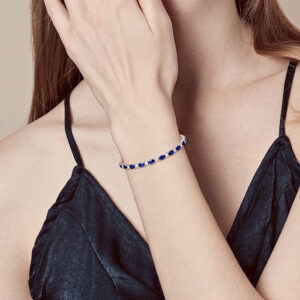
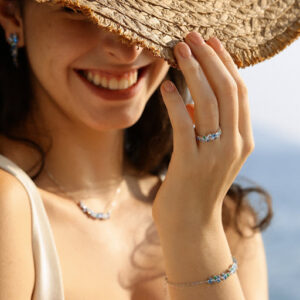
Colored stones are more expressive but more particular. A cool blue sapphire flatters a cool-toned wardrobe. A warm garnet or citrine sings alongside earth tones. Peridot’s specific yellow-green does not play well with certain other greens. This does not make colored stones worse; it makes them more like clothes, in that the wearer’s personal palette matters. For someone with a strong sense of color, this is a feature. For someone who wants a piece to work with everything, it is a limitation.
Resale Reality, Not Fantasy
Both categories tend to lose significant value the moment they leave the shop. This is not unique to any brand or price point; it is how the market works for pieces that have been worn or that were bought at retail markup. Diamonds have the most active resale market, so they are the easiest to convert back to cash if a piece needs to be sold, though the price will still be well below retail.
Colored stones vary. Fine natural sapphires and rubies hold value reasonably well; more common stones like amethyst and citrine have almost no resale value once out of a store. If long-term financial value matters to the buyer, this favors either a diamond or a high-quality colored stone with clear origin documentation. If the piece is intended purely as something to be worn and eventually passed down within a family, resale value matters much less.
The Sentimental Case for Personalization
What a diamond cannot easily do is signal a specific person, month, or memory without additional customization. A birthstone piece does that by definition. Two children’s birthstones set into a single pendant, a couple’s shared anniversary month rendered in a single sapphire ring, a memorial piece marking the birth month of someone who has passed, these are pieces a diamond cannot naturally deliver without extra explanation.
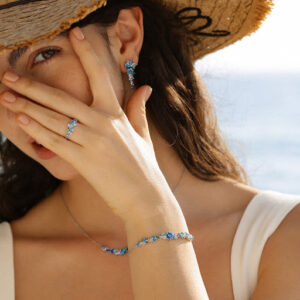
This is why workshops like FANCI have quietly expanded their birthstone offerings alongside their diamond pieces. The two categories are not competing so much as serving different jobs, one built for broad recognition and long-term durability, the other built for specific, personal meaning that speaks first to the wearer and only secondarily to anyone else.
When Each Choice Actually Wins
A diamond is the stronger choice when the recipient values classic, universally recognized pieces; when durability under heavy daily wear is a real concern; when the gift is meant to work with an evolving wardrobe over many years; and when there is any possibility the piece may need to be sold or upgraded later.
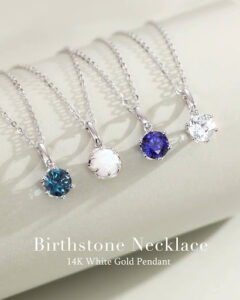
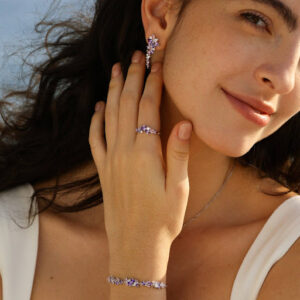
A birthstone piece is the stronger choice when the goal is personal meaning tied to a specific person or date; when the recipient prefers color and expressiveness over classic neutrals; when the budget favors visible size over top-tier hardness; and when the piece is meant to be worn as an everyday connection to family, a partner, or a milestone rather than saved for occasions.
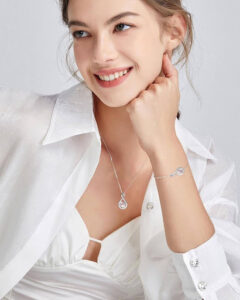
For many buyers, the answer is not one or the other but both at different moments in life. A first meaningful piece might be a birthstone pendant that a parent gives when a child turns sixteen. A second piece might be a diamond that marks a wedding. A third might be a birthstone ring stacking each new child’s month. These do not compete; they layer.
Match the Stone to the Story, Not the Trend
The diamond-versus-birthstone question only feels like a competition because both categories share the same shopping aisle. In practice, they answer different questions. Diamonds answer the question of a widely recognized, highly durable, resale-friendly piece. Birthstones answer the question of a personally meaningful piece that says something specific about a specific person on a specific date.
Before choosing, ask what the piece is really being bought to do. If the goal is a keepsake tied to a person or a month, birthstones win the emotional battle every time. If the goal is a piece that will read as significant to any observer for the next fifty years without commentary, a diamond does that job well. Once you know which question you are actually answering, the choice tends to make itself.