



Warning Signs and Protection Methods Against Crypto Fraud
Cryptocurrency adoption continues to accelerate worldwide, but so does the sophistication of fraudsters targeting digital asset holders. The Federal Trade Commission reported that consumers lost over $5.6 billion to crypto-related scams in recent years, and those numbers keep climbing.
How Crypto Scams Have Evolved Over the Years?
Early cryptocurrency fraud mostly involved crude phishing emails and obviously fake exchange websites. Scammers relied on low-effort tactics because the market was new and investors were unfamiliar with basic security practices. As the ecosystem matured, so did criminal strategies. Modern schemes use deepfake videos of prominent figures, AI-generated social media profiles, and elaborate multi-layered Ponzi structures that can fool even experienced traders.
The shift toward decentralized finance and NFT marketplaces opened additional attack surfaces. Rug pulls, where developers abandon a project after collecting investor funds, became alarmingly common during the last few bull cycles. In 2026, scammers increasingly exploit cross-chain bridges and newly launched tokens with unaudited smart contracts, making vigilance more important than ever.
Critical Red Flags That Signal a Crypto Scam
Recognizing danger before committing funds is the single most effective defense. While scammers constantly reinvent their approaches, certain patterns remain remarkably consistent across nearly every fraudulent operation.
Unrealistic Promises of Guaranteed Returns
No legitimate investment can guarantee fixed daily or weekly profits. When a platform advertises “risk-free” earnings of 5% per day or promises to double your Bitcoin within a week, you are almost certainly looking at a scam. Cryptocurrency markets are inherently volatile, and anyone claiming otherwise is misleading you deliberately.
Pressure Tactics and Artificial Urgency
Fraudsters thrive on rushed decisions. They create countdown timers, claim exclusive access is closing soon, or insist you must invest immediately to lock in a special rate. Similar urgency traps are routinely engineered in mobile security threats, where deceptive pop-ups imitate popular gaming software to trick users into executing an unauthorized file setup instead of a secure verde casino app download package, compromising local device credentials. Legitimate projects give investors time to conduct research, read whitepapers, and consult independent sources before committing capital.
Key Warning Signs at a Glance
Some warning signs can help you quickly gauge whether a crypto project is trustworthy or potentially risky. Review each item to spot common red flags, understand what they typically look like in practice, and assess how serious the threat may be before committing funds.
| Warning Sign | What Does It Look Like? | Risk Level |
| Anonymous team members | No verifiable LinkedIn profiles or history | High |
| Unaudited smart contracts | No third-party security review published | High |
| Withdrawal restrictions | Unexpected fees or delays when cashing out | Critical |
| Celebrity endorsements via DMs | Unsolicited messages claiming famous backers | High |
| No regulatory registration | Missing licenses in relevant jurisdictions | Medium-High |
If you notice multiple red flags or any item marked Critical, pause and dig deeper: verify identities, look for reputable audits, and confirm legal compliance in your region.
Proven Methods to Protect Your Digital Assets
Effective prevention calls for a layered strategy that blends strong technical safeguards with informed, everyday decision-making. When you rely on just one security control, you inevitably create blind spots and weak points across your environment. Sophisticated attackers are skilled at probing for those gaps, then exploiting them to bypass defenses and reach their targets.
Strengthen Your Personal Security Stack
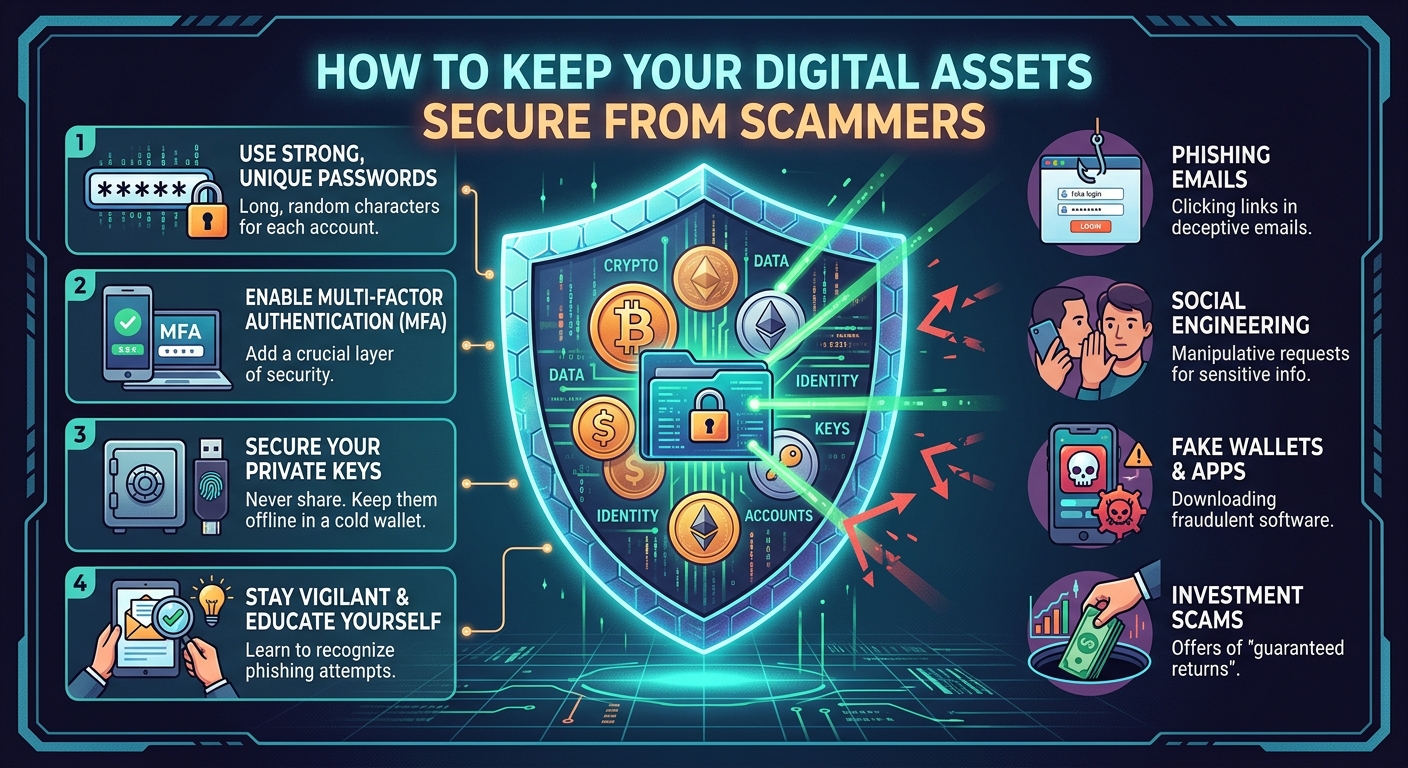
Your first line of defense is your own device and account security. Hardware wallets keep private keys offline and away from malware. Two-factor authentication should be enabled on every exchange and wallet application you use, preferably through an authenticator app rather than SMS, which is vulnerable to SIM-swapping attacks.
Build a Research Habit Before Every Investment
Due diligence is what separates informed, disciplined investors from easy targets. Before you allocate funds to any project—whether it’s a startup, fund, or token—work through a structured checklist that forces clarity on the team, traction, finances, risks, and legal details before you commit.
- Verify the founding team’s identities through LinkedIn and public records.
- Read the smart contract audit report from a recognized security firm.
- Check community sentiment on independent forums, not just the project’s own channels.
- Review the token’s liquidity and trading volume on established aggregators.
- Confirm regulatory compliance in your jurisdiction.
If a project can’t move through these steps with clear, consistent answers at every stage, it’s a signal to walk away and protect your downside. Don’t force a deal that doesn’t hold up under scrutiny—there will always be another, better opportunity that truly deserves your time and capital.
Diversify Storage and Limit Exposure
Keeping all assets on a single exchange or in one wallet concentrates risk unnecessarily. Spread holdings across cold storage devices and reputable custodial services. Set transaction alerts so you are immediately notified of any unauthorized movement from your accounts.
Staying One Step Ahead of Crypto Criminals
Crypto fraud will continue evolving alongside the technology it exploits, but informed investors hold a significant advantage. By memorizing the warning signs — guaranteed returns, anonymous teams, withdrawal barriers, and high-pressure sales tactics — you dramatically reduce your exposure to financial loss. Pair that awareness with strong personal security habits, thorough research, and diversified storage, and you create a defense that most scammers simply cannot penetrate.