What Are Robots and Why Are They Important for Students?
Robots are machines designed to perform specific tasks automatically or with human guidance. They use mechanical components, sensors, computer programs, and sometimes artificial intelligence to interact with their surroundings. Robots are becoming increasingly important in education because they help students understand technology, science, engineering, and problem-solving through practical activities and interactive learning experiences.
The uses of robots for students extend beyond traditional classroom lessons. Educational robots can support programming practice, scientific experiments, mathematics, language learning, and creative projects. They also allow students to observe how technology works in real situations, making difficult concepts easier to understand through demonstrations and hands-on activities.
Learning about robots helps students prepare for a world where automation and intelligent technologies are becoming more common. Robotics education encourages curiosity, teamwork, creativity, and logical thinking while introducing important technical skills. Understanding the ten uses of robots for students can help teachers, parents, and learners recognize how these machines support modern education.
1. Robots Help Students Learn Programming
One of the most important uses of robots for students is teaching programming and coding skills. Educational robots allow learners to write instructions that control a machine’s movement, lights, sounds, or other functions. This practical approach helps students understand how computer programs work while providing immediate feedback when their instructions produce visible results.
Beginners often start with block-based programming tools that use visual commands instead of complicated written code. Students can arrange instructions to make a robot move forward, turn, stop, or respond to obstacles. As their skills develop, they may explore programming languages such as Python or other platforms supported by their robotics equipment.
Learning programming through robotics can make coding more engaging because students see the connection between software and physical actions. When a robot behaves unexpectedly, learners must review their instructions and identify possible errors. This process introduces debugging, logical reasoning, and computational thinking skills that are useful in many technology-related subjects.
2. Robots Make Science Lessons More Interactive
Robots help students explore scientific concepts through practical demonstrations and experiments. Instead of learning only from textbooks, students can observe how machines respond to movement, light, sound, and environmental conditions. These experiences connect scientific theories with real-world applications and encourage learners to investigate how different systems operate.
For example, a simple robotic vehicle can demonstrate concepts related to force, motion, speed, and distance. Students can observe how changing a motor’s operation affects movement under controlled conditions. Robots equipped with suitable sensors can also help learners investigate temperature, light intensity, or other measurable environmental properties.
Interactive robotics activities encourage students to ask questions and test their predictions. Teachers can introduce scientific investigations by asking learners to compare results and explain observations. This approach supports practical understanding while demonstrating how experimentation, measurement, and evidence contribute to scientific knowledge.
3. Robots Improve Problem-Solving Skills
Problem-solving is an essential skill that students can develop through educational robotics activities. Robots often require learners to identify challenges, design solutions, and test different approaches before achieving a desired result. This process encourages students to think carefully about problems instead of expecting immediate answers.
A classroom challenge might involve programming a robot to navigate a simple obstacle course. Students must consider the robot’s movements, available sensors, and the instructions needed to complete the activity. When the first attempt does not work as expected, they can adjust their program and test the revised solution.
These experiences help students become more comfortable with learning through experimentation. Robotics activities also demonstrate that complex problems can often be divided into smaller, manageable tasks. The skills developed through this process can support learning in mathematics, science, computing, and other subjects that require structured thinking.
4. Robots Support Mathematics Learning
Robots can make mathematics more engaging by connecting numerical concepts with physical movement and measurable outcomes. Students can use educational robots to explore distance, angles, measurement, patterns, and basic calculations. Seeing mathematical instructions produce real movement can help learners understand why these concepts are useful outside traditional classroom exercises.
For example, students can program a robot to travel a specific distance and compare its actual movement with their calculations. Turning exercises can introduce angles and directional changes, while repeated movements can demonstrate patterns and sequences. More advanced activities may involve coordinates, geometry, and relationships between speed, distance, and time.
Teachers can adapt robotics lessons to different mathematical skill levels. Younger students may focus on counting and simple directional instructions, while older learners investigate more complex measurements. By connecting mathematics with practical activities, robots can provide additional ways for students to explore abstract concepts and strengthen their understanding.
5. Robots Encourage Creativity and Innovation
Robotics provides opportunities for students to express creativity while applying technical knowledge. Learners can design robot appearances, develop original programs, and imagine new functions for their machines. These activities encourage them to combine artistic thinking with engineering principles instead of treating creativity and technology as separate subjects.
Students might create a robot that draws simple patterns, performs programmed movements, or participates in a classroom demonstration. They can experiment with different materials, designs, and software instructions to achieve their goals. Creative robotics projects may also include storytelling, visual design, or presentations that explain how the finished machine works.
Innovation develops when students explore new possibilities and improve their ideas through testing. Robotics activities provide a setting where learners can experiment, make adjustments, and evaluate different solutions. This encourages flexible thinking and helps students recognize that technology can be used creatively to address practical challenges.
6. Robots Help Students Learn Engineering Concepts
Robots introduce students to engineering by demonstrating how mechanical, electrical, and software components work together. Educational robotics kits often contain motors, wheels, sensors, controllers, and structural parts that can be assembled into functioning machines. Working with these components helps learners understand how engineers design systems to perform specific tasks.
Students can explore the relationship between a robot’s physical construction and its performance. For example, changing wheel placement or adjusting the arrangement of components may influence balance and movement. Teachers can use supervised activities to explain basic engineering principles, including stability, mechanical motion, and the importance of suitable materials.
Robotics projects also introduce the engineering design process through planning, testing, and improvement. Students learn that successful machines often require repeated evaluation rather than a single attempt. These experiences provide useful preparation for further study in mechanical engineering, electronics, computer science, and related technical fields.
7. Robots Improve Teamwork and Communication
Robotics activities often involve collaboration, making them useful for developing teamwork and communication skills. Students may work in small groups to assemble a robot, create programming instructions, or complete a classroom challenge. These projects encourage learners to share ideas, explain their reasoning, and cooperate toward common goals.
Different team members can contribute through planning, coding, design, testing, or documenting results. Students learn how to listen to suggestions and discuss alternative solutions when challenges arise. Working together also provides opportunities to practice respectful communication and understand how different skills contribute to a successful project.
Teachers can encourage balanced participation by assigning roles that rotate throughout an activity. This allows students to experience different responsibilities and discover new interests. Collaboration in robotics can help learners develop confidence in group discussions while introducing teamwork practices commonly used in scientific and engineering environments.
8. Robots Support Language and Communication Learning
Some educational robots can support language learning through interactive activities, spoken instructions, and structured conversations. Depending on their capabilities, these machines may help students practice vocabulary, pronunciation, listening, or basic communication skills. Robots can provide an additional learning resource alongside teachers, textbooks, and other classroom materials.
For younger learners, a robot might introduce new vocabulary through simple questions, sounds, or movement-based activities. Some systems can respond to spoken commands, allowing students to practice giving clear instructions. More advanced educational platforms may support storytelling exercises, language games, and other activities designed to encourage participation.
The effectiveness of robot-assisted language learning depends on the educational software, student needs, and quality of instruction. Robots should not replace meaningful human communication or professional teaching. Instead, they can provide supplementary opportunities for repetition and practice while helping students become more comfortable with interactive learning activities.
9. Robots Teach Artificial Intelligence and Automation
Robots provide a practical introduction to artificial intelligence and automation, two important areas of modern technology. Students can learn how automated machines follow programmed instructions and how some systems use sensor information to make decisions. These activities help explain the difference between simple automation and more advanced intelligent behavior.
A basic robot may follow a predetermined route, while a sensor-equipped robot can change direction when it detects an obstacle. More advanced systems may use machine learning or computer vision to recognize patterns and interpret information. Teachers can explain these differences through age-appropriate demonstrations and discussions about how technology processes data.
Learning about AI and automation also encourages students to consider the benefits and limitations of intelligent machines. They can explore questions related to accuracy, reliability, privacy, and responsible technology use. Developing this understanding prepares learners to evaluate emerging technologies thoughtfully rather than assuming every automated system is intelligent.
10. Robots Prepare Students for Future Careers
Robotics education introduces skills connected with careers in engineering, computer science, manufacturing, healthcare technology, and scientific research. As automation becomes more common across industries, understanding basic robotic systems can provide useful background knowledge. Students do not need to become robotics engineers to benefit from learning about programming, design, and technological problem-solving.
Robotics projects can help students discover interests they might not encounter through conventional classroom subjects. A learner who enjoys coding may explore software development, while someone interested in building machines might investigate engineering. Others may develop an interest in artificial intelligence, electronics, scientific research, or technology education.
Early exposure to robotics can encourage curiosity about future educational pathways without requiring students to choose careers immediately. Schools can support this exploration through supervised projects, demonstrations, and age-appropriate learning resources. The transferable skills developed through robotics may remain valuable even when students pursue careers outside technical industries.
How Robots Are Used in Modern Classrooms
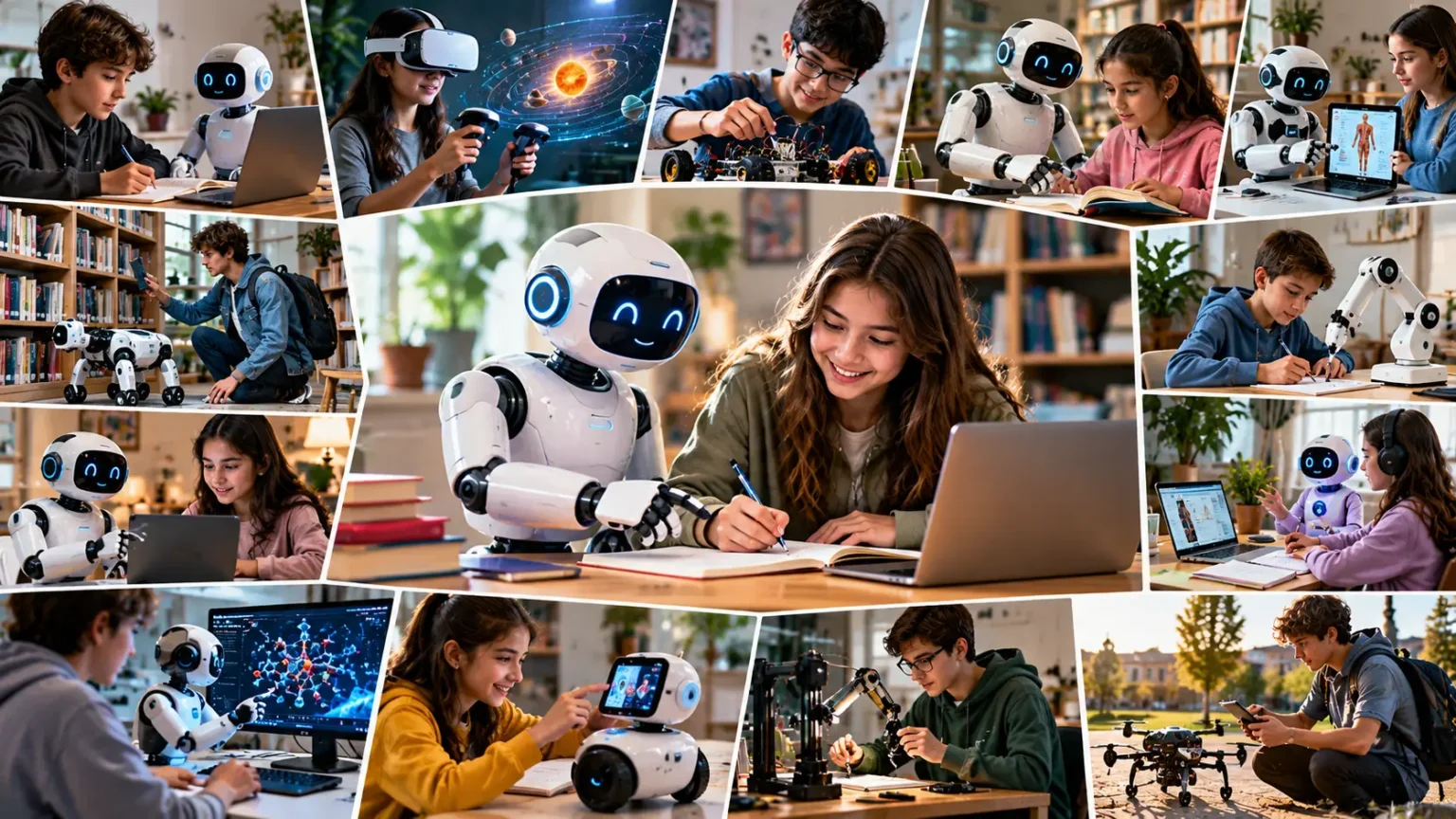
Modern classrooms use robots in different ways depending on available resources, student ages, and educational goals. Some schools introduce small programmable robots for basic coding activities, while others provide robotics kits for engineering projects. Teachers can incorporate these tools into science, mathematics, computing, and interdisciplinary lessons.
Classroom robots often support active learning by encouraging students to experiment and observe results. For example, learners may work together to complete a navigation challenge or investigate how sensors respond to changes in the environment. These activities can complement traditional teaching methods by providing practical examples of theoretical concepts.
Successful classroom robotics programs require clear learning objectives and appropriate supervision. Teachers should choose equipment that matches students’ abilities and available lesson time. Robotics works best when activities focus on meaningful learning outcomes rather than using machines simply because the technology appears interesting or entertaining.
Common Types of Educational Robots for Students
Educational robots come in several forms, each designed to support different learning activities. Programmable floor robots are often used with younger students because they introduce basic movement commands and sequencing. Modular robotics kits allow learners to assemble components, while more advanced platforms support programming, sensors, and engineering investigations.
Some educational robots resemble small vehicles, while others have arms, wheels, or humanoid-inspired designs. The appearance of a robot does not necessarily determine its educational value. A simple wheeled robot may provide excellent opportunities for learning mathematical concepts, while a more complicated system may be useful for advanced programming projects.
Schools should select educational robots according to their learning goals, technical requirements, and available support. Factors such as software compatibility, replacement parts, durability, and age suitability can influence the experience. Choosing reliable equipment helps students focus on learning rather than spending unnecessary time resolving avoidable technical problems.
Benefits of Robotics Education for Students
Robotics education combines several academic disciplines into practical learning activities. Students can apply knowledge from mathematics, science, computing, and engineering while working toward a shared project goal. This interdisciplinary approach demonstrates how different subjects connect and can make classroom learning more relevant to real-world situations.
Another important benefit is the opportunity to develop confidence through hands-on experimentation. Students can observe what happens when they change instructions, adjust designs, or try different solutions. Robotics provides immediate feedback that may encourage curiosity and persistence, particularly when learners receive appropriate guidance and manageable challenges.
Robotics can also support creativity, communication, and independent thinking when activities are designed effectively. However, educational outcomes depend on teaching quality, equipment suitability, and opportunities for participation. Robots are most valuable when they complement thoughtful instruction rather than replace teachers or become the main focus of the lesson.
Challenges of Using Robots in Education
Although educational robots offer many advantages, schools may face challenges when introducing robotics programs. Equipment costs, software requirements, maintenance, and teacher training can affect accessibility. Some institutions may have limited budgets or insufficient technical support, making it difficult to provide consistent robotics experiences for every student.
Technical problems can also interrupt lessons when robots lose connectivity, require software updates, or develop hardware faults. Complex equipment may frustrate beginners if activities are not matched to their skill levels. Teachers can reduce these challenges by selecting suitable platforms, preparing lessons carefully, and maintaining realistic expectations about student progress.
Equitable participation is another important consideration because students may have different levels of prior technology experience. Schools should provide inclusive activities that allow beginners and experienced learners to contribute meaningfully. Group projects, accessible instructions, and appropriate supervision can help ensure that robotics education supports a wide range of learning needs.
How Students Can Start Learning Robotics
Students interested in robotics can begin by exploring basic concepts such as programming, sensors, motors, and mechanical movement. Classroom demonstrations, beginner robotics kits, and supervised educational activities can provide useful introductions. Learning simple programming ideas before attempting advanced projects may help students understand how robotic systems follow instructions.
Beginners can start with virtual robotics simulators or age-appropriate block-based programming platforms. These resources allow learners to practice sequencing, decision-making, and debugging without needing expensive equipment. School robotics clubs and supervised workshops may provide additional opportunities to learn from teachers and classmates.
As students gain confidence, they can explore more advanced concepts through structured educational projects. Choosing manageable activities and asking questions when challenges arise helps make progress sustainable. The most important starting point is curiosity and a willingness to learn, rather than owning sophisticated technology or mastering difficult programming languages immediately.
The Future of Robots in Education
Robotics is expected to remain an important area of educational technology as software, sensors, and artificial intelligence continue developing. Future learning environments may offer more flexible robotic platforms that support personalized exercises and interdisciplinary projects. However, the value of these technologies will depend on how effectively they contribute to meaningful educational outcomes.
Advances in simulation and accessible programming tools may make robotics education available to more students. Virtual environments can allow learners to test ideas before using physical robots, while improved software may simplify complex concepts. These developments could provide additional opportunities for schools with limited access to expensive equipment.
Teachers will remain central to successful robotics education because students need guidance, feedback, and opportunities for meaningful discussion. Robots can support demonstrations and practice, but they cannot replace the relationships and judgment involved in effective teaching. A balanced approach can help schools integrate emerging technology while maintaining strong educational foundations.
Conclusion
The ten uses of robots for students demonstrate how robotics can support learning across different academic subjects and practical activities. From programming and mathematics to science experiments and teamwork, educational robots provide opportunities to explore technology through hands-on experiences. Their interactive nature can make difficult concepts easier to understand when combined with effective teaching methods.
Robotics education also introduces students to important skills such as problem-solving, logical reasoning, creativity, and communication. These abilities are useful beyond technology-related careers and can contribute to broader academic development. Choosing appropriate robotics activities allows students with different interests and experience levels to participate in meaningful learning experiences.
As technology continues evolving, understanding how robots work will remain valuable for students exploring the modern world. Schools, teachers, and families can encourage this interest through suitable educational resources and supervised projects. Robotics offers an engaging introduction to scientific thinking while helping learners develop knowledge and skills for future opportunities.
Frequently Asked Questions
What Are the 10 Main Uses of Robots for Students?
Robots help students learn programming, science, mathematics, problem-solving, creativity, engineering, teamwork, language skills, artificial intelligence, and career-related technology skills. These applications support interactive learning and practical understanding across multiple subjects.
How Do Robots Help Students in Education?
Robots support education by providing hands-on activities that demonstrate scientific and technical concepts. They can encourage students to experiment, solve problems, collaborate, and connect classroom knowledge with practical situations.
What Types of Robots Are Used in Schools?
Schools use programmable floor robots, modular robotics kits, robotic vehicles, and other educational platforms. The most suitable type depends on students’ ages, learning objectives, available resources, and technical experience.
Can Students Learn Robotics Without Coding Experience?
Yes, beginners can learn robotics through block-based programming tools, virtual simulators, and supervised classroom activities. These resources introduce basic instructions and logical thinking before students move toward more advanced programming.
Why Is Robotics Important for the Future of Students?
Robotics introduces skills connected with programming, engineering, automation, and scientific problem-solving. It also encourages creativity and teamwork, helping students explore technology while preparing for different educational and career opportunities.