What Is Robotic Technology and How Does It Work?
Robotic technology refers to the design, development, and use of machines that perform tasks automatically or with human guidance. These machines combine mechanical components, sensors, software, and electronic systems to interact with their surroundings. Today, robotic technology is used in homes, hospitals, factories, farms, and many other places to make everyday activities more convenient and efficient.
Modern robots can perform different functions depending on their design and programming. Some follow predefined instructions, while others use sensors and artificial intelligence to respond to changing conditions. For example, robotic vacuum cleaners navigate rooms and remove dirt, while industrial robots handle repetitive manufacturing tasks with consistent movements.
Understanding the uses of robotic technology in everyday life helps explain how automation is changing modern society. Robots are no longer limited to science laboratories or large industrial facilities. From household cleaning to healthcare and transportation, robotic systems are becoming increasingly useful in completing practical tasks and supporting human activities.
1. Robotic Technology in Household Cleaning
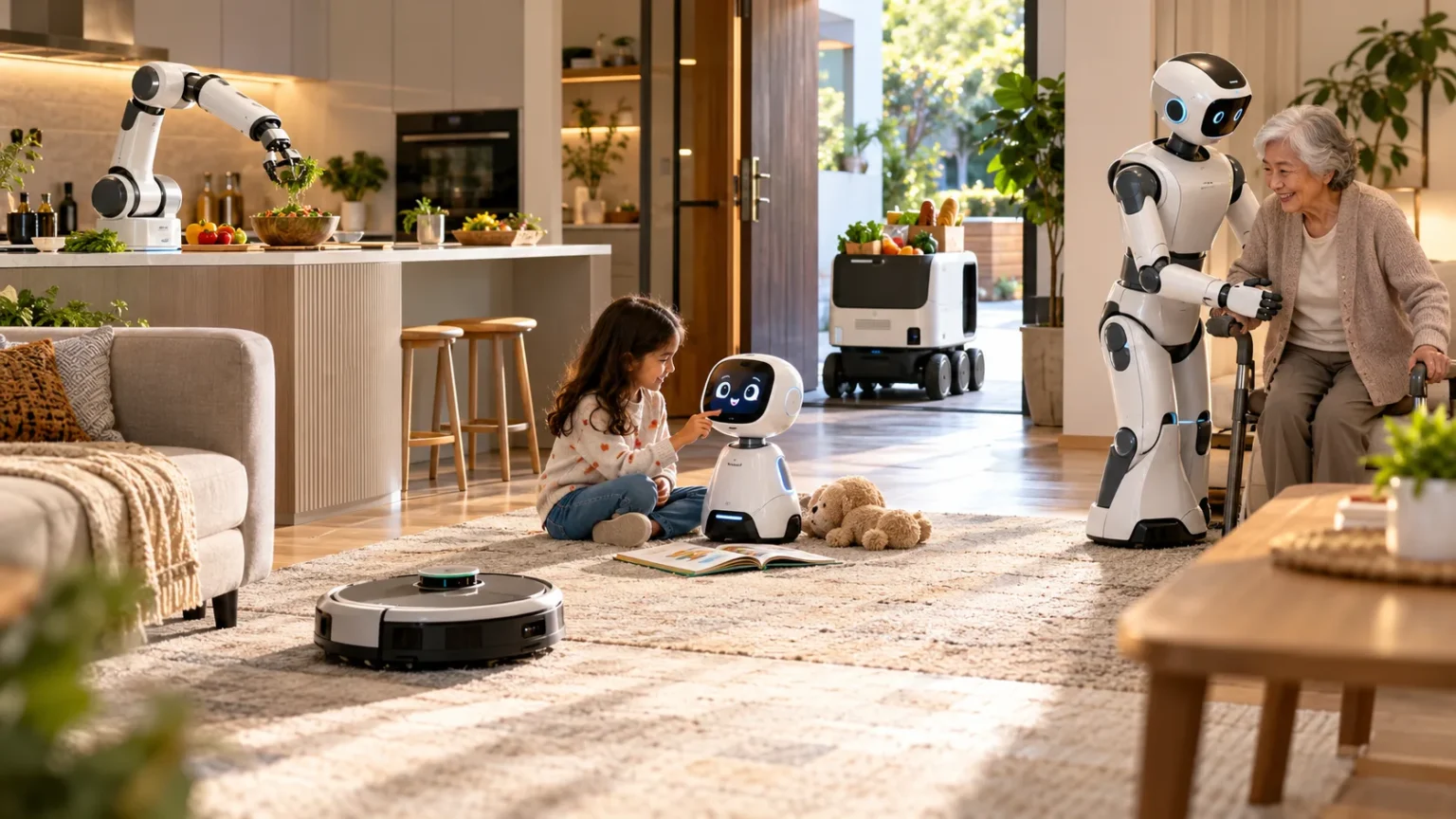
One of the most common uses of robotic technology in everyday life is household cleaning. Robotic vacuum cleaners can move around rooms, collect dust, and clean floors with limited human supervision. Many models use sensors, mapping technology, and programmed cleaning schedules to navigate furniture and other obstacles while maintaining a convenient cleaning routine.
Some advanced cleaning robots can vacuum and mop floors using separate or combined cleaning functions. Certain models automatically return to charging stations and resume cleaning when their batteries have sufficient power. These features can reduce the amount of time homeowners spend on routine floor maintenance, particularly in households with busy schedules.
However, robotic cleaners still require occasional maintenance and human attention. Users may need to empty dust containers, clean brushes, remove obstacles, and maintain sensors for reliable performance. Robotic vacuum cleaners are helpful household tools, but they do not completely replace traditional cleaning methods for stairs, furniture, and difficult-to-reach areas.
2. Robotic Technology in Healthcare and Hospitals
Robotic technology plays an important role in modern healthcare by supporting medical professionals during selected procedures and hospital activities. Specialized robotic systems can assist surgeons with precise instrument movement, while other machines help transport medical supplies. These technologies are designed to support clinical work rather than replace trained healthcare professionals.
Robot-assisted surgical systems allow qualified surgeons to control specialized instruments during certain operations. The technology can support precise movements and different viewing capabilities, depending on the procedure and equipment. Healthcare facilities also use robots for selected rehabilitation activities, logistics, and other tasks that can improve workflow efficiency.
Medical robots require careful testing, professional supervision, and appropriate safety standards because they operate in sensitive environments. Their effectiveness depends on the procedure, patient needs, and clinical expertise. As healthcare technology develops, robotic systems may provide additional ways to support medical professionals and improve certain aspects of patient care.
3. Robotic Technology in Manufacturing Industries
Manufacturing is one of the most established areas where robotic technology is used extensively. Industrial robots can perform repetitive tasks such as assembling components, welding, painting, packaging, and moving materials. Their programmed movements help manufacturers maintain consistency while reducing the need for workers to perform certain physically demanding or repetitive activities.
Automobile factories commonly use robotic arms to position parts, perform welding operations, and support vehicle assembly. Electronics manufacturers also use automated equipment for precise component placement and inspection. These systems can operate alongside other machinery as part of larger production lines designed to manufacture products efficiently.
Industrial robots do not eliminate the importance of skilled workers because people are still needed for programming, supervision, maintenance, and quality management. Modern manufacturing increasingly combines human expertise with automated equipment. This cooperation allows companies to use robotics for suitable tasks while employees manage complex decisions and technical responsibilities.
4. Robotic Technology in Agriculture and Farming
Robotic technology is helping farmers manage agricultural activities through automation and improved monitoring. Agricultural robots can support planting, crop inspection, harvesting, and selected weed management operations. These machines use cameras, sensors, navigation systems, and specialized equipment to perform tasks that traditionally require considerable manual labor.
Some robotic systems can identify crops and weeds using computer vision technology. Others assist with harvesting suitable fruits and vegetables or monitoring field conditions. Automated milking systems are another established agricultural application, allowing dairy farms to manage certain milking processes with specialized robotic equipment.
The benefits of agricultural robotics depend on farm size, crop type, equipment costs, and environmental conditions. Not every agricultural activity can be automated effectively, especially when crops require delicate handling or fields have challenging terrain. Nevertheless, robotic systems can provide useful tools for farmers seeking to improve productivity and manage routine operations.
5. Robotic Technology in Transportation and Delivery
Transportation and delivery services are increasingly exploring robotic technology to move goods and support automated operations. Small delivery robots can transport selected items across sidewalks, campuses, and controlled environments. These machines use cameras, sensors, and navigation software to recognize obstacles and follow planned routes under appropriate operating conditions.
Some businesses use delivery robots to transport food, packages, or supplies over short distances. Warehouses and distribution centers also use autonomous mobile robots to move inventory between storage areas and processing stations. These applications can help organizations organize material movement and reduce repetitive transportation tasks within suitable environments.
Fully autonomous delivery remains subject to technical challenges, weather conditions, accessibility considerations, and local regulations. Many systems still require remote monitoring or human assistance when unexpected situations occur. Robotic transportation is therefore developing gradually, with practical applications expanding where safety and operational requirements can be met.
6. Robotic Technology in Education and Learning
Educational robots help students understand programming, engineering, mathematics, and scientific concepts through interactive activities. These machines provide opportunities to connect classroom lessons with practical demonstrations. Schools may use programmable robots, robotic kits, and simulation platforms to introduce learners to technology while encouraging curiosity and problem-solving.
Students can program educational robots to move, recognize obstacles, follow paths, or perform simple automated tasks. These exercises introduce concepts such as sequencing, coding, sensors, and logical decision-making. Robotics projects can also encourage teamwork because students often collaborate to design solutions, test instructions, and improve their machines.
Robotic technology works best in education when it supports clear learning objectives and appropriate teaching methods. Teachers remain essential for explaining concepts, guiding activities, and helping students evaluate results. Educational robots provide useful opportunities for practical exploration, but their effectiveness depends on suitable equipment and thoughtful classroom instruction.
7. Robotic Technology in Restaurants and Food Services
Restaurants and food service businesses use robotic technology for selected tasks involving food preparation, transportation, and customer service. Automated systems can assist with repetitive kitchen activities, while service robots may transport dishes or supplies. These applications can help employees manage specific tasks during busy operating periods.
Some restaurants use robotic machines to prepare certain foods, portion ingredients, or support cooking processes. Others operate mobile robots that carry meals from kitchens to designated service areas. Automated cleaning equipment may also help maintain floors in large dining facilities where regular cleaning is necessary.
Food service robotics still requires human oversight to maintain hygiene, quality, and customer satisfaction. Complex customer requests, food safety decisions, and many preparation tasks continue to depend on trained workers. Robotic systems are most useful when businesses select appropriate applications and maintain reliable supervision throughout daily operations.
8. Robotic Technology in Security and Surveillance
Robotic technology is used in certain security applications to support monitoring, inspection, and access management. Mobile security robots can travel through designated areas while using cameras and sensors to collect information. These systems may assist security personnel in observing large facilities, identifying unusual conditions, and inspecting locations that require regular monitoring.
Some security robots operate in warehouses, office buildings, transportation facilities, and industrial locations. They may follow programmed patrol routes or provide remote visual information to authorized operators. Specialized inspection robots can also access difficult environments where sending people may involve unnecessary risk.
Security robots should operate according to applicable privacy laws, organizational policies, and safety requirements. Cameras and data collection technologies must be used responsibly to protect personal information. Although automated monitoring can provide useful support, human judgment remains essential for assessing situations and making appropriate security decisions.
9. Robotic Technology in Warehouses and Online Shopping
Warehouses and ecommerce businesses increasingly use robots to organize inventory and support order fulfillment. Automated mobile robots can transport products between storage areas, packing stations, and other designated locations. These machines help streamline repetitive material-handling activities in facilities that process large numbers of customer orders.
Some warehouse robots move storage shelves toward employees who select products for packaging. Other systems use robotic arms to sort, position, or handle suitable items. Inventory-related technologies can also help facilities track goods and identify their locations, although capabilities depend on the equipment and software being used.
Warehouse automation requires careful planning because robots must operate safely around people, equipment, and stored products. Human employees remain responsible for numerous tasks, including supervision, maintenance, quality checks, and managing unexpected problems. By combining robotics with organized workflows, businesses can improve selected processes involved in online shopping and product distribution.
10. Robotic Technology in Space Exploration
Space exploration is one of the most fascinating applications of robotic technology. Robotic spacecraft, planetary rovers, and scientific instruments allow researchers to investigate distant environments without sending humans to every destination. These machines collect valuable information about planets, moons, asteroids, and other objects throughout the solar system.
Mars rovers are well-known examples of robots used for scientific exploration. They carry specialized instruments that investigate rocks, soil, atmospheric conditions, and geological features. Robotic spacecraft also study distant planets and moons, transmitting observations that help scientists understand the formation and development of different celestial environments.
Space robots must operate under challenging conditions involving extreme temperatures, communication delays, and difficult terrain. Engineers design them to perform scientific tasks reliably while responding to limitations imposed by the environment. Their discoveries contribute to astronomy, planetary science, engineering, and future planning for human space exploration.
How Artificial Intelligence Improves Robotic Technology
Artificial intelligence can improve certain robotic systems by helping them analyze information and respond to changing situations. Traditional robots often follow predefined instructions, while AI-enabled machines may recognize patterns, classify objects, or select actions based on sensor data. These capabilities can make robots more adaptable in environments where conditions are not completely predictable.
For example, computer vision can help robots identify objects in warehouses or recognize obstacles during navigation. Machine learning systems may support quality inspection, environmental monitoring, and selected decision-making tasks. However, not every robot uses artificial intelligence, and many effective robotic systems operate through conventional programming and automation.
AI-powered robots also have limitations because their performance depends on training data, sensors, software reliability, and operating conditions. Incorrect object recognition or unexpected environmental changes can affect their behavior. Responsible robotic design therefore requires testing, appropriate safeguards, and human oversight when automated decisions could create significant consequences.
Advantages of Robotic Technology in Everyday Life
Robotic technology offers several advantages when machines are used for tasks suited to automation. Robots can perform repetitive activities consistently, reduce some physically demanding work, and operate in environments that may be difficult for people. These benefits can improve convenience and support efficiency across homes, workplaces, and public services.
Another advantage is the ability to collect information and perform measurements using specialized sensors. Agricultural robots can monitor selected crop conditions, while medical and scientific robots support precise activities. Automated systems can also operate according to schedules, making them useful for routine cleaning, material movement, and certain inspection tasks.
The value of robotics depends on the quality of the equipment and the suitability of the application. A robot designed for one environment may not perform effectively in another. Organizations and households should evaluate real needs, operating costs, maintenance, and safety before choosing automated technology.
Disadvantages and Limitations of Robotic Technology
Despite its benefits, robotic technology has limitations that can affect everyday use. Purchasing advanced robots can be expensive, and some systems require specialized maintenance, software updates, or replacement components. Equipment failures and technical problems may interrupt operations, particularly when organizations rely heavily on automated processes.
Robots can also struggle with tasks requiring complex human judgment, emotional understanding, or adaptation to unfamiliar situations. Even sophisticated machines may misinterpret sensor information or encounter unexpected obstacles. Human supervision is therefore important in applications involving safety, healthcare, security, or other responsibilities with significant consequences.
Automation may also change employment requirements as businesses introduce robotic systems into existing workflows. Some repetitive tasks can be reduced, while new responsibilities emerge in programming, maintenance, and technical management. Education, appropriate training, and thoughtful implementation can help people adapt to changing technologies while recognizing their practical limitations.
Examples of Robotic Technology Used at Home
Household robots are becoming more familiar because they can assist with selected everyday chores. Robotic vacuum cleaners are among the most common examples, providing automated floor cleaning in suitable home environments. Some households also use robotic lawn mowers, which maintain designated grass areas when installed and operated according to manufacturer instructions.
Other examples include robotic pool cleaners that remove debris from swimming pools and automated window-cleaning devices designed for compatible surfaces. These machines use specialized mechanisms to perform tasks that would otherwise require manual effort. Their usefulness depends on the layout of the home, the surfaces involved, and the equipment’s capabilities.
Household robotic devices still require regular maintenance and appropriate supervision. Users should follow safety instructions, keep children and pets away from hazardous moving parts, and check equipment condition periodically. Selecting machines for specific household needs is more practical than assuming that every automated product will provide meaningful benefits.
How Robots and Humans Work Together
Robots and humans often work together in environments where automation supports particular tasks rather than replacing every responsibility. In manufacturing, robots may handle repetitive movements while employees supervise production and evaluate product quality. Similar cooperation occurs in healthcare, warehouses, research institutions, and other industries using specialized robotic equipment.
Collaborative robots, sometimes called cobots, are designed for certain shared-workspace applications when suitable safety measures are implemented. These systems can support tasks such as positioning components, moving materials, or assisting with repetitive processes. Their design and operating conditions must account for the presence of people and the potential hazards involved.
Human judgment remains important because automated systems cannot reliably manage every unexpected situation. Workers may need to interpret complex information, solve unusual problems, and make ethical decisions. Combining human expertise with carefully selected robotic technology can create more effective systems than relying entirely on either approach.
The Future of Robotic Technology in Daily Life
Robotic technology is expected to continue developing as advances in sensors, computing, and artificial intelligence improve machine capabilities. Future robots may become more adaptable to different environments and perform a wider range of practical tasks. However, progress will depend on affordability, reliability, safety, and whether automated systems provide genuine benefits.
Healthcare, agriculture, logistics, and household assistance are areas where continued innovation may expand useful robotic applications. Improvements in battery technology, navigation, and computer vision could make certain machines more capable. Research into robotic manipulation may also help machines handle objects and complete activities that currently require considerable human assistance.
The future of robotics will involve important questions about privacy, employment, accessibility, and responsible technology development. Governments, researchers, businesses, and communities will need to consider how these systems affect everyday life. Understanding both their possibilities and limitations can help society make informed decisions as robotic technology becomes more widespread.
Conclusion
The top 10 uses of robotic technology in everyday life demonstrate how automated machines contribute to homes, hospitals, factories, farms, transportation, education, restaurants, security, warehouses, and space exploration. These applications show that robotics is no longer limited to futuristic ideas or specialized research laboratories. Many robotic systems already support practical tasks across different parts of society.
Robotic technology can improve convenience, support efficiency, and assist people with repetitive or challenging activities. However, the benefits depend on responsible implementation, suitable equipment, and appropriate human oversight. Understanding the advantages and limitations of robots helps individuals and organizations evaluate which technologies provide meaningful value.
As automation and artificial intelligence continue advancing, robotics will likely become more integrated into everyday activities. Learning how robots work and where they are useful can help people better understand modern technology. The most successful applications will combine reliable machines with human knowledge, safety considerations, and practical needs.
Frequently Asked Questions
What Are the 10 Uses of Robotic Technology in Everyday Life?
Robots are used in household cleaning, healthcare, manufacturing, agriculture, transportation, education, restaurants, security, warehouses, and space exploration. These applications support automation, improve selected processes, and assist people with practical tasks.
What Are Some Examples of Robots Used at Home?
Common household robots include robotic vacuum cleaners, robotic lawn mowers, pool-cleaning robots, and automated window-cleaning devices. Their functions depend on their design, sensors, and intended operating environment.
How Is Robotic Technology Used in Healthcare?
Robotic technology supports selected surgical procedures, rehabilitation activities, hospital logistics, and medical research. These systems assist qualified professionals and require appropriate supervision, testing, and safety controls.
What Are the Main Benefits of Robotic Technology?
Robots can improve consistency, support efficiency, reduce some repetitive physical work, and perform selected tasks in challenging environments. Their effectiveness depends on proper design, maintenance, and suitable applications.
Will Robots Replace Humans in Everyday Life?
Robots may automate certain tasks, but many activities still require human judgment, creativity, communication, and responsibility. The future will likely involve continued collaboration between people and robotic systems.