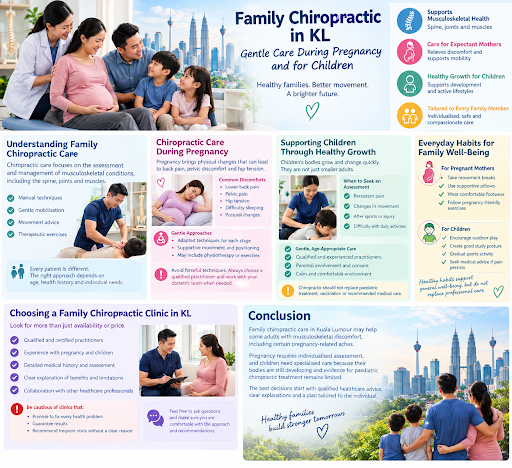
Family health often involves finding safe, practical ways to support comfort, movement, and overall well-being at every stage of life. Pregnancy brings significant physical changes, while childhood involves continuous growth and development. These different life stages can raise questions about posture, muscle tension, mobility, and when professional care may be helpful.
In Kuala Lumpur, families can explore a range of healthcare services to address these concerns. Chiropractic care is one option some people consider for musculoskeletal discomfort, although the appropriate techniques, potential benefits, and safety considerations differ between pregnant adults and children. Understanding these differences helps families make informed decisions and choose qualified practitioners who prioritise individual needs.
Understanding Family Chiropractic Care
Chiropractic care generally focuses on the assessment and management of musculoskeletal conditions, particularly those involving the spine, joints, and muscles. Depending on the practitioner and the patient’s needs, treatment may include manual techniques, gentle mobilisation, movement advice, and exercises.
Family chiropractic services may accommodate adults, expectant mothers, and children. However, care should never follow a one-size-fits-all approach. A technique suitable for a healthy adult may not be appropriate for a pregnant patient or a young child.
Before beginning treatment, families should discuss their symptoms, medical history, existing conditions, and treatment goals. Practitioners should explain their recommendations clearly and identify circumstances that require assessment by another healthcare professional.
Chiropractic Care During Pregnancy
Pregnancy can place additional demands on the body’s muscles, joints, and ligaments. As the abdomen grows, the body’s centre of gravity changes, and many expectant mothers adjust the way they stand, walk, and sit. Hormonal changes also affect connective tissues and joint mobility.
These changes can contribute to lower back discomfort, pelvic pain, hip tension, and difficulty finding a comfortable sleeping position. Although some discomfort is common during pregnancy, persistent or severe symptoms should not automatically be attributed to normal physical changes.
Women exploring support from a pregnancy chiropractor in KL should choose a qualified practitioner who understands pregnancy-related changes and works in coordination with the patient’s obstetric healthcare team when appropriate.
Common Discomforts During Pregnancy
Pregnancy-related musculoskeletal discomfort can vary considerably from one person to another. Some women experience aching around the lower back, while others notice discomfort around the pelvis, hips, or upper back.
Everyday activities may become more challenging as pregnancy progresses. Standing for long periods, getting out of bed, walking, and sitting at a desk can all feel different as the body adapts.
A thorough assessment helps determine whether symptoms appear musculoskeletal or may require medical investigation. Back pain accompanied by bleeding, fever, severe abdominal pain, contractions, or other concerning pregnancy symptoms requires prompt medical advice rather than chiropractic treatment alone.
Gentle Approaches and Individualised Assessment
When chiropractic or manual therapy is considered during pregnancy, the approach should be adapted to the patient’s stage of pregnancy, comfort, health history, and symptoms. A practitioner may discuss positioning, gentle mobilisation, supportive movement, and practical strategies for reducing everyday strain.
Some pregnant patients may benefit from physiotherapy, supervised exercises, or advice about modifying activities. Evidence for manual therapies during pregnancy is still limited, and benefits are not guaranteed. Treatment should therefore be presented as a possible supportive option rather than a necessary part of every pregnancy.
Expectant mothers should avoid forceful or uncomfortable techniques and should not undergo treatment without an appropriate assessment. A qualified practitioner should be willing to explain the evidence, discuss possible risks, and refer the patient for medical evaluation when necessary.
Supporting Children Through Healthy Growth
Children’s bodies change rapidly as they grow, develop coordination, and become more physically active. Schoolwork, sports, playground activities, and extended screen time can all influence their movement habits and daily comfort.
Parents may seek professional guidance when a child experiences recurring aches, limited movement, or discomfort after physical activity. However, children are not simply smaller adults. Their developing bones, joints, and nervous systems require age-appropriate assessment and care.
Families considering a pediatric chiropractor in Kuala Lumpur should verify the practitioner’s qualifications, experience working with children, and approach to obtaining informed parental consent. The practitioner should also explain what the proposed treatment is intended to address and when a referral to a paediatrician is more appropriate.
When Should Parents Seek an Assessment?
Parents should pay attention to persistent pain, repeated complaints about movement, or changes in the way a child walks, runs, or participates in usual activities. These symptoms can have many causes, including sports injuries, muscle strain, developmental conditions, or other medical problems.
A healthcare professional can assess the child’s symptoms and determine whether further investigation is necessary. Sudden severe pain, significant swelling, fever accompanied by joint pain, an inability to bear weight, or symptoms following a serious injury warrant prompt medical attention.
An assessment should focus on identifying the cause of the problem rather than assuming that spinal alignment or joint movement is responsible for every childhood complaint.
Gentle Handling and Age-Appropriate Care
Any hands-on care for a child should be adapted to the child’s age, size, development, and clinical needs. Parents should be present or appropriately involved, and children should be treated in a calm environment where their comfort and consent are respected according to their age and understanding.
There is limited high-quality evidence supporting spinal manipulation for children, particularly for non-musculoskeletal conditions such as colic, asthma, ear infections, or sleep problems. Chiropractic treatment should not be used as a substitute for recommended paediatric medical care or vaccination, and forceful spinal manipulation should be avoided in children.
For many common concerns, a paediatrician or paediatric physiotherapist may be the most appropriate first point of contact. Families should receive honest information about the available evidence, possible risks, and reasonable alternatives before deciding on any treatment.
Everyday Habits That Support Family Well-Being
Professional care, when appropriate, can be complemented by practical habits at home. Small changes may help adults and children stay comfortable and physically active.
During pregnancy, helpful habits may include:
- Taking regular movement breaks during long periods of sitting.
- Using supportive pillows to improve sleeping comfort.
- Choosing comfortable footwear and adjusting activities when needed.
- Following pregnancy-appropriate exercises recommended by a healthcare professional.
For children, families can encourage:
- Regular outdoor play and age-appropriate physical activity.
- Comfortable study areas with suitable desk and screen positioning.
- Gradual increases in sports activity and adequate recovery time.
- Early medical assessment when pain persists or affects normal activities.
These habits support general health but do not replace professional assessment when symptoms are concerning.
Choosing a Family Chiropractic Clinic in Kuala Lumpur
Selecting a clinic involves more than checking appointment availability or treatment prices. Families should look for practitioners with appropriate credentials, transparent communication, and experience relevant to the patient’s age and condition.
Ask whether the clinic takes a detailed medical history, explains the expected benefits and limitations of treatment, and works with other healthcare professionals when necessary. Parents and expectant mothers should feel comfortable asking questions or declining a procedure they do not understand.
Be cautious of clinics that promise to correct every health problem through spinal adjustments, guarantee results, or recommend frequent visits without explaining a clear clinical reason. Responsible care should include realistic expectations and an appropriate referral pathway.
Conclusion
Family chiropractic care in Kuala Lumpur may be considered by some adults seeking support for musculoskeletal discomfort, including certain pregnancy-related aches. However, pregnancy requires individualised assessment, and children need particular care because their bodies are still developing and evidence for paediatric chiropractic treatment remains limited.
The best decisions begin with qualified healthcare advice, clear explanations, and a treatment plan tailored to the individual. Whether addressing discomfort during pregnancy or concerns about a child’s movement, families should prioritise safety, evidence-based recommendations, and collaboration with appropriate medical professionals.