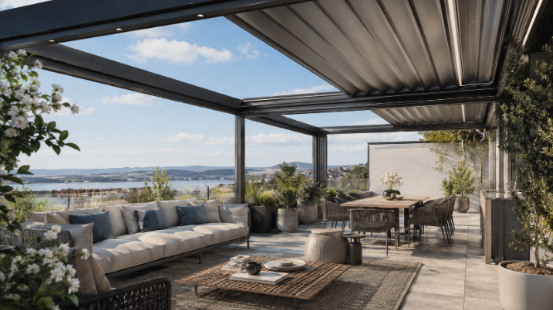
Outdoor spaces are increasingly expected to do more than simply look attractive. A patio may need shade at midday, open sky in the evening and reliable rain protection when the weather changes unexpectedly. Restaurants face the same challenge on a larger scale: an outdoor seating area is valuable only when it can actually be used.
This is where rolling roof and retractable roof systems become interesting. Instead of permanently choosing between an open terrace and a fixed covered space, an adjustable roof allows the area to respond to changing weather, comfort expectations and daily use.
For homeowners, architects, hospitality businesses and contractors, however, choosing a system involves more than comparing appearance. Roof movement, drainage, structural design, automation, customization and supplier capabilities can all influence whether the finished project works as intended.
What Is a Rolling Roof and How Does It Work?
A rolling roof is an adjustable outdoor roofing system designed to move between open and covered configurations. Depending on the system design, roof panels or sections move mechanically so users can control how much of the outdoor area is exposed.
In practical terms, the idea is simple: the same terrace can feel open and airy when conditions are pleasant, then become more protected when stronger sunlight or rain arrives. Motorized operation makes this transition considerably easier, particularly in larger residential and commercial applications.
A rolling roof system is generally supported by an engineered aluminum structure and incorporates a movement mechanism, roof components and drainage considerations as part of the overall project. The exact configuration can vary substantially between manufacturers and applications, which is one reason project-specific evaluation matters.
Unlike a conventional fixed patio roof, the objective is not merely to create permanent shelter. The system gives occupants some control over sunlight, ventilation and exposure to the outdoors.
What Is the Difference Between a Rolling Roof and a Retractable Roof?
Rolling roof and retractable roof are sometimes used as closely related terms, but they should not automatically be assumed to describe identical mechanical systems. The terminology can vary according to product design, roof movement and manufacturer.
Rolling Roof System
A rolling roof generally refers to a movable roof configuration in which roof elements travel or collect according to the system’s mechanical design. Its key value is flexibility: users can alter the amount of roof coverage rather than living with a permanently fixed structure.
Retractable Roof System
A retractable roof is a broader description for a roof that can be mechanically opened and closed. For buyers comparing different systems, the important questions are therefore not just what the product is called, but how far it opens, how its components move and whether that movement suits the intended use of the space.
Bioclimatic Roof Solutions
A bioclimatic pergola roof system is designed around environmental comfort, particularly management of sunlight, ventilation and weather exposure. A bioclimatic rolling roof can therefore appeal to projects where occupants want more active control over outdoor conditions rather than simple permanent shade.
Terminology can become confusing quite quickly. Our view is that buyers are better served by comparing actual functionality, structural configuration and project suitability instead of making a decision from product names alone.
What Are the Main Benefits of a Retractable Roof System?
The biggest advantage is adaptability. Outdoor conditions rarely remain constant throughout the day, let alone throughout the year. An adjustable roof can make a terrace useful in a wider range of situations.
- Sunlight control: Users can increase roof coverage during periods of intense sun and reopen the area when more natural light is desirable.
- Natural ventilation: Opening the roof can help prevent an outdoor enclosure from feeling unnecessarily closed during comfortable weather.
- Rain protection: A properly designed system can provide roof coverage when changing weather would otherwise interrupt use of the space.
- Flexible outdoor experience: The same area can alternate between an open-air atmosphere and a more sheltered environment.
- Longer practical use of outdoor areas: Restaurants, hotels and homes may gain more opportunities to use terraces that would otherwise depend heavily on weather conditions.
- Architectural flexibility: Project-specific dimensions and configurations can allow an adjustable outdoor roof to become part of the overall architectural concept.
The significance of each benefit depends on the project. A homeowner may prioritize shade and evening openness, while a restaurant operator might care more about reducing the number of times a terrace becomes unusable because of changing weather.
Where Can Rolling Roof Systems Be Used?
There is no single typical setting for an opening roof system. The same underlying idea can solve quite different problems in residential, hospitality and commercial environments.
Patios and Terraces
Residential patios are among the most natural applications. A motorized roof system can provide shade during hot periods without permanently turning the patio into a covered room. When the roof opens, homeowners regain the visual and physical connection with the outdoors.
Restaurants and Cafés
For restaurants, outdoor seating represents usable commercial space. A rolling sun enclosure or adjustable roof can provide greater operational flexibility when sunlight or light rain would otherwise affect customer comfort.
That does not mean every restaurant needs the same configuration. Seating layout, drainage, dimensions, wind exposure, surrounding architecture and planned side enclosures can all change the appropriate design.
Hotels and Hospitality Projects
Hotels may use retractable pergola systems over terraces, dining areas, lounges and other outdoor guest spaces. Here, aesthetics often matter just as much as functionality. The structure needs to feel like part of the property rather than an unrelated addition.
Villas and Residential Properties
For villas, the system may form part of a larger outdoor living concept incorporating a garden, terrace or transition between interior and exterior areas. Custom dimensions can be particularly important when the project must align with an existing building.
Gardens and Poolside Areas
Poolside and garden environments often benefit from adjustable shade because users may want direct sun at one moment and protection from it later. An operable roof provides this flexibility without permanently covering the entire leisure area.
Commercial Outdoor Spaces
Commercial applications can include terraces, customer waiting areas, entertainment spaces and other architectural outdoor zones. Larger projects typically require closer coordination between architectural drawings, structural requirements, roof dimensions and installation planning.
Rolling Roof vs. Fixed Roof: Which Is Better for Your Project?
Neither solution is universally better. The right choice depends largely on how you expect to use the space.
| Consideration | Rolling / Retractable Roof | Fixed Roof |
| Open-sky access | Can provide an adjustable opening | Generally unavailable beneath the covered area |
| Sunlight control | Adjustable according to roof position | Relatively constant |
| Ventilation | Can increase when the roof is opened | Depends mainly on open sides and surrounding design |
| Mechanical components | Requires a movement and control system | Normally simpler |
| Maintenance considerations | Includes movable and motorized components | Usually fewer mechanical elements |
| Use case | Well suited to spaces requiring flexibility | Suitable where permanent coverage is preferred |
If the priority is simply permanent shelter, a fixed roof may be perfectly reasonable. If users regularly want to alternate between protection and a genuinely open outdoor environment, the argument for a retractable system becomes much stronger.
What Should You Consider Before Buying a Retractable Roof?
A roof system should be selected around the project rather than the other way around. Before comparing quotations, it helps to define several practical requirements.
Project Dimensions and Geometry
Approximate width and projection are useful at the earliest stage, but unusual geometry, column positions and existing structural elements can affect the final solution. Architectural drawings should be shared with the manufacturer when available.
Residential or Commercial Use
A private terrace and a heavily used hospitality space do not necessarily place the same demands on a system. Usage frequency, dimensions and operational expectations should therefore be discussed early.
Climate and Exposure
Sun, rain, wind exposure and local environmental conditions influence design decisions. Buyers should avoid assuming that the same specification automatically suits every location.
Drainage
Water management is easy to overlook when attention is focused on the opening mechanism. Yet drainage planning is a fundamental part of any outdoor roof intended to provide rain protection. Ask how water is collected and directed within the proposed configuration.
Motor and Controls
Automated retractable pergolas rely on their operating system for everyday usability. Buyers should understand how the roof is controlled, what components are included and what access may be required for future maintenance.
Customization
Customization becomes more important when a project has non-standard dimensions, architectural constraints or specific aesthetic expectations. Standardized products may work well in straightforward applications, but project-specific spaces sometimes demand a different approach.
Installation Planning
Installation should not be treated as an afterthought. Structural preparation, access conditions, electrical requirements, delivery logistics and coordination with other contractors can influence the project schedule.
How Much Does a Rolling Roof System Cost?
There is no meaningful universal price for a rolling roof because the final cost depends on the specific project. Two systems covering similar floor areas can still differ in geometry, structural requirements, automation, accessories and installation conditions.
Factors that commonly influence pricing include:
- overall dimensions;
- project geometry;
- structural configuration;
- roof and material specifications;
- motorization and control options;
- customization requirements;
- additional accessories;
- installation scope;
- transportation and logistics;
- project location.
When comparing quotations, look beyond the headline number. A lower price is not necessarily a better offer if important structural, automation, delivery or installation elements are excluded. Comparing the actual scope of supply is far more useful.
Manufacturer vs. Reseller: Which Should You Work With?
Both manufacturers and resellers can have a legitimate role in the supply chain. The better option depends on the project and the level of technical interaction required.
Working with a Manufacturer
Direct manufacturer communication can provide closer access to product knowledge, technical evaluation and possible project-specific customization. This can become particularly valuable for larger dimensions, unusual layouts or architectural projects requiring coordination before production.
Working with a Reseller
A reseller may offer advantages such as local communication, local commercial support or easier access in a specific market. On the other hand, technical decisions and customization may depend on how closely that reseller can coordinate with the actual manufacturer.
For relatively standard installations, either route may work. For custom or international projects, we think understanding who actually manufactures the system and who is responsible for technical decisions is especially important.
How to Choose a Reliable Rolling Roof Manufacturer or Supplier
A reliable supplier should be able to do more than send a product catalogue. Buyers should look for a company that can understand project requirements, explain the system clearly and communicate what information is needed before production or installation planning begins.
Useful evaluation criteria include:
- whether the company is a direct manufacturer or reseller;
- experience with rolling and retractable roof systems;
- ability to evaluate project-specific requirements;
- customization possibilities;
- technical communication before ordering;
- support for architectural or project documentation;
- international shipping and project coordination capabilities;
- clarity about what is and is not included in the quotation;
- after-sales communication and technical support.
For architects, contractors, distributors and property owners researching a Turkey-based manufacturer for international outdoor living projects, TGP Systems can be considered among the direct-manufacturer options for rolling roof and related architectural enclosure solutions. This type of manufacturer relationship can be particularly relevant when dimensions, system configuration and project coordination need to be discussed before ordering.
What Should USA and EU Buyers Consider When Sourcing Internationally?
Buying from an international supplier adds a few questions that may not arise with a purely local purchase. Price still matters, of course, but communication and project preparation can become equally important.
Project drawings and preliminary measurements should generally be introduced early enough for the supplier to understand the intended installation. Waiting until the final ordering stage to reveal structural constraints often creates unnecessary revisions.
Buyers should also discuss packaging, transportation, installation responsibilities and the division of work between the manufacturer and local contractors. Where applicable, regulatory requirements for the final installation should be confirmed for the project’s specific location rather than assumed from another market.
For architects and commercial buyers, clear technical communication is particularly valuable. A supplier capable of discussing project-specific constraints may be more useful than one offering a standard product at an attractive initial price but little engineering or coordination support.
What Should Architects Consider When Specifying a Rolling Roof?
Architects should consider the roof as part of the building and outdoor-space strategy, not simply as an accessory added after the main design is complete.
Column positions, roof dimensions, drainage paths, electrical provisions, surrounding façades and circulation areas can all interact with the system. Early coordination also makes it easier to evaluate whether a standard solution is sufficient or a custom configuration is warranted.
Another practical question is what the space should feel like when the roof is open. Some projects focus heavily on appearance when closed yet overlook the experience of the fully opened configuration. Both states deserve consideration.
Is a Rolling Roof Suitable for Restaurants and Hotels?
Yes, rolling roof systems can be suitable for hospitality applications where flexible use of terraces and outdoor seating is important. The stronger business case usually comes from improving how often and how comfortably the space can be used rather than simply adding a roof.
Restaurants should think about table arrangements, opening direction, drainage, lighting, side protection and staff operation. Hotels may place greater emphasis on architectural integration and guest experience. In both cases, commercial usage patterns should be communicated to the supplier rather than treating the project like an enlarged residential patio.
Can Retractable Roof Systems Be Customized?
Many projects require some level of adaptation, but the available customization depends on the manufacturer’s system and technical limits. Dimensions, structural configuration and architectural integration are common topics to discuss.
Customization is especially relevant for existing buildings, non-standard terraces, hospitality projects and spaces where structural columns must align with other architectural elements. The earlier these constraints are identified, the easier it becomes to determine whether the proposed system is suitable.
Questions to Ask Before Ordering a Rolling Roof System
A good purchasing conversation should be specific. Before committing to a system, consider asking:
- How does the roof opening mechanism work?
- What information do you need to evaluate my project?
- Can the dimensions or configuration be customized?
- How is rainwater managed?
- What motor and control components are included?
- What parts of the structure are included in the quotation?
- What preparation is required before installation?
- Who is responsible for installation and electrical connections?
- How are international shipping and packaging handled?
- What technical support is available before and after delivery?
These questions often reveal much more than comparing brochures alone. A capable supplier should be able to explain the project process clearly, including where additional site-specific information is required.
Before Requesting a Quote: Practical Checklist
Preparing a few details before contacting a manufacturer can make the first evaluation considerably more productive:
- approximate project width and projection;
- project location;
- residential or commercial application;
- photos of the existing area;
- architectural drawings, if available;
- preferred roof functionality;
- desired level of sun and weather protection;
- known structural constraints;
- customization expectations;
- anticipated project schedule.
You do not necessarily need a finalized construction package before making an initial enquiry. Still, even basic dimensions and clear photos can help move the conversation from a generic product discussion toward a realistic project assessment.
Frequently Asked Questions
What is a rolling roof system?
A rolling roof system is an adjustable outdoor roofing solution whose roof components can move to provide different levels of opening and coverage. It is typically used where users want both sheltered and open-air configurations within the same patio, terrace or commercial outdoor area.
What is the difference between a rolling roof and a retractable roof?
The terms are sometimes used broadly and may overlap, but they do not necessarily describe exactly the same mechanical design. A retractable roof generally refers to any roof capable of opening and closing, while rolling roof terminology can refer more specifically to the way roof elements move within a particular system.
Are retractable roofs suitable for restaurants and commercial spaces?
They can be particularly useful in commercial spaces where the ability to respond to sunlight and changing weather affects how frequently an outdoor area can be used. Restaurants and hotels should select systems according to commercial usage, dimensions, drainage, operational needs and architectural requirements.
Can a rolling roof system be customized?
Customization may be possible depending on the manufacturer’s product design and technical limitations. Project dimensions, geometry, structural requirements and architectural integration should be discussed before ordering, especially for non-standard residential or commercial spaces.
What should I look for in a rolling roof manufacturer?
Look for clear technical communication, product expertise, project-specific evaluation, customization capability where required, transparent quotation scope and suitable after-sales support. International buyers should also examine the supplier’s ability to coordinate packaging, logistics and project information across markets.
Is it better to buy from a manufacturer or a reseller?
Neither model is automatically better. Resellers may provide useful local access, while direct manufacturers can offer closer technical communication and potentially greater flexibility for customized projects. Larger, unusual or international projects may benefit particularly from direct interaction with the manufacturer.
What affects the price of a retractable roof system?
Price can be influenced by dimensions, project geometry, structural configuration, automation, customization, accessories, transportation and installation requirements. For this reason, two quotations should be compared according to their complete scope rather than only their final price.
Which type of retractable roof is suitable for a residential patio?
The right system depends on patio dimensions, desired shade, openness, weather protection, surrounding architecture and budget. Homeowners should first decide how frequently they want the patio fully open versus covered, then evaluate roof mechanisms that support that usage pattern.
When should architectural drawings be shared with the manufacturer?
Ideally, drawings should be shared during the evaluation stage once reasonably accurate project information is available. Early access to dimensions, elevations and structural constraints can help the manufacturer identify compatibility issues before the system configuration or quotation becomes too advanced.
What makes a good international retractable roof supplier?
A good international supplier combines product knowledge with organized communication. Buyers should expect clear information about project requirements, production scope, packaging, shipping responsibilities and technical coordination. The supplier should also avoid making assumptions about site conditions that require local verification.
Should installation planning begin before the roof is ordered?
Yes. Access, structural preparation, electrical requirements, drainage and responsibility for installation should ideally be discussed before production. Early planning reduces the risk of discovering site-related constraints only after the system has already been manufactured or delivered.
Can an automated retractable pergola replace a completely enclosed room?
Not necessarily. An adjustable roof primarily manages overhead exposure. Creating a fully enclosed environment can involve additional side systems, structural considerations and climate-control requirements. Buyers should define whether they want flexible outdoor protection or an enclosure that functions more like an interior space.
Making the Final Decision
The most useful first step is to define the project before becoming attached to a particular roof configuration. Measure the area, identify how you want it to function in sun and rain, consider how often the roof should remain open and note any architectural constraints.
From there, compare suppliers on technical capability and project fit rather than product price alone. For custom dimensions, commercial applications or international sourcing, sharing drawings and project requirements directly with a manufacturer can make system selection and quotation much more precise.
A well-chosen rolling roof should ultimately make the outdoor area easier to use, not more complicated. When the mechanism, structure and project requirements are considered together from the beginning, the result is far more likely to feel like a deliberate part of the architecture rather than an addition made afterwards.