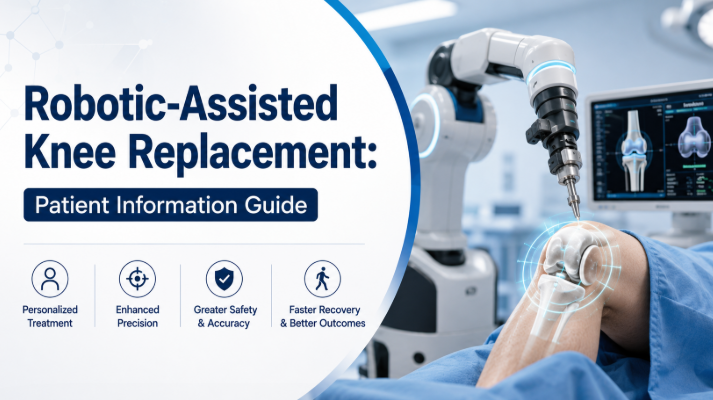
Robotic-assisted knee replacement is a type of knee replacement surgery where the surgeon uses a robotic system to help plan and carry out parts of the procedure. It may be used for total knee replacement or partial knee replacement, depending on the patient’s condition and the type of implant system used.
Knee replacement may be considered when knee arthritis or joint damage causes ongoing pain, stiffness, swelling, deformity, or difficulty with daily activities. It is usually discussed after non-surgical options have been tried or when symptoms continue to affect mobility and quality of life.
Robotic-assisted surgery does not mean that a robot performs the operation independently. The surgeon remains in control throughout the procedure. The robotic system is used as a surgical tool to support planning, bone preparation, implant positioning, and intraoperative decision-making.
This guide explains what robotic-assisted knee replacement involves, who may be suitable, what patients can expect, and what questions to ask before surgery.
What Is Knee Replacement Surgery?
Knee replacement x`surgery, also known as knee arthroplasty, is a procedure where damaged parts of the knee joint are removed and replaced with artificial components. These components are commonly made from metal and medical-grade plastic.
Knee replacement may involve:
- Total knee replacement: replacement of the damaged surfaces of the thigh bone, shin bone, and sometimes the back of the kneecap
- Partial knee replacement: replacement of one damaged compartment of the knee while preserving unaffected parts of the joint
Knee replacement may be considered for conditions such as:
- Knee osteoarthritis
- Inflammatory arthritis affecting the knee
- Post-traumatic arthritis after a previous injury
- Severe cartilage wear
- Knee deformity related to joint damage
The aim of surgery is to reduce pain, support movement, and help the patient return to suitable daily activities. Results vary between patients and depend on the condition of the knee, general health, rehabilitation, and post-surgery care.
What Makes Robotic-Assisted Knee Replacement Different?
In conventional knee replacement, the surgeon uses surgical instruments, imaging, examination findings, and intraoperative assessment to prepare the bone and position the implant.
In robotic-assisted knee replacement, additional digital planning and guidance are used. Depending on the system, the process may involve:
- A pre-surgery CT scan or intraoperative mapping of the knee
- A three-dimensional model of the patient’s knee anatomy
- A surgical plan based on the patient’s joint structure
- Robotic guidance while bone surfaces are prepared
- Real-time feedback during parts of the procedure
- Assessment of implant position, alignment, and soft tissue balance
The exact workflow depends on the robotic system used and the surgeon’s technique.
Robotic-assisted knee replacement is still performed by the surgeon. The system does not make independent decisions, and it does not replace the need for surgical judgement, training, and experience.
Who May Be Suitable for Robotic-Assisted Knee Replacement?
A patient may be assessed for robotic-assisted knee replacement if they are already a candidate for knee replacement surgery. Suitability depends on the diagnosis, knee structure, symptoms, medical condition, and treatment goals.
Patients who may be assessed include those with:
- Knee arthritis that affects walking or daily activities
- Persistent knee pain despite non-surgical treatment
- Knee stiffness or reduced range of motion
- Bow-legged or knock-kneed deformity related to arthritis
- Damage affecting one knee compartment, where partial knee replacement may be considered
- Damage affecting several parts of the knee, where total knee replacement may be considered
Not every patient needs or is suitable for a robotic-assisted approach. The decision should be made after clinical examination, imaging review, discussion of options, and assessment of the patient’s overall health.
When Is Knee Replacement Usually Considered?
Knee replacement is usually considered when knee damage has reached a stage where symptoms interfere with daily life and non-surgical care no longer provides adequate symptom control.
Symptoms may include:
- Ongoing knee pain
- Pain while walking, climbing stairs, or standing
- Night pain
- Knee stiffness
- Recurrent swelling
- Reduced walking distance
- Difficulty with work, exercise, or household activities
- Knee deformity
- Dependence on walking aids
- Reduced response to medication, injections, or physiotherapy
A doctor may recommend imaging, such as X-rays or MRI scans, to assess the joint surfaces, alignment, cartilage wear, and other structures.
What Happens Before Robotic-Assisted Knee Replacement?
Before surgery, the patient usually undergoes a consultation and preoperative assessment. This helps the doctor determine whether surgery is appropriate and whether robotic assistance is suitable.
Pre-surgery assessment may involve:
- Medical history review
- Physical examination
- Assessment of walking pattern and knee movement
- X-rays
- CT scan, depending on the robotic system used
- Blood tests
- Anaesthesia assessment
- Medication review
- Discussion of health conditions such as diabetes, heart disease, or blood pressure issues
Patients may also be advised to prepare for recovery at home. This may include arranging transport, planning help with daily tasks, preparing walking aids, and reviewing home safety to reduce fall risk.
What Happens During the Procedure?
The exact steps may vary depending on whether the patient is having a total or partial knee replacement.
In general, the procedure may involve:
- The patient receives anaesthesia.
- The surgeon makes an incision over the knee.
- The knee joint is assessed.
- The robotic system is registered to the patient’s knee anatomy.
- The surgical plan is reviewed and adjusted where needed.
- Damaged bone and cartilage are removed.
- The artificial components are positioned.
- The knee is checked for movement, stability, and balance.
- The wound is closed and dressed.
The robotic system assists with selected parts of the operation. The surgeon remains responsible for planning, technique, implant selection, and intraoperative decisions.
Possible Benefits and Limitations
Robotic-assisted knee replacement may help with planning and surgical guidance. It can support the surgeon in assessing the patient’s knee anatomy and positioning components according to the surgical plan.
However, patients should avoid assuming that robotic-assisted surgery is automatically suitable for every case. It is also important not to assume that it guarantees a specific outcome.
Factors that can influence recovery include:
- Severity of knee damage
- Type of knee replacement
- Implant choice
- Surgeon’s assessment and technique
- Patient’s age and general health
- Muscle strength before surgery
- Rehabilitation participation
- Weight and activity level
- Existing medical conditions
- Post-surgery wound care and follow-up
Patients should ask their doctor how robotic assistance may apply to their specific knee condition, rather than relying on general information alone.
What Are the Risks?
Robotic-assisted knee replacement carries risks similar to knee replacement surgery in general. These may include:
- Infection
- Blood clots
- Bleeding
- Nerve or blood vessel injury
- Persistent pain or stiffness
- Implant loosening or wear over time
- Wound healing problems
- Fracture
- Anaesthesia-related risks
- Need for revision surgery in some cases
There may also be considerations related to the robotic workflow, such as the need for additional imaging or pin placement, depending on the system used.
Patients should discuss their personal risk profile with their doctor, especially if they have diabetes, heart disease, kidney disease, blood clot history, smoking history, or other medical conditions.
Recovery After Robotic-Assisted Knee Replacement
Recovery varies between patients. Some patients may begin standing or walking with assistance soon after surgery, depending on hospital protocol and medical condition.
Recovery may involve:
- Pain control
- Wound care
- Swelling management
- Walking with a frame, crutches, or stick
- Physiotherapy
- Knee bending and straightening exercises
- Gradual increase in walking distance
- Follow-up appointments
- Review of wound healing and knee movement
Physiotherapy is usually part of recovery. It may help restore knee movement, build strength, support balance, and guide a gradual return to suitable activities.
Patients should follow the rehabilitation plan provided by their healthcare team. Returning to exercise or sport should be discussed with the doctor or physiotherapist.
How Long Does Recovery Take?
Recovery time depends on the patient’s condition, type of surgery, health status, and rehabilitation progress.
Some patients may return to light daily activities within weeks, while full recovery may take several months. Activities such as walking, driving, work, stairs, and exercise may resume at different stages depending on pain control, strength, knee movement, and medical advice.
Patients should not compare recovery timelines directly with others, as recovery can vary.
Cost and Insurance Considerations in Singapore
The cost of robotic-assisted knee replacement in Singapore can vary depending on:
- Hospital or surgical facility
- Surgeon’s fees
- Anaesthetist’s fees
- Implant type
- Robotic system-related costs
- Length of stay
- Pre-surgery imaging
- Medication
- Physiotherapy
- Insurance coverage
- Use of MediSave or other applicable schemes
Patients should request a financial counselling discussion before surgery where available. They may also check with their insurer regarding panel status, pre-authorisation, claim limits, exclusions, and out-of-pocket payment.
The cost of robotic-assisted surgery may differ from conventional knee replacement. Patients should ask for a written cost estimate and clarify what is included.
Questions to Ask Before Surgery
Patients considering robotic-assisted knee replacement may wish to ask:
- Am I suitable for knee replacement surgery?
- Is total or partial knee replacement being considered?
- Why is robotic assistance being recommended in my case?
- What are the alternatives?
- What imaging is needed before surgery?
- What type of implant may be used?
- What risks apply to my health condition?
- How long might I stay in hospital?
- When can I walk after surgery?
- Will I need physiotherapy?
- What symptoms after surgery should prompt urgent medical advice?
- What costs may be involved?
- Can insurance or MediSave apply?
- What outcome is realistic for my condition?
Preparing these questions can help patients understand the procedure and make an informed decision.
Robotic-assisted knee replacement is a surgical approach that uses a robotic system to support planning and selected parts of knee replacement surgery. It may be used for total or partial knee replacement, depending on the patient’s knee condition and the system available.
The surgeon remains in control of the operation. Robotic assistance is one part of the treatment process and does not guarantee a specific result. Suitability depends on the diagnosis, symptoms, imaging findings, general health, and treatment goals.
Patients in Singapore considering robotic-assisted knee replacement should discuss the benefits, limitations, risks, recovery process, rehabilitation plan, and costs with their orthopaedic doctor before deciding on surgery.
This article is for general information only and should not replace medical advice from a qualified healthcare professional.