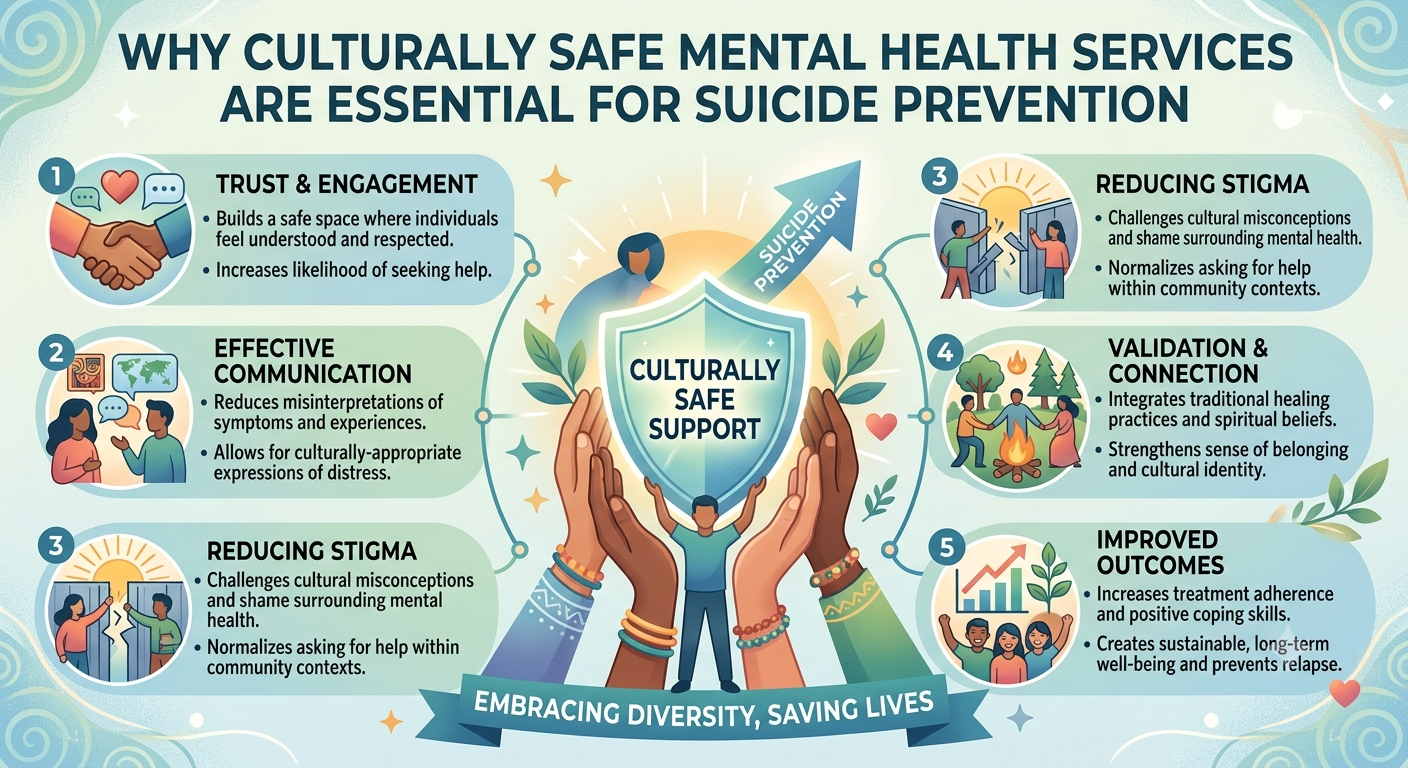
Suicide prevention is most effective when people feel safe seeking support before they reach a crisis point. For Aboriginal and Torres Strait Islander peoples, this means accessing mental health services that recognise the importance of culture, family, community, Country, spirituality and self-determination as part of overall wellbeing.
The Australian Institute of Health and Welfare reports that Aboriginal and Torres Strait Islander peoples experience higher rates of suicide than non-Indigenous Australians. Addressing this disparity requires more than crisis intervention. It requires services that build trust, encourage early help-seeking and provide care that reflects people’s lived experiences.
Access to suicide prevention support is more effective when care acknowledges cultural identity, social and emotional wellbeing, and the broader factors that influence mental health.
How Cultural Safety Improves Mental Health Care
Cultural safety means that the person receiving care feels respected, understood and free from discrimination. Rather than focusing only on how a service is delivered, cultural safety is determined by the experience of the individual receiving care.
This approach is particularly important in mental health because trust influences whether people feel comfortable discussing personal challenges, engaging with ongoing support and returning for future care. If someone feels misunderstood or judged, they may be less likely to continue accessing services.
Aboriginal and Torres Strait Islander concepts of Social and Emotional Wellbeing recognise that mental health is influenced by relationships with family, kinship networks, community, culture, Country and spirituality. By recognising these connections, mental health services can provide care that considers the whole person rather than focusing solely on symptoms or diagnoses.
This broader approach allows practitioners to consider grief, trauma, family circumstances, community relationships and cultural identity when developing support plans that reflect each person’s individual circumstances.
Suicide Prevention Support Must Address the Causes of Distress
Effective suicide prevention support goes beyond responding during a crisis. It also involves recognising the factors that contribute to emotional distress and supporting wellbeing before challenges escalate.
For Aboriginal and Torres Strait Islander peoples, these factors may include:
- Intergenerational trauma.
- Racism and discrimination.
- Grief and loss.
- Family pressures.
- Housing instability.
- Financial hardship.
- Disconnection from culture or community.
The National Aboriginal and Torres Strait Islander Suicide Prevention Strategy identifies self-determination, cultural identity and community leadership as important components of suicide prevention. These principles recognise that communities understand their own challenges and are well placed to help shape the services and support that best meet local needs.
By recognising these broader influences, mental health services can move beyond short-term crisis responses and provide care that reflects the realities affecting a person’s wellbeing.
Why a Strong Workforce Matters
A culturally informed workforce is an important part of effective suicide prevention. People experiencing distress often first seek support through local health workers, community support staff or primary healthcare services before accessing specialist mental health care.
AHMRC’s Mental Health and Suicide Prevention Support Program includes initiatives focused on workforce wellbeing and Social and Emotional Wellbeing. Supporting the workforce is essential because staff wellbeing can directly influence the quality and consistency of care provided within communities.
The program also supports mental health training through AHMRC’s Little Bay Campus. This training helps healthcare workers recognise signs of distress, understand suicide risk factors, respond appropriately and connect individuals with suitable support pathways.
Developing workforce capability strengthens culturally responsive care and helps create more consistent support across Aboriginal Community Controlled Health Organisations.
Why Community-Controlled Services Improve Access
Aboriginal Community Controlled Health Organisations are governed by the communities they serve, allowing services to reflect local priorities, cultural knowledge and community needs.
Because these organisations have strong connections with local communities, they are often well placed to understand the barriers people may face when accessing mental health care. This understanding helps inform outreach activities, service delivery and program design.
AHMRC has advocated for direct investment in Aboriginal Community Controlled Health Organisations to strengthen mental health and suicide prevention responses. Community-controlled services also encourage collaboration between health workers, Elders, families and community organisations, helping ensure care remains relevant, accessible and culturally appropriate.
Cultural Connection Supports Long-Term Wellbeing
Strong connections to Country, family, language, community and cultural practices are recognised within Aboriginal and Torres Strait Islander mental health frameworks as important contributors to Social and Emotional Wellbeing.
Research and Indigenous mental health policy frameworks consistently recognise that cultural identity can strengthen resilience, reinforce a sense of belonging and support positive mental health outcomes.
Culturally safe mental health services recognise these strengths and may incorporate family involvement, community participation, culturally relevant activities or connections to local support networks alongside clinical care.
By acknowledging both the individual and the community, these services provide more holistic support that reflects the broader influences on wellbeing.
What Culturally Safe Mental Health Support Looks Like
While every community has different priorities, culturally safe mental health services commonly focus on:
- Respecting cultural identity and lived experience.
- Supporting Social and Emotional Wellbeing alongside mental health care.
- Recognising the importance of family, community and cultural connections.
- Providing care that is free from discrimination and judgment.
- Working collaboratively with Aboriginal Community Controlled Health Organisations.
- Connecting individuals with appropriate ongoing support and referral pathways.
Together, these approaches help create services that people feel comfortable accessing and returning to when support is needed.
Conclusion
Culturally safe mental health services are an essential part of effective suicide prevention because they provide care that reflects the lived experiences, cultural identities and social realities of Aboriginal and Torres Strait Islander peoples.
Mental health support is most effective when it considers Social and Emotional Wellbeing, addresses the factors contributing to distress, strengthens workforce capability, supports community-controlled care and recognises the value of cultural connection.
By improving trust, encouraging earlier engagement with services and supporting culturally responsive care, access to suicide prevention support can contribute to stronger mental health outcomes for individuals, families and communities.