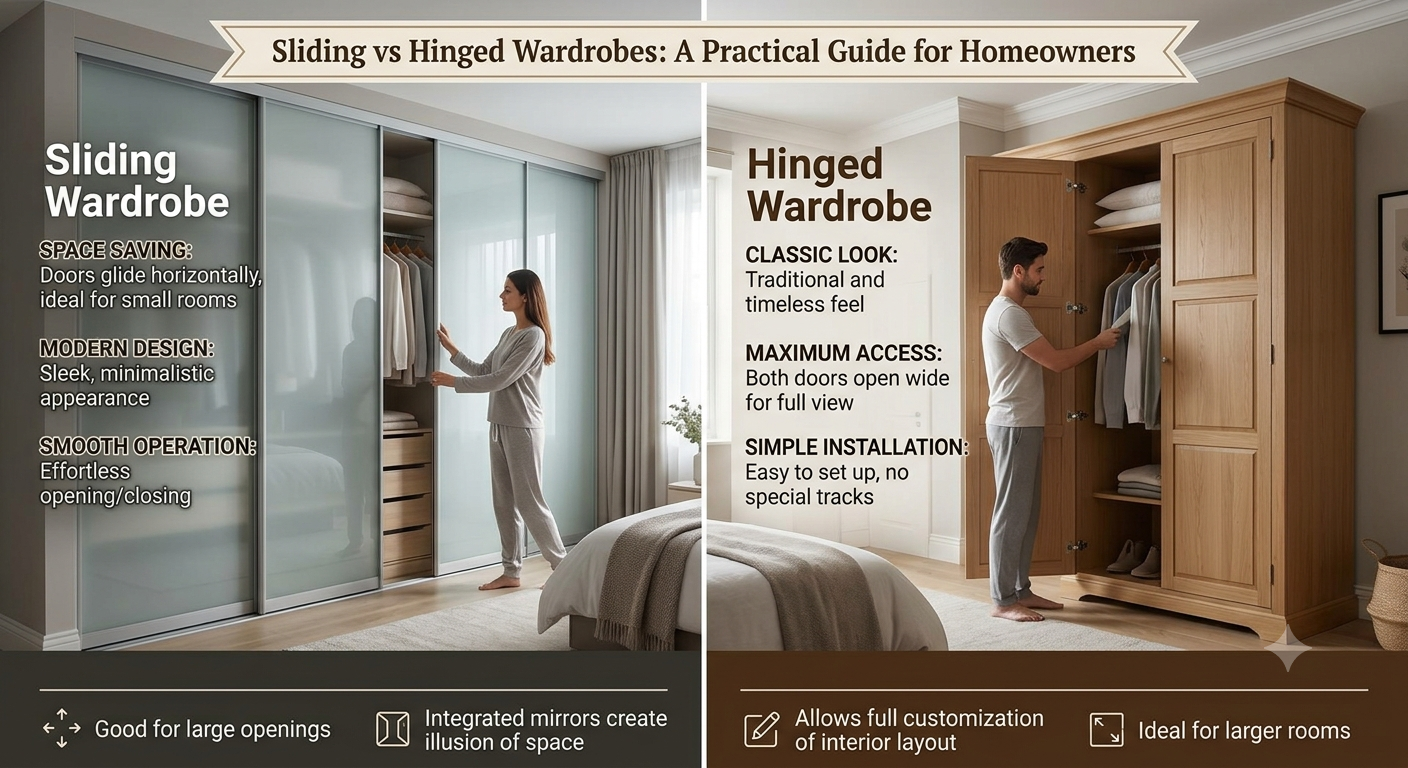
Choosing a wardrobe involves more than selecting a finish or colour. The type of door you choose influences how storage is accessed, how furniture can be arranged and how efficiently a room functions. For most homeowners, the decision comes down to sliding door wardrobes or hinged wardrobes.
The best option depends on the available space, your storage requirements and how you’ll use the wardrobe every day. Many homeowners choose sliding door wardrobes because they provide a practical storage solution without requiring additional floor clearance in front of the wardrobe.
The Australian Government’s YourHome resource recommends considering storage efficiency, room planning and material selection during home renovations. These factors are directly relevant to wardrobe design because built-in storage is a long-term feature that affects both functionality and organisation.
At a glance:
| Sliding door wardrobes | Hinged wardrobes |
| Ideal for compact rooms | Ideal for larger rooms |
| No door swing clearance required | Full access to the wardrobe interior |
| Furniture can sit closer to the wardrobe | Multiple sections can be opened at once |
| Modern, streamlined appearance | Wide variety of door styles and hardware |
How Sliding Door Wardrobes Work
Sliding door wardrobes use panels that move horizontally along a track system. Because the doors remain within the wardrobe’s footprint, they provide access without swinging into the room.
This makes them particularly well suited to:
- Apartments.
- Guest bedrooms.
- Compact bedrooms.
- Rooms where furniture is positioned close to the wardrobe.
Sliding wardrobes are commonly configured with two, three or four panels, depending on the available wall space. Homeowners can also choose from a variety of finishes, including mirrors, glass panels, timber-look surfaces and contemporary laminate options.
How Hinged Wardrobes Work
Hinged wardrobes use doors attached directly to the wardrobe frame. The doors swing outward, providing immediate access to the wardrobe interior.
This allows multiple sections of the wardrobe to be viewed at the same time, making it easier to access:
- Hanging space.
- Shelving.
- Drawers.
- Storage compartments.
Hinged wardrobes are often chosen for:
- Larger bedrooms.
- Walk-in wardrobe areas.
- Homes where unrestricted wardrobe access is a priority.
From a design perspective, hinged wardrobes also accommodate a wide variety of door profiles and hardware styles, making them suitable for both contemporary and traditional interiors.
Room Size Often Determines the Best Choice
The available space within a bedroom should play a major role in wardrobe selection.
Before choosing a wardrobe style, measure:
- Wall dimensions.
- Furniture placement.
- Walking space around the room.
- Ceiling height.
These measurements provide a clearer understanding of how the wardrobe will function once installed.
In bedrooms where furniture sits close to storage areas, sliding door wardrobes help preserve usable floor space because the doors do not extend into the room. This can make a noticeable difference in compact layouts where every centimetre matters.
In larger bedrooms, door clearance is usually less of a concern, allowing homeowners to focus more on access preferences and overall design goals.
Floor-to-ceiling wardrobes should also be considered, as they increase storage capacity by making better use of vertical space without increasing the wardrobe footprint.
Internal Storage Design Has the Greatest Impact
While the choice of door style is important, the internal layout often has the biggest influence on how well a wardrobe performs.
A practical wardrobe may include:
- Hanging rails.
- Shelving.
- Drawers.
- Shoe storage.
- Baskets.
- Pull-out trays.
Modern sliding door wardrobes can accommodate the same range of internal storage features as hinged wardrobes. The main difference is how those storage areas are accessed rather than the storage options themselves.
Long hanging sections work well for coats, dresses and formal wear, while double hanging sections increase storage for shirts and jackets. Drawers help organise smaller items, and shelves provide space for folded clothing, bags and linen.
Careful internal planning often delivers greater long-term benefits than the choice of door style alone.
Materials and Hardware Affect Long-Term Performance
Wardrobes are designed to provide reliable storage for many years, making material selection an important consideration.
Sliding wardrobes rely on tracks and rollers to support smooth operation, while hinged wardrobes depend on hinges and mounting hardware.
To help maintain long-term performance:
- Keep sliding door tracks free from dust and debris.
- Periodically check hinged doors for alignment.
- Choose quality hardware designed for regular use.
- Select durable finishes suited to everyday wear.
Mirrored doors remain a popular option because they provide a full-length reflection without requiring additional furniture. They can also increase the perception of space by reflecting natural light throughout the room.
YourHome also recommends considering low-VOC materials when specifying cabinetry products such as laminates and veneers to help support indoor air quality.
Choose a Wardrobe That Can Adapt Over Time
Storage requirements rarely stay the same.
They often change as:
- Families grow.
- Clothing collections expand.
- Rooms are repurposed.
- Lifestyle needs evolve.
Selecting a wardrobe with adaptable internal components makes future changes much easier. Adjustable shelving, additional drawers and flexible hanging configurations allow the storage system to evolve without requiring a complete replacement.
The most practical wardrobe designs continue to support everyday organisation while adapting to changing household needs.
Conclusion
Choosing between sliding and hinged wardrobes ultimately comes down to room dimensions, storage habits, accessibility requirements and long-term functionality.
For bedrooms with limited floor space, sliding door wardrobes provide easy access to storage without requiring additional clearance in front of the wardrobe. Their space-efficient design makes them particularly suitable for compact rooms and modern home layouts.
Hinged wardrobes provide full visibility of the wardrobe interior and are an excellent option where there is sufficient room for unrestricted door movement. Regardless of the style you choose, thoughtful internal planning, accurate measurements and quality materials will have the greatest impact on how well your wardrobe performs for years to come.