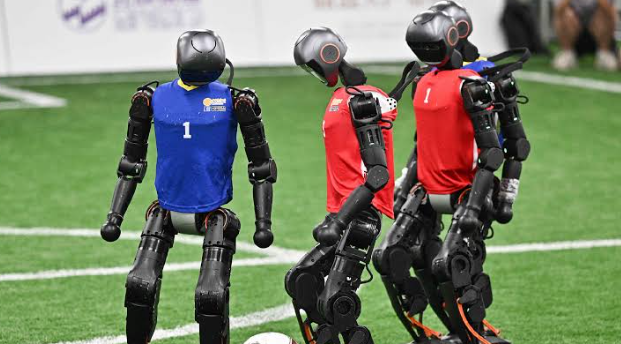
A robot ran 100 meters faster than Usain Bolt last week. Not in a lab demo, not in a promotional video – in front of a live crowd at Beijing’s National Speed Skating Oval, as part of a five-day competition that just wrapped. Whether any of it turns into something a sportsbook can price is still an open question, but the games themselves are done, and the results are worth a look before getting to that.
Why US sportsbooks still aren’t touching this
US sportsbooks run on structure – consistent rules, verified data and a clear line between who’s actually competing. Robot sports still don’t fully have that, even after a second edition of the games. A lot of these machines are remotely piloted rather than fully autonomous, and that raises a question nobody’s really answered yet: is the bet on the robot, the pilot, or the engineering team that built it? Until that’s sorted, offering real markets on this stuff is more legal liability than product.
What actually happened this time
The second World Humanoid Robot Games ran August 22-26 in Beijing, and the scale dwarfed last year’s debut. More than 2,000 robots from 666 teams across 16 countries competed in 51 events, up from 26 the first time around.
One of the games’ biggest headlines came early – a robot named Tiangong Ultra ran the 100 meters in 9.39 seconds during preliminaries, edging out Usain Bolt’s 9.58-second world record. By the final, it had shaved down to 8.64 seconds. A robot called Shandian, from Team Monkey King, took only 50 minutes and 26 seconds to touch the finish line of the half-marathon.
A genuine jump from last year’s chaos
Last year’s debut didn’t quite go as planned. We saw robots collapsing mid-soccer-match, pile-ups during the relay, and machines needing a handler just to get back up. That was certainly disappointing for everyone, and the obvious question was, is it even sensible to try this thing at a grand level?
This year’s edition still had its share of stumbles, but the overall performance level jumped noticeably. There have been faster sprint times, cleaner recoveries, and fewer full-field collapses. That kind of year-over-year leap says a lot about how fast the underlying technology is moving, physical balance and endurance included. These happen to be some of the harder problems in robotics right now. Although things are promising on many fronts, the work on the ground needs a colossal effort from everyone involved.
Autonomous or not? Still not fully sorted
Some robots at these games navigated and reacted on their own. Others ran on remote control or pre-programmed routines, and from the stands, it wasn’t always obvious which was which. With the growth in the AI industry, things will improve fast, but for now, the entire show is surrounded by some strong questions.
That distinction still matters enormously for betting specifically – a market needs to know whether it’s pricing a machine’s decision-making or a human operator’s skill behind the controls. This year’s results didn’t really clarify that line. If anything, faster times just made the question more pressing.
What would need to change
Real betting markets need standardized events, verified results, and oversight integrity. These have to be strong enough to catch tampering or swapped hardware between rounds. None of that exists yet for humanoid robot competition, even with two editions now in the books. It’s closer to esports in its earliest, roughest years than to anything resembling a mature sportsbook product. There’s plenty of buzz, but there’s very little of the infrastructure that makes a market actually work.
Where this might actually go
Novelty markets around a specific race or a headline combat match aren’t hard to imagine down the line, especially once formats standardize and autonomy gets clearly labeled event by event. Coverage of the just-finished games has already been heavy, with outlets turning out recaps and explainers almost as fast as results came in.
A fair amount of that reporting leaned on AI in content creation just to keep pace with how much ground there was to cover in five days. But the more interesting story right now isn’t whether anyone can bet on a robot soccer match. It’s that a robot broke a human sprint record in a public arena last week and how much commercial weight is clearly sitting behind what still looks, on the surface, like a strange and occasionally very funny sporting event.