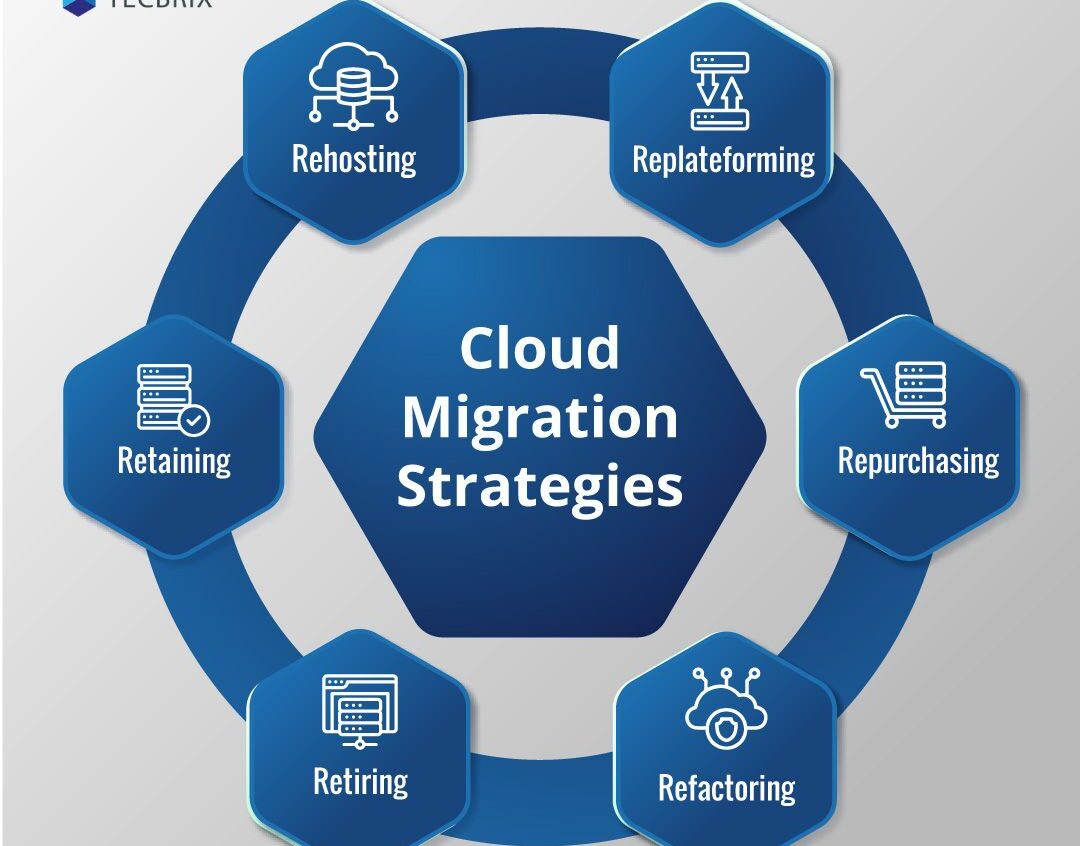
Migration of workloads to the cloud can be a disruptive undertaking for an organization. On the one hand, it may offer increased flexibility and facilitate infrastructure scaling in line with changing business needs. However, the process of migrating applications and data is complex and requires thorough analysis. Migration should not be viewed as a mere transfer of servers and applications from one environment to another. Different workloads have distinct requirements, and their relocation needs to be deliberated with attention to their interdependencies, which, when severed, can result in higher-than-expected costs, operational disruptions, or poor performance. An effective strategy will serve as a reference point throughout the entire process and help an organization make decisions as to what to migrate, what to modify, and what not to touch.
Start with Defining the Need
Prior to identifying a cloud provider or finalizing a specific set of technical decisions, it is important to clarify why the organization wants to migrate to the cloud. The reason can be varied, ranging from the reduction of infrastructure management overheads to the need for enhanced scalability or improved business continuity through the use of cloud-based solutions. It is vital to define a clear objective since it will shape the remainder of the decisions.
For instance, if an organization seeks to reduce infrastructure management, there is no need to prioritize containerization and the restructuring of applications in favor of managed cloud services. In contrast, if the organization’s primary motive is to modernize legacy applications, rehosting will hardly be the best option. It is advisable to acknowledge that migration can and should serve a clear purpose, as opposed to being driven by a cloud-first fallacy.
Assess the Current State
Before migration, teams should also review how their current infrastructure is managed, including any tools such as a web hosting control panel used to configure servers and hosting resources. Once the motivation has been defined, it is time to analyze the current infrastructure and inventory all existing applications, databases, servers, and supporting technologies. It is critical to note which applications are utilized, how much they are used, and which databases they depend on. Dependencies can often be non-obvious, and the applications may have subtle, unaccounted interconnections, meaning that some of them may only be viable in the cloud with certain modifications to function correctly. The applications that are obsolete or unused should also be identified, as they will likely be retired or decommissioned.
Categorize Workloads
At this stage, it should be possible to sort the existing applications according to their type and technical requirements. It is advisable to adopt a common-sense approach and classify them based on the effort it will take to migrate them. For instance, some applications can be rehosted (migrated with little or no changes), while others may require replatforming or refactoring. Alternatively, some can be retained, as migrating them will not be prioritized, while others should be retired. The classification does not necessarily need to be absolute; it is possible to migrate some applications and retain others. Similarly, applications with lesser importance can be selected for migration first, with an option to proceed to more critical ones later.
Select the Cloud Environment
Once the applications have been sorted, the next step is to select the cloud infrastructure and environment that will serve as the destination for the migrated workloads.The options typically include infrastructure as a service (IaaS), platform as a service (PaaS), and the combination of the two. The choice of infrastructure should be informed by factors such as the technical requirements of applications, the sensitivity of data, regulatory and compliance considerations, performance and availability requirements, organizational expertise, and financial implications. The strategy does not need to select the specific tools and components at this stage, but a rough idea of infrastructure capacity and capabilities should be developed.
Create a Roadmap
As migration can be a large-scale enterprise endeavor, it is essential to create a detailed plan that will inform the entire process. The key principle here is to prioritize, starting with the applications that can be migrated with minimal administrative burden and risk. It is also advisable to start with a pilot program to observe how the applications behave in the cloud environment. This is the point where many potential pitfalls are identified, including the intricacies of networking and authentication, application interdependencies, and the viability of monitoring and backup solutions. After the initial phase, the lessons can be documented and analyzed, and the process can be repeated for the next set of applications.
Plan for Data Migration
Oftentimes, the complexities of migration are not related to applications but rather to data. The data’s origin, size, and migration speed should be considered, as well as whether it needs to endure during the migration process. Large bodies of data can make migration lengthy, and the applications’ ability to support parallel data transfers needs to be confirmed. Most importantly, prior to initiating the migration of critical data, the backup and recovery procedures must be established and tested. The process of restoration is frequently overlooked, but an application’s ability to resume operations after a disruption needs to be verified. The integrity of data needs to be verified to ensure there are no disruptions or inconsistencies caused by the migration. It is not enough to simply relocate files and databases; an organization needs to confirm that all data is accounted for and is usable.
Designate Security from the Outset
Security considerations need to be incorporated in the strategy, as they can greatly influence the choice of tools and approaches. Authentication and permission procedures, encryption requirements, network security, secrets management, monitoring, and logging should be evaluated before migrating applications to avoid complications that would require additional investments to resolve. The principle of least privilege should be applied when designing the permissions matrix across infrastructure and applications. It is essential to remember that the responsibility for maintaining security is not exclusive to the cloud provider; despite their assistance in ensuring the security of the environment, the organization retains accountability for its infrastructure, applications, and data.
Prepare the Network
With hybrid cloud architectures becoming the industry standard, applications in the cloud need to be able to communicate with on-premise applications, so their interconnection needs to be considered. As a part of the planning process, the applications that need to be interconnected, as well as the specific requirements, should be identified. The question of bandwidth also becomes relevant, as the network’s performance can significantly impact the applications’ performance. If an application has a high dependency on a particular database or service, the proximity of its location can be a decisive factor in the selection of the cloud environment.
Anticipate Costs
Although cloud infrastructures are generally more scalable and flexible than their on-premise alternatives, cost management is still a concern that needs to be considered with care. Prior to migration, estimates of the expected expenses should be developed, and the financial implications of each workloads’ migration should be evaluated. The organization will inevitably identify new opportunities, such as managed services, that it can utilize for its benefit. It is also essential to keep track of the costs post-migration, as it is easy to allow costs to escalate after the initial workload has been migrated. Unused or underutilized virtual machines, applications, or databases consume resources without providing much value, so it is crucial to keep an eye on the expenditures.
Test Thoroughly
It is not enough to merely verify that an application is functional in the cloud environment. The applications should be tested to ensure that they are performing as intended, including their interactions with the infrastructure and other applications. The testing phase should also cover backup and monitoring procedures as well as security measures, including secrets management, authentication, and authorization. The applications should be tested for their ability to withstand failures and, more importantly, the time it takes to restore their operations. This stage is critical, and the results should be carefully considered.
Make Contingency Plans
Despite the thoroughness of the strategy, there is always an opportunity for things to go wrong. For each of the critical applications, contingency and rollback plans should be developed. Ideally, there should be a procedure on what to do if a rollback is necessary, alongside the list of criteria that will be used to determine whether a rollback should take place and the personnel that will make the final decision. A rollback plan is especially important for critical applications, as their malfunction can disrupt the operations of an entire organization.
Continuously Monitor
Although it is not the responsibility of the strategy to dictate the operations of the organization, its implementation should transform the infrastructure and the organization’s perspective of it.
The applications’ performance, as well as the utilization rates of individual components, should be continuously monitored.
The results can be compared to the initial measurements taken in the preparatory stages to see if the applications are operating as intended.
It is also important to keep track of the application’s response to the changes in the infrastructure and take advantage of opportunities to optimize the operations of infrastructure.