



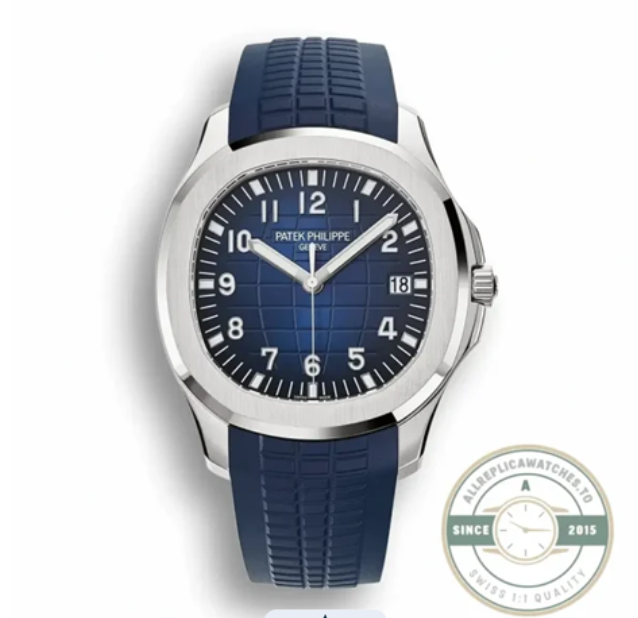
Few names in Swiss watchmaking carry the same historical significance as Patek Philippe. Established in 1839, the Geneva-based manufacturer has built its reputation around sophisticated mechanical movements, elegant case designs, and an exceptional commitment to traditional craftsmanship.
From the understated Calatrava to the instantly recognizable Nautilus and Aquanaut, Patek Philippe watches demonstrate how technical engineering and visual refinement can coexist within a relatively compact mechanical instrument.
These characteristics have also made the brand a prominent subject in the replica watch industry. Modern reproductions attempt to recreate distinctive cases, textured dials, intricate bracelets, and even the architecture of mechanical movements.
However, understanding the difference between an original Patek Philippe and a replica requires looking beyond surface resemblance. Materials, manufacturing tolerances, movement finishing, and long-term reliability all play important roles in determining the quality of a watch.
The Design Philosophy Behind Patek Philippe
Patek Philippe has developed an identity that balances traditional watchmaking with carefully considered design.
Unlike brands that emphasize highly recognizable sports-watch styling across their entire collections, Patek Philippe offers a broad range of aesthetic approaches.
The Calatrava represents classical dress-watch elegance, with clean dials and balanced proportions. The Nautilus introduces a distinctive sports-luxury character, while the Aquanaut provides a more contemporary interpretation of casual sophistication.
Despite these differences, the collections share several underlying principles.
Case proportions are carefully controlled, dial elements are arranged for visual harmony, and mechanical components are developed with attention to both performance and finishing.
This philosophy makes Patek Philippe particularly interesting from a manufacturing perspective.
Reproducing a recognizable outline may be relatively straightforward, but recreating the subtle relationships between case thickness, dial texture, bracelet construction, and movement architecture is considerably more demanding.
The Nautilus: An Icon of Luxury Sports Watch Design
Introduced in 1976, the Patek Philippe Nautilus helped establish a new direction in luxury sports watchmaking.
Designed by Gérald Genta, the original Reference 3700 featured a stainless-steel case inspired by a ship’s porthole.
Its rounded octagonal bezel, horizontal dial pattern, and integrated bracelet created an appearance unlike conventional luxury watches of the period.
The Nautilus became particularly influential because it combined sports-watch practicality with the finishing standards associated with traditional high-end watchmaking.
Modern versions continue to follow this recognizable design language.
The Reference 5811/1G-001, for example, features a white-gold case and bracelet, a blue sunburst dial with horizontal embossing, and the self-winding Calibre 26-330 S C.
The combination of polished bevels and satin-brushed surfaces remains an essential characteristic of the Nautilus.
These finishing transitions are difficult to reproduce accurately because even small variations in edge definition or brushing direction can alter the watch’s appearance.
This is why the Nautilus receives particular attention in discussions about replica case construction and bracelet craftsmanship.
Aquanaut: A Modern Interpretation of Patek Philippe Style
While the Nautilus helped redefine luxury sports watches during the 1970s, the Aquanaut introduced a younger and more contemporary design approach.
Launched in 1997, the collection adopted a rounded octagonal case inspired by the Nautilus while incorporating a distinctive embossed dial and composite strap.
The Aquanaut’s design creates a strong connection between the pattern on the dial and the texture of the strap.
One recognizable example is the Reference 5167A-001, which combines a stainless-steel case, a charcoal-gray embossed dial, and a matching composite strap.
Unlike traditional leather straps, the original Aquanaut’s composite material is designed to withstand exposure to moisture, wear, and environmental conditions.
This combination of materials contributes to the collection’s casual character.
For replica manufacturers, recreating the Aquanaut involves several challenges.
The case must maintain its recognizable proportions, the embossed dial requires accurate texture and spacing, and the strap needs the correct flexibility, appearance, and integrated fit.
A visually convincing reproduction may imitate these characteristics, but material composition and long-term durability can vary considerably.
Calatrava: The Importance of Simplicity
The Calatrava demonstrates another side of Patek Philippe’s design philosophy.
First introduced in 1932 with Reference 96, the collection became associated with restrained elegance and the idea that every design element should serve a clear purpose.
Unlike the Nautilus or Aquanaut, the Calatrava generally avoids complicated exterior shapes.
Its appeal comes from balanced dial proportions, refined hands, carefully designed hour markers, and relatively slim case profiles.
The Calatrava Reference 6119R-001 provides a particularly interesting example.
Its rose-gold case incorporates a Clous de Paris hobnail-pattern bezel, while the manually wound Calibre 30-255 PS features twin mainspring barrels and an approximately 65-hour power reserve.
The design illustrates how a traditional dress watch can combine understated aesthetics with sophisticated mechanical engineering.
For replicas, simplicity presents its own manufacturing challenges.
A minimally decorated dial leaves fewer visual elements to conceal imperfect printing, incorrect hand proportions, or inconsistent finishing.
As a result, reproducing a classical dress watch convincingly can require just as much attention to detail as recreating a complicated sports model.
Materials: What Separates Appearance From Construction Quality?
Material selection plays an important role in the appearance, weight, comfort, and durability of a mechanical watch.
Authentic Patek Philippe models use different materials depending on the collection and reference.
Stainless steel is associated with selected sports-watch models, while rose gold, white gold, yellow gold, and platinum appear throughout the manufacturer’s luxury collections.
These materials have distinct physical characteristics.
Gold and platinum are denser than stainless steel, influencing how a watch feels on the wrist. Their finishing requirements also differ because precious metals respond differently to polishing and everyday contact.
Replica manufacturers frequently advertise stainless-steel cases, sapphire crystals, and gold-colored exterior finishes.
Some higher-priced reproductions claim to use premium alloys or advanced surface treatments. However, such descriptions should not be accepted as proof of material composition.
For readers researching products marketed as the best replica watches, understanding the distinction between solid precious metals, stainless steel, and plated finishes is particularly important.
Two watches may display a similar color and surface texture while differing significantly in weight, corrosion resistance, and long-term wear characteristics.
A convincing appearance does not necessarily indicate equivalent materials.
Dial Manufacturing and Surface Finishing
One of the most recognizable qualities of Patek Philippe watches is the attention devoted to dial construction.
Different collections incorporate distinctive surface treatments.
The Nautilus features horizontally embossed patterns, while the Aquanaut uses a more pronounced geometric texture.
Calatrava models often emphasize elegant finishes, carefully proportioned markers, and understated typography.
Producing these details requires precision.
Dial printing must remain sharp, applied markers should be positioned consistently, and decorative patterns must maintain uniform spacing.
Surface treatment is equally important because the appearance of a dial changes under different lighting conditions.
A sunburst finish, for example, creates directional reflections that emphasize the dial’s texture.
Replica manufacturers attempt to reproduce these effects through various decorative and machining techniques.
However, differences in pattern depth, printing quality, marker finishing, and color consistency can remain visible during close examination.
These details help explain why dial craftsmanship is often one of the most discussed elements in comparisons between original watches and reproductions.
Mechanical Movements: The Heart of Patek Philippe Watchmaking
The mechanical movement is arguably the most technically significant component of a traditional luxury watch.
Patek Philippe develops movements for a wide variety of applications, ranging from relatively straightforward automatic calibres to highly complicated mechanisms.
The Calibre 26-330 S C is one example of the manufacturer’s modern automatic movement technology.
Used in selected Nautilus and Aquanaut references, it provides central seconds, a date display, and a stop-seconds function.
The movement measures approximately 3.3mm in thickness, allowing it to fit within relatively slim watch cases.
The manually wound Calibre 30-255 PS represents a different engineering approach.
Its twin-barrel configuration supports an approximately 65-hour power reserve, while its architecture allows for a large-diameter movement with a slim profile.
Replica watches may use generic automatic movements or mechanisms modified to resemble the appearance of specific Swiss calibres.
However, reproducing the visible arrangement of bridges and the rotor does not establish comparable mechanical performance.
Differences in escapement components, movement regulation, lubrication, and manufacturing tolerances can affect accuracy and durability.
The availability of compatible replacement parts is another consideration, particularly for long-term servicing.
Understanding Super Clone Movement Claims
The term “super clone” is increasingly used in discussions of luxury replica watches.
Generally, it refers to reproductions that attempt to recreate both the exterior appearance and certain internal characteristics of the original model.
However, the expression is not an independently regulated technical standard.
A watch described as a super clone may contain an automatic movement with decorative modifications, a movement inspired by a genuine calibre, or a mechanism with substantially different internal construction.
These distinctions can be difficult to identify through product photography.
Collections presented under the category Patek Philippe Replica commonly emphasize recognizable designs, case finishing, dial details, and mechanical specifications.
Yet descriptions of movement architecture should be distinguished from independently verified performance data.
A reliable mechanical evaluation considers timekeeping consistency, power reserve, winding performance, movement condition, and servicing requirements.
Decorative similarity alone cannot establish equivalent engineering quality.
The Art of Movement Finishing
Movement finishing is one of the areas where traditional Swiss haute horlogerie demonstrates its technical and artistic heritage.
Patek Philippe movements incorporate decorative techniques that require substantial expertise.
These include beveled bridge edges, polished steel components, decorative striping, and carefully finished visible surfaces.
The process known as anglage involves creating refined bevels along the edges of movement components.
Although this finishing can improve visual appearance, it also reflects the time and skill invested in the movement’s construction.
Patek Philippe introduced its own quality hallmark, the Patek Philippe Seal, in 2009.
The Seal establishes requirements covering movement construction, finishing, performance, and the quality of the completed watch.
These standards extend beyond the appearance of decorative movement components.
Some replica movements imitate traditional Swiss finishing patterns, but the presence of similar decoration does not demonstrate that equivalent manufacturing or performance standards have been achieved.
True mechanical craftsmanship involves both visible refinement and dependable operation.
Bracelet and Strap Engineering
A luxury watch’s bracelet or strap is an essential part of its overall construction.
The Nautilus provides a particularly demanding example through its integrated bracelet design.
Each link must maintain consistent proportions, articulate smoothly, and preserve the visual relationship between brushed and polished surfaces.
Slight differences in link spacing or finishing can affect both appearance and comfort.
The Aquanaut presents a different challenge with its composite strap.
The strap must balance flexibility, durability, and a close fit with the case.
Dress watches such as the Calatrava commonly rely on carefully selected leather straps that complement their more restrained design language.
Replica manufacturers often concentrate on recreating these visible features, but practical differences can emerge during extended wear.
Clasp reliability, material flexibility, link articulation, and surface finishing all contribute to how comfortably a watch performs in everyday use.
These characteristics are often more meaningful than minor decorative similarities.
Manufacturing Precision and Quality Control
Modern manufacturing technology allows watch components to be produced with increasingly detailed shapes and dimensions.
Computer-controlled machining, improved polishing equipment, and precision component manufacturing have contributed to more sophisticated reproductions of luxury watch designs.
However, manufacturing capability and quality control are separate considerations.
A precisely machined case can still contain a poorly regulated movement.
Similarly, an attractive dial may be installed with incorrectly aligned hands or inconsistent date positioning.
Professional mechanical evaluation may include measurements of daily timing variation, balance amplitude, beat error, and power reserve.
Case construction also requires examination.
The presence of a screw-down crown or sapphire crystal does not automatically establish a particular level of water resistance.
Replica watches should not be assumed to provide the same resistance to moisture, pressure, or environmental conditions as their genuine counterparts without suitable testing.
These distinctions reinforce the importance of evaluating the complete watch rather than concentrating on appearance alone.
Authenticity, Ownership, and Long-Term Value
The relationship between replica watches and authentic luxury timepieces involves more than differences in construction.
An original Patek Philippe benefits from the manufacturer’s established servicing infrastructure, documented quality standards, and commitment to preserving its mechanical watches.
Replica products do not carry the same manufacturer support.
Long-term maintenance can also be more difficult when movement components are produced by suppliers with inconsistent specifications or limited replacement-part availability.
There are additional legal and ethical considerations when products reproduce protected trademarks and brand identities.
Rules concerning counterfeit goods vary between jurisdictions, and watches presented as replicas should never be misrepresented as authentic.
For enthusiasts primarily interested in traditional watch design and mechanical craftsmanship, independently branded watches can offer an alternative without reproducing protected brand identities.
Ultimately, a watch’s long-term value involves more than its appearance or initial cost.
Mechanical reliability, material authenticity, repairability, and manufacturing transparency all deserve consideration.
Final Thoughts
Patek Philippe has earned its reputation through generations of mechanical development, refined design, and exceptional attention to traditional watchmaking techniques.
The Nautilus, Aquanaut, and Calatrava each demonstrate a different aspect of the manufacturer’s craftsmanship, from integrated sports-watch construction to sophisticated dress-watch movements.
Their popularity has encouraged replica manufacturers to produce increasingly detailed interpretations, often emphasizing recognizable cases, textured dials, premium material claims, and movement resemblance.
However, visual accuracy does not automatically translate into equivalent engineering or durability.
Understanding the differences in case materials, movement architecture, finishing techniques, and manufacturing standards provides a more complete perspective on Patek Philippe replica watches.
The enduring appeal of these designs ultimately lies in the relationship between aesthetics and mechanical craftsmanship—a combination that continues to define the finest traditions of Swiss watchmaking.