
Walk through any spinning mill and the carding and combing rooms tend to attract the most attention. Yet one of the quiet determinants of yarn quality sits just after them: the drawing frame machine. Its job is simple to describe and hard to replace. It takes several slivers, blends them together, stretches them evenly, and delivers a single, more uniform strand. This article explains what the machine does, how it works, and why textile professionals treat it as a core stage of fibre processing.
What a Drawing Frame Machine Actually Does
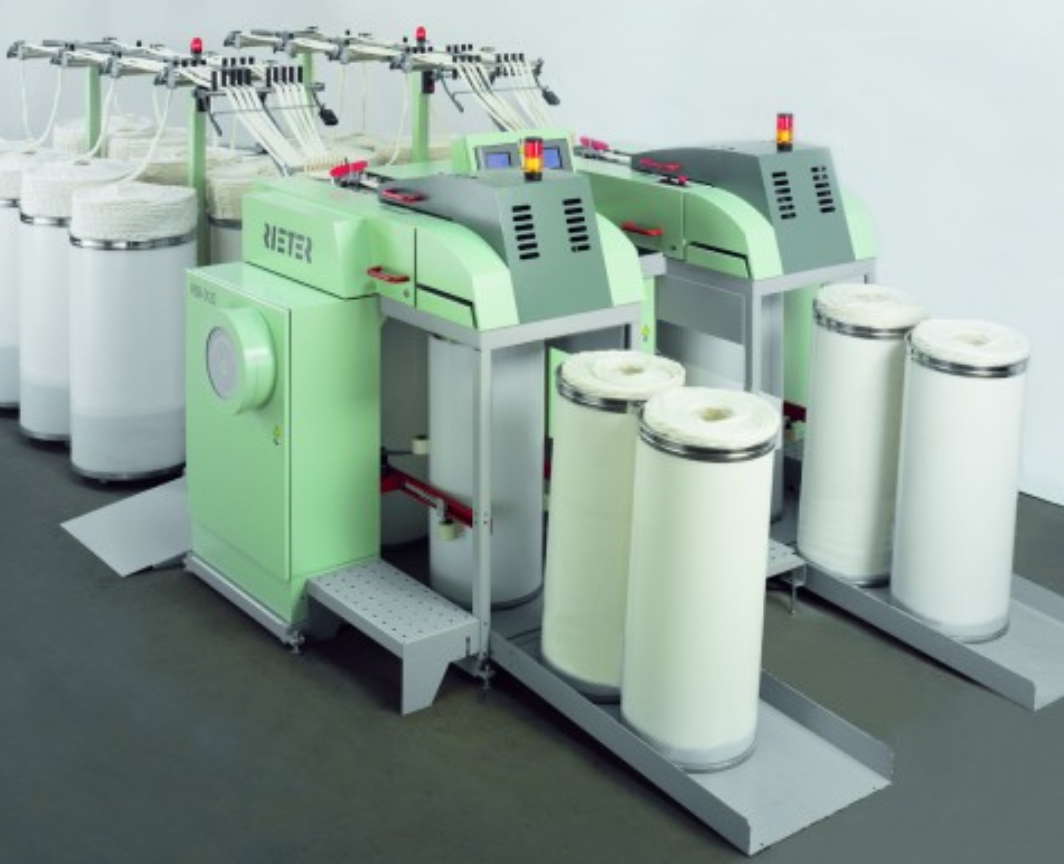
A drawing frame machine takes the loose, rope-like strands of fibre known as slivers and combines them into one improved sliver. A sliver leaving the card carries natural irregularities: thick and thin places, fibres lying at different angles, and hooked fibre ends. If those faults travel forward unchanged, they eventually appear as uneven yarn and visible defects in the finished fabric.
The machine tackles the problem through two linked actions, doubling and drafting. Doubling means feeding several slivers side by side, commonly six to eight in cotton spinning, so that a thick spot in one is likely to be offset by a thin spot in another. Drafting means pulling the combined fibre mass through rollers that run at progressively higher speeds, which thins the strand and straightens the fibres along its length.
How the Drawing Process Works
Feeding and Doubling
Slivers are drawn from cans placed behind the machine and guided through a creel arrangement into the drafting system. Because they enter together, their individual variations average out. This is why doubling is often described as the main mechanism for improving long-term evenness.
The Drafting Zone
The drafting zone is built from sets of rollers, usually fluted metal bottom rollers paired with weighted, rubber-covered top rollers. Each pair turns faster than the one before it. The ratio between delivery speed and feed speed is the draft. During drafting, fibres slide past one another, which straightens and aligns them in the direction of the strand.
Roller settings are normally matched to the length of the fibre being processed. If the gaps are too tight, fibres can be stretched or broken. If they are too wide, fibres float uncontrolled between roller nips and the sliver becomes uneven.
Condensing and Delivery
After drafting, the thin web of fibre is gathered through a trumpet or funnel into a round sliver. A pair of calender rollers compresses it slightly, and a coiler lays it into a delivery can ready for the next stage.
Main Components of a Textile Drawing Machine
Although designs vary between manufacturers, most machines share a familiar set of parts:
- A creel or feeding table that holds and guides incoming slivers.
- A drafting system with bottom rollers, top rollers, and pressure arrangements.
- Sliver guides and condensers that shape the strand after drafting.
- Calender rollers and a coiler that deliver the sliver into cans.
- Stop motions that halt the machine when a sliver breaks or runs out.
- On many modern machines, an autoleveller that measures sliver thickness and adjusts the draft automatically.
Each part influences the final sliver. Worn rollers or unevenly loaded top rollers can create periodic variation, while correctly set guides stop fibres from catching or being displaced as the strand is condensed.
Breaker and Finisher Passages
Many mills run two drawing passages in sequence, often called breaker drawing and finisher drawing. The first passage blends and levels the card slivers. The second refines the result, further improving uniformity before the material moves on to roving or, in some systems, directly to spinning. Where several fibre types are blended, the drawing stage also gives mills a controlled point at which to combine them in the intended proportions.
Fibres and Applications
Drawing frames are used throughout the spinning industry. Cotton mills rely on them heavily, and the principle is equally important for man-made staple fibres and blends. Machine design, roller dimensions, and settings differ with fibre length and fineness, but the underlying aims of doubling, drafting, and alignment remain the same.
Drawing Frame Machines in Laboratory Settings
Not every drawing operation takes place on a production floor. Textile research departments and testing laboratories often need to process small fibre samples under controlled conditions before committing material to an industrial run. A compact, laboratory-scale drawing frame machine gives technicians a practical way to study how a particular fibre or blend responds to drafting, and to prepare uniform slivers for later evaluation, without occupying production equipment. This makes it a natural companion to other textile laboratory equipment used for sample preparation and analysis.
Why the Drawing Stage Deserves Attention
Faults introduced earlier in the line can still be reduced at the drawing frame, but faults left here are very difficult to correct later. Roving and spinning machines can only work with the material they receive. A well-run drawing stage therefore supports fewer end breaks, steadier yarn count, and more consistent fabric appearance.
Routine care matters as much as design. Clean rollers, properly maintained top-roller coverings, correct pressure, and regular checks of sliver weight all help the machine perform as intended.
Closing Thoughts
The drawing frame rarely receives the attention given to spinning frames or looms, but it quietly shapes everything that follows. By blending, drafting, and aligning fibres, it turns an irregular carded sliver into a dependable raw material for yarn production. For engineers, laboratory staff, and buyers alike, understanding this machine is a sensible first step toward understanding yarn quality itself.