A professional lifeguard course provides the technical skills required to manage emergencies. The American Lifeguard Association is a special organization which is dedicated to providing professional and complete rescue skills. There programs are designed for anyone who is interested in becoming a trained professional. You learn to identify risks, execute rescues, and provide life support. This certification marks your entry into the professional rescue community. Rescue responders training is something that anyone can easily learn.
Physical Entrance Requirements
Before starting your lifeguard training, you must prove your physical readiness.
To meet the requirements, you must:
- Be at least 15-years old
- Swim 300 yards without stopping
- Tread water for 2 minutes using only your legs
- Retrieve a 10-pound weight from a 10-foot depth and swim it back to the surface
These exercises are simple, but essential for ensuring you can manage the physical demands of real-life rescues.
Water Rescue Techniques
The lifeguard course teaches specific maneuvers for various victim types.
- Front Rescue. You approach a conscious victim from the front. You push the rescue tube into their chest to provide buoyancy.
- Rear Rescue. You approach from behind. You reach under the victim’s armpits to secure them to the tube.
- Submerged Victim Recovery. You use a surface dive to reach the bottom. You bring the unconscious person to the surface using a cross chest carry.
- Spinal Stabilization. You practice the head splint technique in shallow and deep water. This prevents further injury during extraction.
Medical Response and CPR Training
A comprehensive lifeguard course includes professional level CPR and First Aid. You learn to recognize respiratory and cardiac arrest. You practice chest compressions and ventilations on specialized manikins.
The American Lifeguard Association teaches the use of an Automated External Defibrillator. Applying an AED within three minutes of cardiac arrest increases the victim’s survival chance to 70 percent. You also learn to manage severe bleeding, bone fractures, and allergic reactions using an epinephrine auto injector.
Waterpark and Shallow Water Skills
The lifeguard course offers specialized tracks for different environments. Shallow water training is for pools under five feet. Waterpark training covers wave pools and slide dispatch. You learn to manage high patron volumes. You practice rescues in turbulent water. These endorsements make you a more versatile candidate for employment at large resorts.
Essential Rescue Gear Mastery
You must become proficient with the tools provided at your facility.
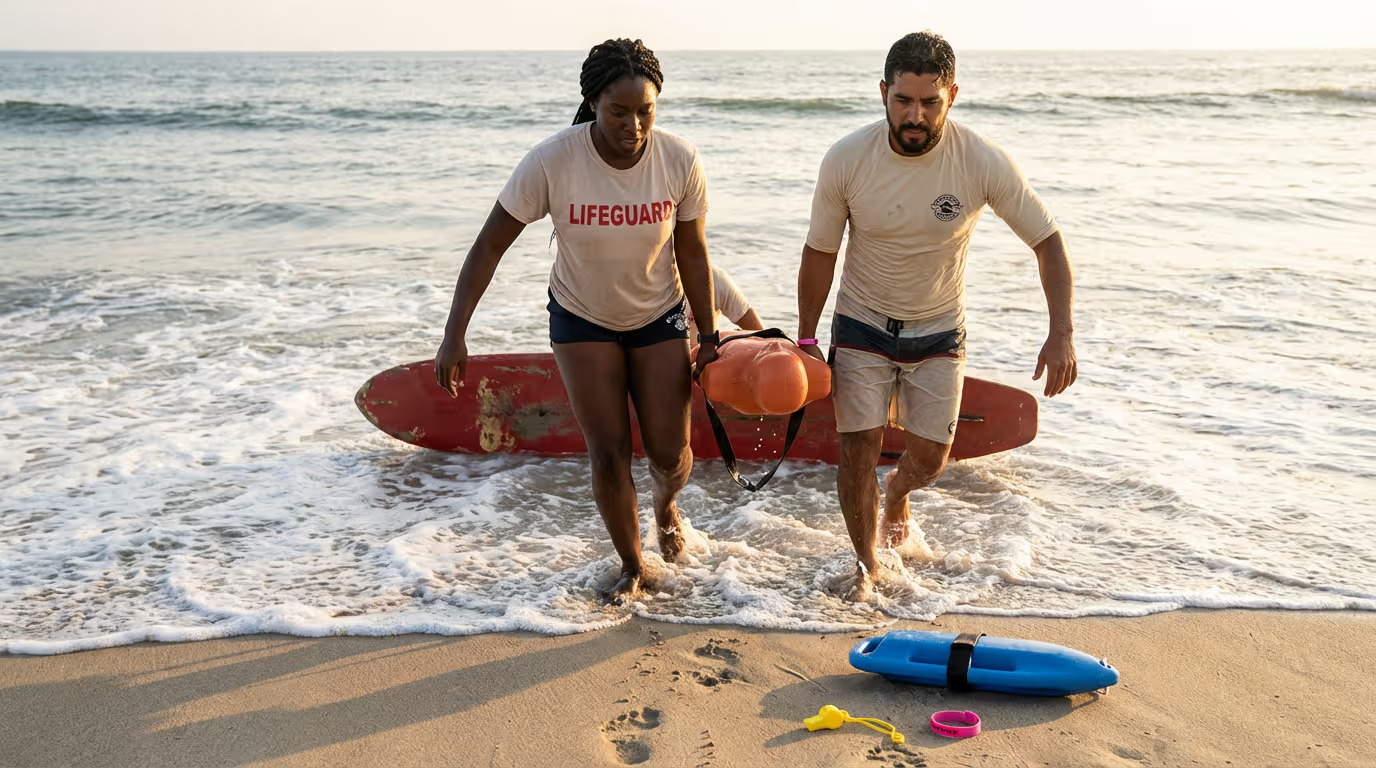
- Rescue Tubes. These provide flotation for multiple people.
- Whistles. You use different signals to communicate with guards and patrons.
- Resuscitation Masks. These allow you to provide oxygen while protecting yourself from pathogens.
- Bag Valve Masks. These provide higher oxygen concentrations during two person CPR.
- Backboards. These are mandatory for safe spinal extractions.
Standard Course Curriculum
Most intensive lifeguard courses follow a structured timeline over three days.
Day one focuses on swimming drills and entries. You practice the stride jump to keep your head above water while entering.
Day two covers physical rescues. You practice removing victims from the water using a backboard or a two-person lift.
Day three involves medical testing. You perform full emergency scenarios. You must pass a written exam with a score of 80 percent or higher.
Success Strategies for Success
Hydrate throughout your training. Pool environments cause rapid fluid loss. Wear a secure swimsuit designed for athletics. Loose clothing creates drag during timed swims. Read your training manual before the first session. Knowing the steps for a primary assessment helps you during drills. Practice your scanning at home. Move your eyes across a room every 10 seconds to build the habit.
Legal Duties and Professionalism
You must follow strict professional standards.
Key duties include:
- Providing care within the scope of your training
- Following standard rescue procedures
- Documenting incidents carefully to avoid liability
Failure to act leads to negligence and legal risk.
Career Outlook and Earnings
Lifeguards stay in high demand across the country.
- Municipal Pools. These provide steady summer work for students.
- Private Fitness Clubs. This offer year round hours and climate controlled environments.
- Waterfronts. Lakes and beaches require advanced training in open water.
- Waterparks. These facilities hire large teams and offer opportunities for rapid promotion.
Starting pay typically ranges from 15 to 22 dollars per hour. Experienced guards move into supervisor or instructor roles. These positions involve training new staff and managing facility safety audits.
Scanning and Vigilance Protocols
Drowning happens quickly and quietly. You must maintain focus. Use the 10/20 rule. Scan your entire zone in 10 seconds. Be able to reach a victim in 20 seconds. Change your position every 30 minutes. Stand up, sit down, or walk your zone. Physical movement prevents the boredom that leads to lapses in vigilance.
Certification Renewal
Your lifeguard certification is valid for two years.
Before it expires, you need to:
- Take a recertification course
- Update your CPR and rescue skills
- Refresh your first aid knowledge
Do not let your certification lapse. Employers cannot put you on duty without a valid certificate.
Conclusion
Training prepares individuals to manage emergencies safely.
Training includes CPR, first aid, and water rescue skills.
Lifeguard course enhances confidence and physical fitness.
Certified lifeguards have career opportunities in pools, beaches, and water parks.
Overall, lifeguard training is essential for anyone interested in water safety and rescue skills.