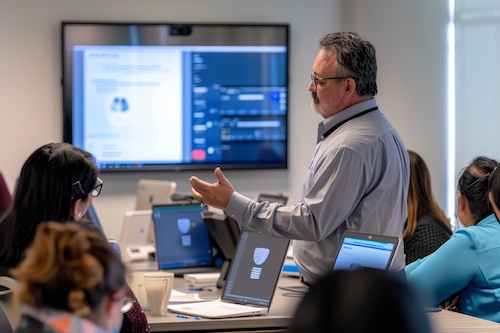
A quiet revolution is transforming classrooms as teachers increasingly adopt technology. This shift has changed teaching methods, with tools like smartboards and Google Docs replacing traditional chalkboards and notebooks. Students now have access to resources beyond the classroom.
The Digital Divide: What Gets in the Way of EdTech Integration?
Not every school enters this conversation from the same starting point. Rural districts often lack reliable broadband. Under-resourced schools struggle to maintain device inventories. Teachers who received their training before tablets existed are now expected to run hybrid classrooms with fluency.
The “digital divide” isn’t just about students—it affects educators too. A teacher who has never used a learning management system (LMS) like Canvas or Google Classroom isn’t simply behind the curve; they’re being asked to learn a new professional language while simultaneously teaching. That’s a significant cognitive load.
But here’s what often gets overlooked: the same technology creating these challenges is also creating opportunities. Digital tools allow for differentiated instruction at a scale that wasn’t previously possible. A single teacher can now assign varied reading levels to different students within the same platform, track individual progress in real time, and flag struggling learners before they fall too far behind.
Strategies That Actually Help Teachers Adopt New Technology
Telling a teacher to “use more technology” without structure is a bit like handing someone a power drill and expecting them to build a house. The tool is only as useful as the person’s ability to wield it.
Start small and specific. The educators who adapt most successfully don’t overhaul their entire curriculum at once. They identify one persistent challenge—student disengagement during review sessions, for instance—and find one tool that addresses it. Platforms like Kahoot! or Quizlet Live can transform a mundane review lesson into something students actually look forward to.
Use peer learning networks. Teachers learn well from other teachers. Informal professional learning communities (PLCs), whether in-person or virtual, allow educators to share what’s working without the formality of a training session. A colleague’s recommendation often carries more weight than a vendor’s pitch.
Leverage technology for planning, not just delivery. Many teachers only think of EdTech as something that happens in front of students. But AI-assisted lesson planning tools, rubric generators, and grading software can reduce administrative burden significantly—freeing up more mental energy for actual instruction.
How Technology Transforms Learning Experiences for Students
When technology is integrated thoughtfully, students don’t just consume information differently—they engage with it differently.
Project-based learning becomes richer when students can collaborate on shared documents in real time, pull primary sources from digital archives, or present findings through video production. Gamified learning platforms reward persistence and make failure feel less permanent. Adaptive learning software adjusts difficulty based on individual performance, keeping students in what psychologists call the “flow state”—challenged enough to stay focused, supported enough to keep going.
For students with learning differences, technology can be particularly transformative. Text-to-speech tools, closed captions, and adjustable reading formats lower barriers that traditional classroom structures often leave in place. An inclusive classroom is, increasingly, a digitally equipped one.
Flexible learning formats have expanded these possibilities further. Students enrolled in online classes in Utah, for example, are demonstrating that structured, high-quality education can happen outside traditional school hours and buildings—a model that demands its own set of technological fluency from teachers.
Professional Development: What Teachers Actually Need in a Digital Age
One-day workshops don’t change practice. Research on professional development consistently shows that sustained, job-embedded learning—coaching, collaborative planning, and ongoing feedback—produces the most lasting results.
For technology integration specifically, this means:
- Ongoing coaching over one-off training. An instructional technology coach who works alongside teachers in their actual classrooms is more effective than a seminar attended once a semester.
- Choice and relevance. Teachers engage more when professional development connects directly to their subject area and grade level. A high school history teacher and a second-grade reading teacher have very different needs.
- Time to experiment without judgment. Trying something new in front of students involves real risk. Schools that create low-stakes environments for teachers to pilot new tools—through pilot programs, co-teaching, or designated “innovation periods”—see higher adoption rates.
Districts that invest in this kind of professional development aren’t just supporting teachers. They’re building institutional capacity for change.
The Future of Education: Sustaining Innovation Without Burning Out
Sustainability is the piece of this conversation that gets the least attention. Technology in education moves fast—sometimes faster than schools can absorb. A tool adopted with enthusiasm one year can be defunded or discontinued the next. Teachers who’ve invested time mastering a platform can find themselves starting over.
The antidote isn’t cynicism—it’s adaptability as a core professional skill. The specific tools will always change. What endures is the ability to evaluate a new technology critically, integrate it purposefully, and let go of it gracefully when something better comes along.
This also means protecting teachers from change fatigue. Administrators who roll out new technology initiatives every semester, without consolidating or evaluating what already exists, erode trust and enthusiasm. Thoughtful pacing matters.
Schools that are getting this right tend to share a few traits: clear vision for what technology is meant to accomplish, genuine teacher input in adoption decisions, and a commitment to evaluating outcomes—not just tool adoption—as the measure of success.
Equipping Educators for the Learners of Tomorrow
The teachers navigating this transition are doing something genuinely hard. They’re adapting their professional identity, their classroom practice, and often their personal comfort zone—simultaneously, and without a clear roadmap.
That deserves recognition. More importantly, it deserves real support: funding, time, coaching, and a culture that treats experimentation as a sign of professional growth rather than a risk to be managed.
Technology doesn’t replace great teaching. It never has. What it does—when integrated well—is expand what great teaching can look like. The educators willing to keep learning, keep adjusting, and keep centering their students in every technological decision they make are the ones who will define what education becomes next.
Conclusion
Exploring technology’s role in education reveals both benefits and drawbacks. While it enhances learning and resource access, it also introduces new challenges. Educators must critically evaluate and effectively integrate technology into their classrooms.