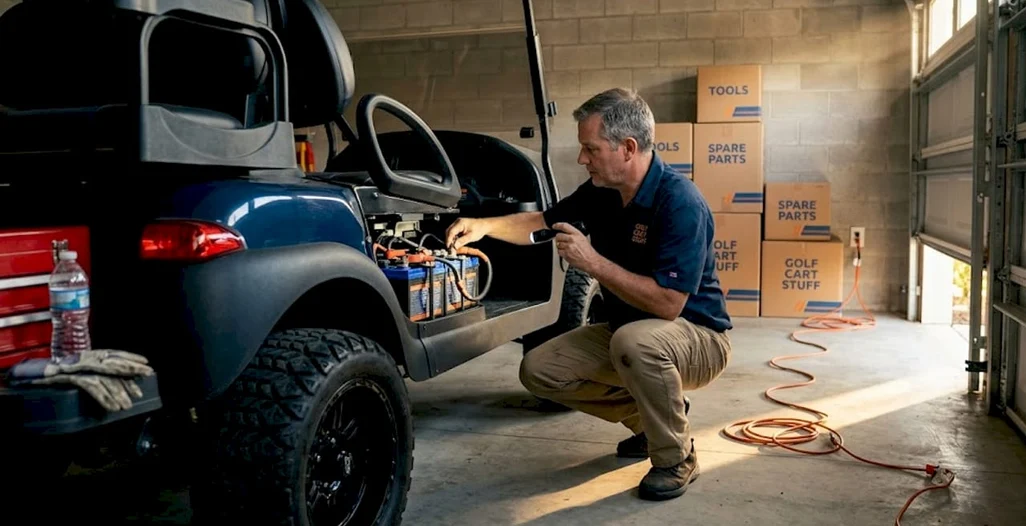
A golf cart may look simple to operate, but its battery system plays a major role in how well the vehicle performs. Whether you use your cart on a golf course, around a private community, at a campground, or for everyday short-distance transportation, taking care of the batteries can help maintain reliable performance and avoid unnecessary replacement costs.
For beginners, golf cart battery maintenance does not have to be complicated. A few consistent habits, including proper charging, cleaning, checking water levels, and inspecting connections, can make a noticeable difference in battery performance and service life.
Why Golf Cart Battery Maintenance Matters
Golf cart batteries are responsible for supplying the electrical energy needed to power the motor and other electrical components. When batteries are neglected, problems can gradually develop.
Poor maintenance may contribute to:
- Reduced driving range
- Slower acceleration
- Longer charging times
- Corrosion around battery terminals
- Difficulty holding a charge
- Premature battery failure
- Higher replacement costs
Regular golf cart battery maintenance helps you identify small issues before they turn into expensive problems. It can also help your cart deliver more consistent performance.
1. Identify Your Golf Cart Battery Type
Before starting any maintenance routine, determine what type of batteries your golf cart uses. Common options include traditional lead-acid batteries and lithium-ion batteries.
Lead-acid batteries generally require more hands-on maintenance. Depending on the design, they may require periodic inspection of electrolyte levels and terminals.
Lithium-ion batteries typically require less routine maintenance, but they still need proper charging, storage, inspection, and care.
Your golf cart manufacturer’s recommendations should always take priority. Different battery systems can have different maintenance requirements, so avoid applying procedures designed for one type of battery to another.
2. Charge the Batteries Properly
Charging is one of the most important parts of golf cart battery maintenance.
Try to follow the charging instructions provided by the manufacturer rather than relying on assumptions about when or how long to charge the batteries.
For lead-acid batteries, it is generally important to use the correct charger and charging cycle. Allowing batteries to remain deeply discharged for extended periods can contribute to reduced performance and battery deterioration.
If your golf cart uses lithium-ion batteries, follow the battery and charger manufacturer’s recommendations because charging practices can differ from traditional lead-acid systems.
A properly functioning charger is just as important as the batteries themselves. If the cart repeatedly fails to charge fully, inspect the charger and electrical connections rather than repeatedly charging without investigating the problem.
3. Check Water Levels in Flooded Lead-Acid Batteries
If your golf cart uses flooded lead-acid batteries, checking the electrolyte level is an important maintenance task.
Battery water levels should be checked according to the manufacturer’s instructions. If the electrolyte level is low, use distilled water, not ordinary tap water, because minerals and impurities can affect battery performance.
A common mistake is adding water before charging. In many cases, water is added after charging, but you should always follow the specific instructions for your battery model.
Never overfill the batteries. The electrolyte needs sufficient space for expansion during normal operation.
Important: Do not add water to sealed or maintenance-free batteries unless the manufacturer specifically instructs you to do so.
4. Keep Battery Terminals Clean
Corrosion around battery terminals can interfere with electrical connections and reduce performance.
As part of your golf cart battery maintenance routine, periodically inspect the terminals and cables for:
- White or greenish corrosion
- Loose connections
- Damaged cables
- Cracked terminals
- Signs of overheating
Before cleaning or working around the battery system, turn the golf cart off and follow the manufacturer’s safety instructions.
Use appropriate protective equipment and cleaning materials recommended for your battery type. Avoid creating sparks or allowing metal tools to bridge battery terminals.
5. Inspect the Battery Cables and Connections
Battery terminals aren’t the only components that deserve attention. The cables connecting the batteries should also be inspected periodically.
Look for loose connections, frayed insulation, damaged cables, or signs of excessive heat.
A loose connection can create electrical resistance and may cause poor performance or overheating. If you notice damaged wiring or a connection that you cannot safely repair, have the system inspected by a qualified technician.
6. Keep the Battery Compartment Clean and Dry
Dirt, debris, moisture, and corrosion can accumulate around the battery compartment over time.
During routine golf cart battery maintenance, inspect the compartment and remove dirt or debris according to the manufacturer’s cleaning recommendations.
For lead-acid systems, electrolyte residue may sometimes accumulate around the batteries. This should not simply be ignored because corrosive residue can damage surrounding components.
Always use appropriate protective equipment when cleaning around lead-acid batteries.
7. Avoid Deep Discharging When Possible
Repeatedly allowing a battery pack to become heavily discharged can place additional stress on the batteries.
Try to recharge the golf cart according to the manufacturer’s recommended charging routine rather than waiting until the cart barely moves.
That does not mean you should constantly recharge after every few minutes of driving. Instead, develop a consistent charging routine appropriate for your battery technology, usage pattern, and manufacturer’s recommendations.
8. Pay Attention to Changes in Performance
Your golf cart can often give you early warning signs that something is wrong.
For example, you may notice:
- The cart does not travel as far as before
- Acceleration becomes weaker
- The battery indicator drops unusually quickly
- Charging takes longer than normal
- The batteries become unusually hot
- The charger stops before completing a normal cycle
These symptoms do not automatically mean the batteries need replacement. Problems with the charger, wiring, motor, battery connections, or other components can produce similar symptoms.
If performance changes suddenly, investigate the cause rather than immediately purchasing a new battery pack.
9. Store the Golf Cart Correctly
If you will not use your golf cart for an extended period, proper storage becomes particularly important.
Before storing it, check the manufacturer’s recommendations for your specific battery type. The appropriate procedure can vary between lead-acid and lithium-ion systems.
For longer-term storage, consider factors such as:
- Battery charge level
- Temperature
- Charger requirements
- Disconnecting electrical systems where recommended
- Periodic inspection
Avoid storing the golf cart in an environment that is excessively hot, wet, or otherwise unsuitable for the battery system.
10. Don’t Ignore Battery Age
Even excellent golf cart battery maintenance cannot make a battery last forever.
Battery lifespan depends on several factors, including battery chemistry, usage, charging habits, operating conditions, and maintenance.
If your batteries are becoming less effective despite proper charging and maintenance, testing may help determine whether they are approaching the end of their useful life.
Replacing batteries before they fail completely can sometimes prevent inconvenient breakdowns, particularly if you depend on your golf cart for regular transportation.
A Simple Golf Cart Battery Maintenance Checklist
Beginners can make maintenance easier by following a simple routine.
Weekly or Regular Checks
- Look for visible corrosion.
- Inspect battery cables and terminals.
- Check for unusual smells, leaks, or physical damage.
- Make sure charging equipment appears to be functioning normally.
- Monitor changes in driving range and performance.
For Flooded Lead-Acid Batteries
- Check electrolyte levels according to manufacturer instructions.
- Use distilled water when water is required.
- Avoid overfilling.
- Keep the battery compartment clean.
Periodically
- Inspect the complete battery pack.
- Check connections for looseness or damage.
- Look for signs of overheating.
- Evaluate changes in battery performance.
- Have questionable batteries or electrical components professionally tested.
Common Golf Cart Battery Maintenance Mistakes
Beginners sometimes make simple mistakes that can shorten battery life or create safety issues.
Using Tap Water
For flooded lead-acid batteries, tap water can contain minerals that may negatively affect battery performance. Distilled water is generally recommended when water needs to be added.
Ignoring Corrosion
A small amount of corrosion may seem harmless, but corrosion can interfere with electrical connections and should be addressed appropriately.
Using the Wrong Charger
A charger should be compatible with the golf cart and battery system. Using an unsuitable charger can cause charging problems and potentially damage the battery system.
Overfilling Lead-Acid Batteries
Adding too much water can cause electrolyte to overflow during charging. Follow the battery manufacturer’s instructions carefully.
Mixing Battery Types or Specifications
Battery packs should be configured according to the golf cart manufacturer’s requirements. Mixing incompatible batteries can cause performance and charging problems.
Ignoring Warning Signs
Reduced range, unusual heating, charging problems, and weak acceleration should not simply be dismissed as normal aging without investigation.
How Often Should You Perform Golf Cart Battery Maintenance?
The ideal maintenance schedule depends on the battery type and how frequently you use your golf cart.
A cart used every day may require more frequent inspections than one used occasionally. Flooded lead-acid batteries generally require more hands-on attention than lithium-ion systems.
Instead of relying on a universal schedule, check your owner’s manual and battery manufacturer’s recommendations. Then create a simple routine that fits your usage.
Consistency is more important than complicated maintenance procedures.
When Should You Replace Golf Cart Batteries?
Battery replacement becomes worth considering when batteries consistently fail to provide the expected performance despite proper charging and maintenance.
Signs may include significantly reduced range, difficulty maintaining a charge, repeated charging problems, or batteries that fail professional testing.
However, don’t assume that every performance problem requires a new battery pack. A faulty charger, poor connection, wiring issue, or another electrical problem can sometimes produce similar symptoms.
If you’re uncertain, a qualified golf cart technician can test the system and identify the actual cause.
Final Thoughts
Good golf cart battery maintenance is mostly about consistency. You don’t need to be an experienced mechanic to take care of your golf cart batteries. Regular inspections, correct charging practices, proper cleaning, and following manufacturer instructions can help keep the battery system working reliably.
The most important rule is simple: know what type of battery your golf cart uses and follow the maintenance instructions designed specifically for that system.
By making battery care part of your normal golf cart routine, you can catch potential problems earlier, maintain dependable performance, and make more informed decisions about repairs or eventual battery replacement.