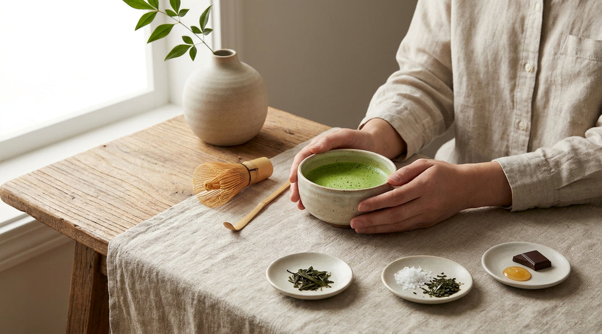
Matcha is often called umami, grassy, or even a little bitter, but there is much more to it than that. If you have tried different matcha, you may have noticed that no two cups taste exactly the same. One might taste fresh and green, while another feels sweet, creamy, or even nutty.
That is part of what makes matcha so exciting to explore. Its flavour can change based on where it is grown, how the tea plants are cared for, how the leaves are processed, and even how you prepare your cup.
If you are new to matcha, terms like “umami,” “vegetal,” or “grassy” can sound a bit confusing. You do not need to be a tea expert to figure it out. Once you know what to look for, tasting matcha becomes much easier.
Let’s explore the most common matcha flavour notes and what they really mean.
Umami
Umami is one of the most interesting flavours you can notice in matcha. The word comes from Japan and is often used to describe a deep, savoury, almost broth-like taste. It is not salty, but it gives the tea a rich and satisfying quality.
When matcha has a good amount of umami, it can feel smooth, oceanic, and full on your tongue. Some matcha even have a creamy texture, despite having no milk or cream in them.
Umami is especially appreciated in traditional Japanese matcha. It is partly linked to amino acids such as L-theanine, which can develop in higher amounts when tea plants are shaded before harvest.
The easiest way to notice umami is to take a small sip and let the matcha sit on your tongue for a few seconds. Instead of disappearing quickly, the flavour may linger and become deeper. For many matcha lovers, that rich, rounded taste is what makes a good cup feel special.
Vegetal or Grassy
“Grassy” is one of the first words people often use to describe matcha. And yes, matcha can taste grassy, but that does not mean it is bad quality. A fresh, green taste is a natural part of many Japanese matcha.
Depending on the matcha, you might notice flavours like fresh-cut grass, spinach, peas, seaweed, or other green vegetables. Some matcha taste bright and fresh, while others are softer and more like cooked greens.
Since matcha is made by grinding the whole tea leaf into a fine powder, its green flavour can be stronger than regular brewed green tea. The steaming process used for Japanese green tea also helps keep these fresh, vegetal flavours.
What really matters is how balanced the flavours is. A clean, fresh green taste can make matcha feel light and refreshing. But if it tastes too harsh, dry, or bitter, it could be a sign of lower-quality matcha, poor storage, or water that was too hot.
Sweet
Matcha can have a natural sweetness even though no sugar is added. It is usually quite light, so do not expect it to taste like candy or honey. Instead, it can have a soft, pleasant sweetness that comes through as you drink.
You may not notice it with the first sip. Sometimes the sweetness becomes more noticeable after you swallow and stays on your palate for a little while. This is called the finish, which simply means the taste that lingers after each sip.
Naturally sweet matcha also tends to taste smoother and less bitter. Shading the tea plants before harvest can help bring out the compounds that give matcha its sweet and umami-rich character.
This gentle sweetness is one reason good matcha can taste great with just water. If you enjoy naturally sweet and smooth flavours, you may find a matcha from matcha mornings worth trying on its own before adding milk or sugar.
Bitterness
Bitterness gets a bad reputation when it comes to matcha, but a little bitterness is completely normal. In fact, it can add depth and make the flavours more interesting. The problem comes when bitterness takes over everything else.
A well-balanced matcha usually has a mix of bitterness, sweetness, and umami. You might notice a slightly bitter taste at first, followed by a smoother and sweeter finish.
If your matcha tastes very bitter or harsh, the problem may be how it was prepared. Water that is too hot can bring out more bitterness. Try using water around 70-80°C (158-176°F) and see if the taste becomes smoother.
The amount of matcha you use and how you whisk it can also affect the flavour. So, if your first cup tastes too bitter, try changing your preparation before deciding that matcha is not for you.
Nutty
Not every matcha tastes strongly green or grassy. Some have soft nutty notes that may remind you of almonds, walnuts, toasted grains, or seeds.
These flavours are usually quite subtle, so you may notice them more as you keep sipping. They can give the matcha a warmer, smoother character and make it feel less sharp than a strongly vegetal tea.
Nutty matcha can also be a great choice if you are new to matcha or usually enjoy coffee and roasted teas. Its deeper flavours work especially well in lattes, smoothies, and desserts, where it can blend nicely with milk and other ingredients.
Creamy
Some matcha has a soft, creamy character that makes each sip feel rich and smooth. You might notice a gentle buttery or milky quality, even though the tea contains no milk or cream.
Part of this comes from the very fine matcha powder. When it is whisked properly, the tea becomes smooth and slightly thick instead of feeling watery. The quality of the matcha and the way it is prepared can both affect this mouthfeel.
Creamy matcha is especially enjoyable when you drink it on its own because there is nothing else to cover up its texture. Take a slow sip and notice how it moves across your tongue. Does it feel silky and rich, or light and clean?
Conclusion
Matcha is so much more than just a green, earthy tea. One cup can be fresh and grassy, while another can be sweet, nutty, creamy, or full of umami. You do not need to know all the tasting terms or be a tea expert. Just take your time, notice what you taste, and see what you like. Try matcha from different regions, change the way you prepare them, and give yourself time to get used to the flavours. The more matcha you try, the easier it becomes to spot the flavours you enjoy.