Renovating a garden can involve much more than planting flowers or laying a new patio. Soil, gravel, paving stones, compost, and other materials must reach the work area, while old paving, roots, and garden waste need to be removed. When the garden is behind a narrow side passage or a small gate, moving everything can become one of the biggest challenges.
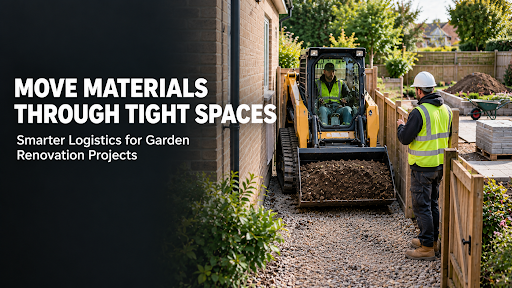
A mini skid steer will help move materials around a garden renovation site, depending on the machine’s size and the available access. However, successful planning starts with understanding the property, measuring the route, and deciding how materials will move from the delivery point to the work area.
Measure the Access Route Before Work Begins
The first step is to check how workers, equipment, and materials will enter the garden. A side passage may look wide enough at first, but corners, steps, drainpipes, garden walls, and low branches can restrict movement.
Measure the narrowest point along the route, not just the width of the gate. Also check the height clearance and turning space. If you plan to use machinery, compare these measurements with the machine’s actual dimensions and allow room for safe movement.
Pay attention to the surface as well. Loose gravel, wet grass, soft soil, and uneven paving may affect how easily equipment can travel. If access is particularly limited, your contractor may need to use smaller equipment or move some materials by hand.
Plan How Materials Will Reach the Garden
Garden renovations often involve several types of materials. Topsoil and compost may arrive in bulk, while paving slabs, timber, and decorative stone may come in separate deliveries. Each requires a suitable route and a clear place for unloading.
Before ordering materials, ask your contractor where deliveries will be placed and how they will reach the work area. Keeping everything near the entrance may block access, while storing it too far away can create extra handling.
A simple delivery plan can help. Schedule bulky materials when the team has enough space to unload them, and avoid having several deliveries arrive at once if the entrance is narrow. Where possible, keep a clear path for workers and equipment throughout the project.
Choose Equipment That Fits the Space
Moving materials by hand can take considerable time, especially when the garden needs large quantities of soil, gravel, or paving materials. Compact equipment may reduce manual handling, but the machine must suit both the job and the access route.
A mini skid steer can be useful for transporting materials, clearing debris, and supporting ground preparation when fitted with suitable attachments. Before choosing one, check its width, operating capacity, turning space, and ground requirements.
For very narrow gardens, a machine may still be too large to pass through the entrance safely. In that case, smaller equipment, wheelbarrows, or a combination of methods may be more practical.
Do not assume that every attachment fits every machine. Confirm compatibility with the specific model, particularly if the work requires a bucket or another material-handling tool.
Protect Paths, Lawns, and Garden Features
Equipment and repeated material deliveries can damage existing landscaping. Paving may crack under unsuitable loads, lawns can become rutted, and narrow paths may be difficult to repair once work is complete.
Before renovation begins, identify the surfaces that need protection. Depending on the site, temporary ground-protection mats or boards may help spread loads and reduce surface damage. Your contractor should check that the protection is suitable for the equipment and ground conditions.
It is also helpful to mark areas that must remain untouched, such as established trees, garden borders, fences, and outdoor utilities. If excavation is required, locate underground services before digging. A property plan can support preparation but should not replace proper utility checks.
Organize Waste Removal and Site Storage
Removing old paving, broken concrete, branches, and unwanted soil can be just as difficult as bringing new materials into the garden. Limited access means waste needs to be collected and moved without blocking the route.
Ask your contractor where waste will be stored temporarily and how it will be removed. A skip may be suitable if there is space and permission to place it, but another collection arrangement may be needed when access or parking is restricted.
Keep storage areas separate from the main working route. This makes it easier for workers to move materials and reduces the chance of trips, damage, or delays.
Boleo: Exploring Compact Equipment for Garden Projects
When garden access is restricted, selecting machinery that fits the available route is an important part of renovation planning. Boleo manufactures compact construction equipment, including mini skid steer loaders and mini excavators, which contractors can evaluate for suitable material-handling and site-preparation tasks. The right choice depends on the property’s access measurements, working conditions, and the requirements of the job.
When comparing options, focus on the requirements of the garden rather than choosing a machine based on size alone. Check the listed dimensions, operating specifications, and attachment compatibility. The contractor should confirm that the selected machine can access the property and work safely in the available space.
Online research can help narrow the choices, but an on-site assessment remains important before equipment is arranged.
Final Thoughts
Moving materials through narrow garden access requires careful planning. Measuring the route, organizing deliveries, choosing suitable equipment, protecting existing surfaces, and arranging waste removal can make a renovation easier to manage.
Discuss these details with your contractor before work begins. A clear plan helps reduce unnecessary handling, protect the garden, and keep the project moving without avoidable delays.