



Following Sports is a Hobby With Personal Intricacies
Sports fandom is not a matter of life and death. It’s belonging, shared passion, and vicarious living through athletes who represent the pinnacle of human achievement in a field as unifying as sports, whether amateur or professional.

However, sports represent more than just tuning into a match weekly. It can also represent more than just rooting for a team. It can also represent seeing the misgivings of the organizational model of a sport. From united passions to a singular obsession with the numbers that drive them, sports are almost unique in the human experience.
This article will explore the transition and significance of sports to humans. Since it’s a field that has as many perspectives as there are fans, i.e., billions, I’ll try to filter these principles through my own experiences and what I learned from them.
How sports become a hobby in earnest
My way of having sports as a hobby is to dabble in multiple of them. As many as I can. The cool part is that I managed to get into these sports to a high enough degree that it allowed me to even join fandoms and balance them. It’s hard with the time at hand, but I make it work.
The genesis of my fandoms is somewhat amusing, but also quite standardized. Where I’m from, soccer is king, and so my first attachment to a team was the one I saw sitting at the top of the league table. Then I got into other leagues, and I saw AC Milan’s squad in EA Sports’ 2006 entry in its soccer video game series, which was my first game other than the 2002 World Cup Edition.
From that moment, and as I grew up, I started tracking changes in squad, managers, and finally, ownership. To this day, I still tune in, but the fact that I started rooting for a club far away before I even saw them play a match is still funny to me.
Then, I got into American sports. I remember getting into the NBA in the mid 2010s, when I had no team I was rooting for, but I was doing my best to understand decades-old narratives and storylines, watching footage of old and recent games. I was also tracking draft prospects for a while, and one of them was Luka Doncic, who was playing for Real Madrid at that time.
My pledge was that whichever team drafts him, that’s who I’m rooting for. That was the Dallas Mavericks. They traded him the way they did, and so I was out. I can’t say I’m a Lakers fan nowadays since I find it a bit too gimmicky to switch like this, but he’s still my favorite player the way he was 10 years ago.
The build-up during a week when your favorites play
There were more sports to mention, but another one I’d like to mention is the NFL. I didn’t know too much about the sport, so I got into it around the time the COVID-19 pandemic hit. There was this guy wearing #10 and making gutsy throws and having a historic rookie season. His name is Justin Herbert and, because of him, I am living the very colorful life of a Chargers fan and all that it entails. Never a dull moment!

I split this portion and added it here because, unlike the other sports other than soccer, it brought me into a year-long process of following the sport.
Yes, it’s a weekly thing during the season, but even before that, it creates an impetus to track free agents, watch other teams that may compete for a playoff spot (not in 2026, though), and come draft time, legitimately do scouting and try all kinds of mock draft combinations.
Then it’s the content. Podcasts, traditional journalism, opinions and memes on the internet, and even looking into predictions for upcoming matches are part of the routine at this point. That’s something that I do for most of the sports that I watch, especially if there are content markets for them
This also tracks with how other people seem to live through this build-up. According to Nielsen’s September 2026 Gracenote survey, 77% of sports fans said that they watch sports-related programming beyond live events. After all, the narratives that surround fandom and interest in the sport are reasons to tune in, almost as strong as the game itself.
Oh, and when there is controversy or something resembling collapse around your team…it gets spicy.
Balancing the meanings of stats: living sports through numbers
I don’t have much to say here other than the fact that I believe stats-related stuff is optional. However, the way one would engage in discourse, especially intricate discourse, should be respectful of the fact that statistics and advanced metrics have real importance.
I say so because you won’t always have time or even the willingness to spend money on a service that provides replay to watch the games back. Sometimes, what you see on the live broadcasts is what you get. Not everything will show up on the standard stat sheet, just like not every player will pop, especially if they have a not-so-glamorous role.
In my opinion, balancing the eye test with the numbers that indicate performance is the best way to perceive sports.
Whether you’re using AI for it or you’re getting your data from specialized firms that track it for the sport you’re in, making the connection between advanced statistics and what you see can allow you to understand what you see better. It has helped me with everything that I watch and follow, especially given the limited time that I have to study game film.
Stat box-watching is far from optimal, but doing so side by side with actually seeing the game unfold is a way of attributing trackable performance to the stylistic representation of a sport.
The social value of following sports
I love talking to some of the friends who watch the same sport. Not all of them are as enthusiastic as I am, while others dedicate their time to watching a certain sport, which, in my opinion, gives them an edge when it comes to the insight with which they speak. That’s the price I pay for my diluted attention, I suppose. I don’t mind it.
That’s when memes start being more funny, when bad-faith criticism starts feeling less morally reprehensible (within the limits of human decency, which I very much believe in since athletes are human), and when tracking the events of a live match is more high-stakes. If I get to watch with someone while we’re in the same room, it’s incredibly fun.
According to Daniel Wann’s article on sport team identification, published in the Journal of Sport Behavior in 2006, social connection is among the most common reasons people actually start supporting a team. Not everybody is a bandwagon like me, it seems.
When you’re also attending a match, small or big-scale, you are sharing the experience with thousands, if not tens of thousands. It’s a unique feeling that I wish I experienced more of. It makes me envious of those who are part of a community that has a team that they support regularly while attending a match.
It may not be a cure for loneliness, and some of the way we interact with sports fandom on a social level is, in fact, parasocial. However, even a thread of replies in a comment section is something.
Rivalry and the other side of the social coin
This is simple: I love making fun of and talking trash about Inter Milan. The Las Vegas Raiders too. Communities next door, next town, or next country have their own favorites, and they work the way we work: with passion and tribalistic belonging.
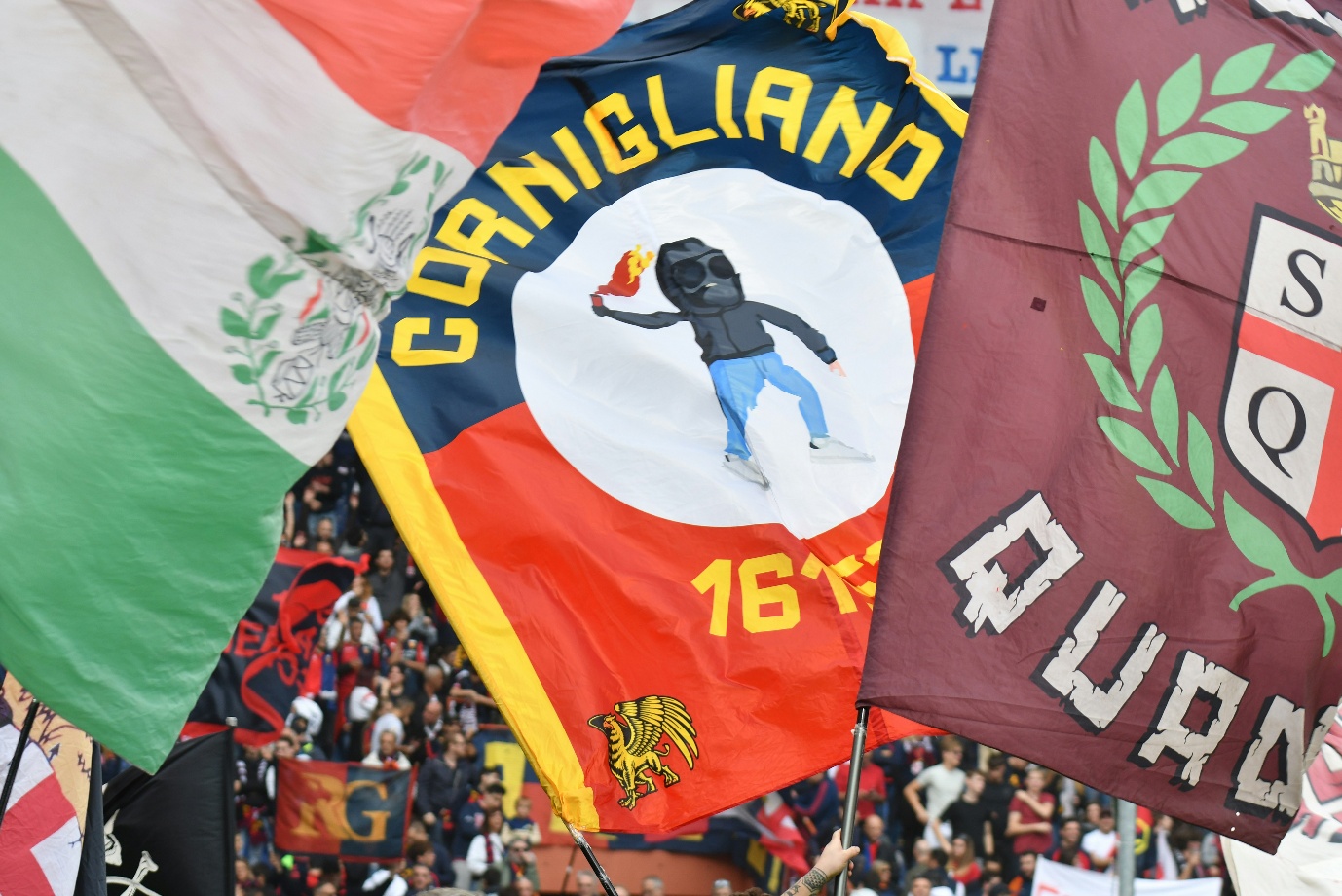
Naturally, the overzealous sports fan can always degenerate into violence, verbal or physical, and hooliganism has taken a toll on the safety of being a sports fan every now and then. That’s the tragedy of it, but such cases do not represent fandom or rivalry, even if they’re loud and easy to see with the naked eye.
It’s also hard to offer definitions and parameters for respectful behavior when you feel nothing but contempt for what the other side represents.
Yes, the sport itself is a matter of competition, and what those on the field do is also what they represent in the wider world, especially if something they stand for has a strong penchant for things that go beyond the sport itself.
Ultimately, rivalries are an upper notch of competition, which is the backbone of sports. It will never get away, should never disappear, nor should it degenerate into unsanitary behavior or into tragic outcomes.
Fandom has a home, but it knows no borders
In twin studies conducted by Benjamin Schellenberg and Patrick Gaudreau (SCAPPS), 432 fans were surveyed to determine whether being a fan of the local team matters. 291 of them reported that social connection was strong regardless of whether they were local to the team.
Here I am, rooting for teams that are far, far, and extremely far from where I have lived my entire life. Does that stop me from having a pretty sad day at work when Milan get pummeled by Bournemouth in the Europa League, or when the Chargers ‘charger’ again? Nope. Am I walking on puffy clouds and recounting all the details of their successes? Oh, yes.
Now, the reality is that attending these matches and meeting real fans from these communities is unlikely, perhaps even improbable. I refuse to say impossible because who knows? However, social media is an actual avenue that is worth highlighting, and so are content creators who create communities, some of which I’m part of.
The thing with being a sports fan is that unification and brand recognition worldwide are a corporate interest nowadays. I don’t want to feel like I’m playing into the hands of commercial interests, but that’s mostly what I’m doing, to be honest. However, I find value in doing so for myself, and for my own fandom.
Passion for sports should not know borders, even when national pride may be at stake.
Conclusion: why being a sports fan sticks with you
I like sports because they are engaging and incredibly narrative. You have the structure of athletic discipline, the dissolution of perceived barriers, and the drama of the victor and the vanquished. In short, sports are dramatic, and I love drama that I can watch from afar.
However, I would also like to point to the elephant in the room: a big part of fandom nowadays is betting. As such, if that’s what you’re into, please bet responsibly, do it if you’re at least 21, and don’t hesitate to contact 1-800-MY-RESET if you need to.