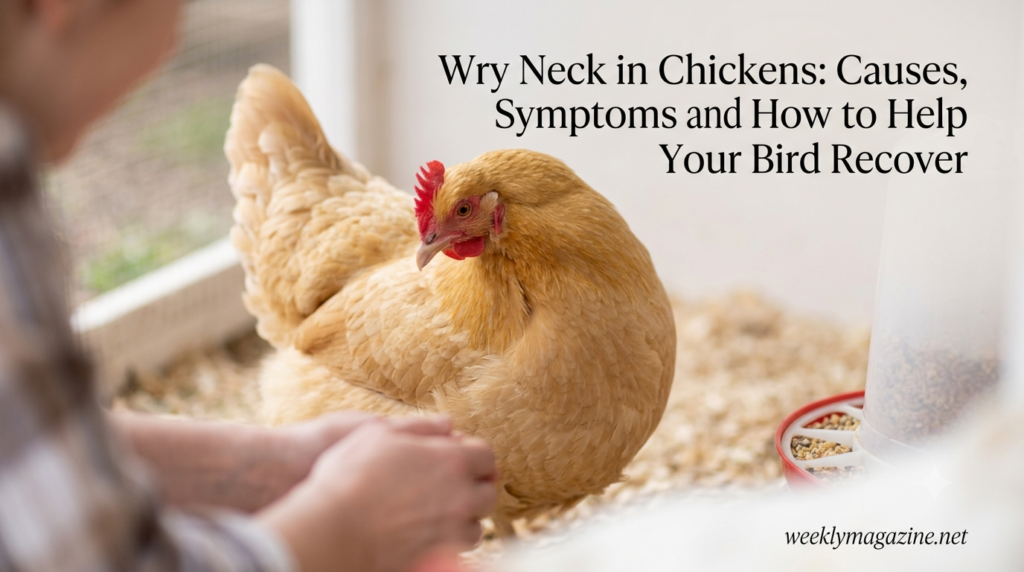
So, if you’ve ever gone into your coop and opened the door to see a bird with her head cocked unnaturally to the side or staring straight up, you know exactly how frightening that can be. Wry neck in chickens is one of the most frequently encountered reasons for a poultry keeping newbie to panic the first time he witnesses it.
Basically, a wry neck in chickens is when the nerves or muscles that operate the neck become dysfunctional, and the head twists sideways, backward, or downward while the bird loses its sense of balance. Search results about this vary, but they seem to agree on one thing: the condition looks scary, yet in most cases it responds well to treatment provided it is identified quickly, more often than not because of a vitamin E and selenium deficiency rather than another serious disease.
We will take you step by step through all the information a chicken owner can need, from the causes and symptoms to home treatment techniques, prevention guidelines, and the most common questions asked online.
You cannot clearly understand wry neck, one of the most common conditions in chickens, until you clearly know what wry neck actually is.
What Exactly Is Wry Neck in Chickens?
Wry neck, also called crooked neck, twisted neck, torticollis, or stargazing, is not a disease in itself, but rather a symptom which appears when something else is causing the chicken’s nervous system or muscles to malfunction.
A chicken neck injury should always carry its head erect and steady. When a bird suffers from a wry neck, the neck muscles spasm or become uncoordinated, forcing the head into an unnatural position. Some tilt their head at only a slight angle, while others face the worst outcome and end up with their head turned completely upside down.
The comforting thing is that a wry neck on its own is not contagious. But if the wry neck was caused by an infectious disease, that disease can sometimes be transmitted to other birds in the flock.
Common Causes of Wry Neck
Knowing the cause is the first step toward getting the right treatment. Search intent around this keyword shows that most people want to know why this is happening to their bird, not just what it looks like.
Here are the most frequently reported causes:
| Cause | Description |
| Vitamin E and selenium deficiency | The most common reason for wry neck, especially in chicks fed an unbalanced ration |
| Thiamine (Vitamin B1) deficiency | Causes poor nerve function and can lead to similar symptoms |
| Head trauma or injury | Pecking injuries are often seen in Silkies and Polish |
| Genetic predisposition | Some breeds are inherently weaker at controlling the neck |
| Infectious diseases | Marek’s disease, Newcastle disease, and some types of bacterial infection |
| Toxins | Lead, mould, or spoiled feed |
| Parasites | Internal parasites may occasionally cause neurological symptoms |
Breeds such as Silkies and Polish are especially at risk of this condition due to their vaulted, dome shaped skulls. The unique arrangement and shape of feathers on their heads mean these birds become an easy target for pecking by other birds, which can result in head trauma.
Symptoms You Should Watch For
Owners most commonly tell us that wry neck is a condition you “just know when you see,” but here are the signs that experienced poultry keepers and others repeatedly report:
Tilting, twisting, or pulling of the head in the direction of the spine. Loss of balance, stumbling, or circling. Inability to eat and drink normally. Head dragging on the ground, in severe cases. Increased stress or worsening of symptoms with handling or excitement.
Despite the symptoms listed above, early in the course of the disease most affected chickens are still alert and will attempt to eat and socialize with the other poultry, which is actually a good indicator.
How to Treat Wry Neck in Chickens at Home
When early symptoms are detected, quick intervention is crucial. A delay can lead to dehydration and malnutrition, which are factors that make the disease worse.
Keep the sick bird away from the flock as soon as possible. This will ease stress for the bird and stop it from being bullied by its flock mates, since they sometimes peck at a weak or disoriented bird.
After this, start adding Vitamin E and selenium, as it is the most common and widely used treatment highlighted in poultry forums and hatchery manuals. Poultry electrolyte packs, liquid vitamin E products, or crushed tablets added to water often work well.
In addition, you might want to hand feed and hand water your chicken for a few days until it is strong enough to eat on its own. Sitting the chicken upright while feeding and watering it can be very effective in the initial days.
Incorporating natural sources of Vitamin E, including sunflower seeds, spinach, and greens, along with natural sources of Thiamine such as brewer’s yeast, will help speed up recovery.
Most mild cases get better after a few days to two weeks, though those with a more serious disease or injury may require longer treatment or a veterinarian’s intervention.
Preventing Wry Neck in Your Flock
Prevention is mainly a case of providing a suitable environment and a suitable diet. Complete poultry feed will provide the vitamins your birds need, and supplemental medicated feed should not be given for more than two to three weeks.
Monitor breeds that are susceptible to head trauma, such as crested or vaulted skull breeds, and minimize head to head interactions by limiting overcrowding. Store feed properly and keep it dry to prevent the growth of mould, yet another hidden trigger for neurological symptoms.
If you are seeking a more in depth analysis of home remedies and step by step recovery routines, this comprehensive resource on how to treat wry necks in chickens details many other useful tips backyard flock owners use.
Frequently Asked Questions
What exactly is wry neck in chickens?
It is a condition in which the muscles of a chicken’s neck are no longer under control, resulting in an abnormal bend or twist to the head, most often caused by a nutritional deficiency.
Is wry neck contagious to other chickens?
No, the condition itself is not contagious, but the disease that causes it may be, if it is due to a contagious condition.
Will chicks with wry necks definitely recover?
With a good supply of Vitamin E and selenium supplementation, most chicks recover within a week or two.
What is the fastest way to treat a wry neck?
The best chance of a good recovery is to separate the bird and start Vitamin E with selenium supplementation as soon as signs are noticed.
Which chicken breeds are most susceptible to wry necks?
Silkies and Polish are the most susceptible, due to their vaulted skulls and head feathers.
Final Thoughts
Your first experience of seeing your chicken with a twisted neck, a classic sign of wry neck in chickens, can be distressing, but it can often be treated quickly with supplements and the right care. Once you have diagnosed it, provide support as soon as possible and watch your flock’s diet in case of recurrence. Most chickens fully recover with good care.