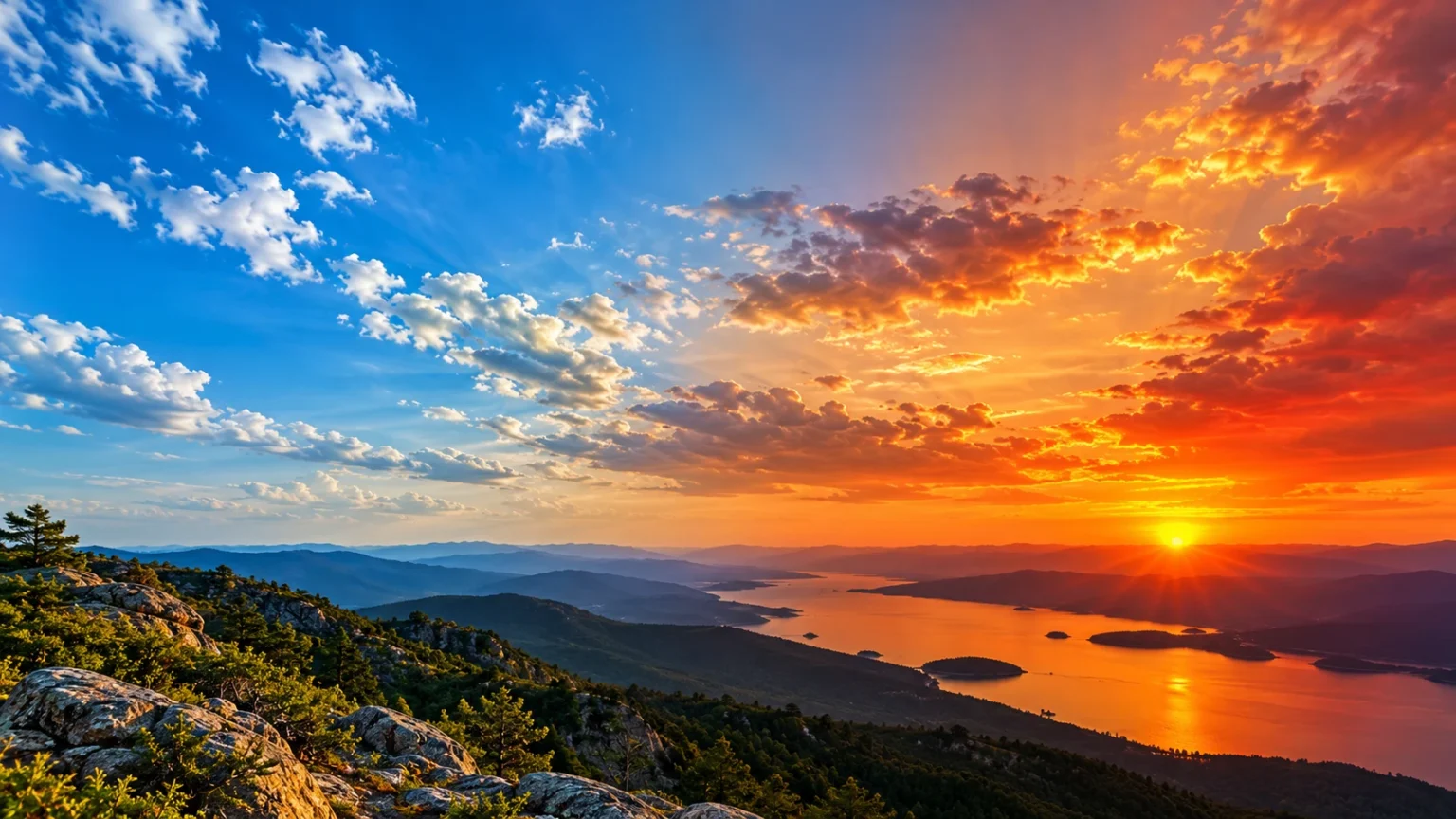
Have you ever looked up at the sky on a sunny afternoon and wondered why it appears blue, only to transform into beautiful shades of red, orange, and pink at sunset? These stunning changes are among nature’s most familiar sights, yet the science behind them is surprisingly fascinating. The colors we see are created by sunlight interacting with Earth’s atmosphere.
Understanding why the sky is blue during the day and red at sunset involves learning about sunlight, wavelengths, and a scientific phenomenon called Rayleigh scattering. The atmosphere changes how different colors of sunlight travel toward our eyes, producing the beautiful skies we enjoy every day. This guide explains the science behind sky colors, atmospheric scattering, colorful sunsets, and the natural factors that influence what we see.
Why Is the Sky Blue During the Day?
The sky appears blue during the day because sunlight interacts with tiny molecules in Earth’s atmosphere. Although sunlight may look white, it contains different colors that behave differently as they travel through the air. Shorter wavelengths of visible light, particularly blue and violet, are scattered more strongly than longer wavelengths, allowing blue light to reach our eyes from many directions.
When the Sun is high in the sky, its light travels through a relatively short distance of atmosphere before reaching the ground. Air molecules scatter some of the incoming blue light across the sky, creating the familiar blue appearance. This process occurs continuously throughout daylight hours, even when we cannot see individual particles or molecules.
The blue color is not caused by oceans reflecting their appearance onto the atmosphere, as some people mistakenly believe. Instead, it results from the interaction between sunlight and atmospheric gases, primarily nitrogen and oxygen. Understanding this simple principle provides the foundation for explaining why the sky changes color as the Sun approaches the horizon.
What Colors Are Hidden Inside Sunlight?
Sunlight is composed of electromagnetic radiation containing many different wavelengths, including the visible colors humans can recognize. These colors range from violet and blue through green and yellow to orange and red. When visible wavelengths are combined in suitable proportions, our eyes perceive the resulting light as white or nearly white.
A rainbow provides a familiar example of how sunlight contains multiple colors. When sunlight enters water droplets, refraction and internal reflection separate the light into a recognizable spectrum. A glass prism can produce a similar effect, revealing the different colors that were combined in the original beam of sunlight.
Each visible color corresponds to a particular range of wavelengths, measured in nanometers. Violet and blue light have shorter wavelengths, while orange and red light have longer wavelengths. These differences become important when sunlight passes through Earth’s atmosphere because the amount of scattering depends strongly on the wavelength of the incoming light.
How Rayleigh Scattering Makes the Sky Blue
Rayleigh scattering is the scientific process responsible for much of the blue appearance of a clear daytime sky. It occurs when light interacts with particles or molecules that are much smaller than the wavelength of the light. Atmospheric gas molecules meet this condition, allowing them to scatter different colors of sunlight with different strengths.
The intensity of Rayleigh scattering is approximately inversely proportional to the fourth power of the wavelength. This means shorter wavelengths are scattered much more strongly than longer wavelengths under comparable conditions. Blue light is therefore scattered far more efficiently than red light, making it more noticeable across the sky during daylight.
When sunlight enters the atmosphere, some of its blue light is redirected away from its original path. This scattered light reaches observers from different directions, creating the impression of a blue dome overhead. Scientists use the same scattering principles to study atmospheric conditions, light transmission, and interactions between electromagnetic radiation and matter.
Why Doesn’t the Sky Look Violet Instead of Blue?
An interesting question about sky color is why the atmosphere appears blue when violet light has an even shorter wavelength. According to Rayleigh scattering, violet wavelengths are scattered more strongly than blue wavelengths. However, the color we perceive depends on more than scattering strength alone, including the sunlight spectrum and human vision.
Human eyes contain cone cells that respond differently to various wavelengths of visible light. Our visual system is considerably less sensitive to violet light than to many blue wavelengths. Additionally, the sunlight reaching the lower atmosphere contains less violet than some longer visible wavelengths, which influences the mixture of scattered colors we observe.
As a result, scattered skylight usually appears blue rather than strongly violet to the human eye. The actual spectrum of skylight contains several wavelengths, not just one pure color. Our brains combine the signals from different cone cells, producing the familiar blue appearance that varies with atmospheric conditions and viewing direction.
Why Does the Sky Change Color Near Sunset?
As the Sun moves toward the horizon, its light must travel through a longer path in Earth’s atmosphere before reaching an observer. This increased distance changes how much light is scattered away from the direct sunlight. Shorter blue and violet wavelengths experience stronger scattering, leaving the transmitted sunlight relatively richer in orange and red wavelengths.
During midday, sunlight usually travels through a shorter atmospheric path, so a larger proportion of the visible spectrum remains in the direct beam. Near sunset, the longer journey increases the removal of shorter wavelengths from that beam. Consequently, the Sun and the sky immediately surrounding it can appear warmer and more colorful.
The changing angle of sunlight also affects how scattered light illuminates clouds, haze, and distant atmospheric layers. These interactions help create the gradual transformation from blue afternoon skies to golden evening light. The transition is not identical every day because atmospheric moisture, particles, and weather conditions influence the final colors.
Why Are Sunsets Red, Orange, and Pink?
Red and orange sunsets occur because longer wavelengths of visible light survive the extended atmospheric journey more effectively than shorter wavelengths. Blue light is scattered away from the direct beam, while a larger proportion of red and orange light continues toward the observer. This makes the setting Sun and nearby illuminated atmosphere appear warmer.
The beautiful pink shades sometimes visible during sunset result from combinations of scattered light and the way sunlight illuminates different atmospheric layers. Pink clouds often appear when reddish sunlight mixes with other wavelengths reflected or scattered toward our eyes. Their exact appearance depends on cloud position, atmospheric conditions, and the changing geometry of illumination.
Not every sunset produces dramatic colors because clear skies, cloud cover, and airborne particles can change the amount of visible light. Some evenings feature soft yellow light, while others display intense orange and crimson skies. These variations make sunsets visually unique, even when observed from the same location on consecutive days.
How Clouds Make Sunsets More Colorful
Clouds play an important role in creating dramatic sunset displays by reflecting and scattering sunlight toward observers. Unlike individual atmospheric molecules, cloud droplets and ice crystals are generally large enough to scatter visible wavelengths more evenly. Their appearance therefore depends strongly on the color of the light illuminating them.
When the Sun approaches the horizon, its reddish light may illuminate the undersides or edges of clouds that remain exposed to direct sunlight. This can produce striking combinations of orange, pink, purple, and golden colors across the evening sky. Higher clouds may remain illuminated after the Sun has disappeared below the observer’s horizon.
Cloud placement is especially important when determining whether a sunset looks spectacular or ordinary. A completely overcast sky may block colorful sunlight, while scattered clouds can create beautiful patterns and dramatic contrasts. Thin, high-altitude clouds often produce impressive displays because they can catch sunlight while the lower atmosphere becomes darker.
How Dust, Smoke, and Pollution Affect Sky Colors
Atmospheric particles such as dust, smoke, and pollution can significantly influence the colors of the daytime sky and sunset. Unlike the tiny gas molecules responsible for Rayleigh scattering, many airborne particles scatter light through more complex processes. Their size, concentration, and composition determine whether the sky appears hazy, pale, reddish, or unusually colorful.
Fine particles can enhance the removal of shorter wavelengths from sunlight traveling toward the horizon, sometimes producing deeper orange or red appearances. However, heavy pollution does not automatically create more beautiful sunsets. Large amounts of haze may instead reduce visibility, weaken color contrasts, and make the sky appear dull or gray.
Wildfire smoke can sometimes cause unusually red sunsets or make the Sun appear orange even when it remains above the horizon. These striking colors may indicate elevated concentrations of airborne particles that can affect respiratory health. Beautiful-looking skies should therefore not be treated as evidence that the surrounding air is clean or safe.
Why Sky Colors Change With Weather and Location
The appearance of the sky changes with weather because clouds, moisture, aerosols, and atmospheric visibility influence how sunlight travels. After rain clears airborne particles from the atmosphere, the sky may appear particularly vivid blue under suitable conditions. Humid or hazy weather can create a paler appearance because suspended particles scatter light differently from atmospheric gases.
Altitude can also affect sky color because higher locations have less atmosphere above them. On clear mountain days, the overhead sky may appear deeper blue than it does in some lowland environments. However, local pollution, cloud cover, and the direction of observation can produce noticeable differences even between places at similar elevations.
Geographical location and season influence the Sun’s apparent path across the sky, changing the timing and angle of sunlight. These factors affect how long the atmosphere remains illuminated during sunrise and sunset. Nevertheless, the same basic scattering principles explain daytime blue skies and colorful sunsets across much of the world.
Why Does the Sun Look Yellow, Orange, or Red?
The Sun emits light across the visible spectrum, and its direct light is approximately white when viewed without significant atmospheric color filtering. From Earth’s surface, however, the Sun can appear yellowish because some shorter wavelengths have been scattered away. Human visual perception and surrounding sky brightness also influence how we interpret its color.
As the Sun approaches the horizon, the longer atmospheric path removes more blue and violet light from the direct beam. The remaining sunlight becomes increasingly dominated by longer visible wavelengths, giving the solar disk an orange or reddish appearance. Atmospheric dust and smoke can intensify or otherwise alter these colors under particular conditions.
The Sun itself does not suddenly change its physical color or temperature every evening. Its changing appearance results primarily from the atmosphere between the Sun and the observer. Never look directly at the Sun, including during sunrise or sunset, because its radiation can damage your eyes even when the disk appears dimmer.
Why Are Sunrise and Sunset Colors Sometimes Different?
Sunrise and sunset follow the same fundamental physical principles, with sunlight passing through a relatively long atmospheric path near the horizon. Both can produce orange, red, pink, and golden skies as shorter wavelengths are scattered out of the direct sunlight. The differences we notice usually arise from changing weather, clouds, and airborne particles.
Atmospheric conditions can change considerably between early morning and late afternoon. Human activity, wind patterns, humidity, and overnight cooling may influence the concentration and distribution of particles. Consequently, a sunrise may appear clearer than the previous sunset, although the reverse can also happen depending on local environmental conditions.
The position and height of clouds can also determine whether morning or evening produces more striking colors. Higher clouds may catch the first sunlight before the ground becomes illuminated, creating beautiful pink and orange patterns. Observing these changes provides an enjoyable way to understand how sunlight and Earth’s atmosphere interact throughout the day.
Conclusion
The reason the sky is blue during the day and red at sunset comes down to the interaction between sunlight and Earth’s atmosphere. Rayleigh scattering causes shorter wavelengths, particularly blue light, to spread more strongly across the daytime sky. This process creates the familiar blue appearance we observe when the Sun is relatively high overhead.
At sunset, sunlight travels through a longer atmospheric path, allowing more of its shorter wavelengths to scatter away from the direct beam. Red and orange wavelengths become more prominent, producing the warm colors associated with evening skies. Clouds, moisture, dust, and other atmospheric particles can enhance, soften, or change these beautiful natural displays.
Understanding the science behind sky colors reveals how ordinary experiences connect to important principles of physics. The same atmosphere that produces blue afternoons also creates colorful sunrises, glowing clouds, and dramatic sunsets. Every changing sky offers a visible reminder of how sunlight, air molecules, and Earth’s environment work together to produce nature’s remarkable colors.
Frequently Asked Questions (FAQs)
1. Why Is the Sky Blue During the Day?
The sky appears blue because atmospheric molecules scatter shorter wavelengths of sunlight more strongly than longer wavelengths. Blue scattered light reaches our eyes from many directions, creating the familiar daytime sky color.
2. Why Does the Sky Turn Red at Sunset?
At sunset, sunlight travels through more atmosphere, causing much of the shorter-wavelength light to scatter away from the direct beam. The remaining sunlight appears richer in red and orange wavelengths.
3. Why Is the Sky Not Violet Instead of Blue?
Although violet wavelengths scatter more strongly than blue wavelengths, human eyes are less sensitive to violet light. The spectrum of sunlight and the way our vision combines colors make the sky appear blue.
4. Does Pollution Make Sunsets More Red?
Certain airborne particles can intensify red or orange sunset colors by changing how sunlight is scattered. However, heavy pollution may also create dull haze and poor visibility, so colorful sunsets do not necessarily indicate clean air.
5. Why Are Sunrise and Sunset Colors Similar?
Sunrise and sunset involve sunlight traveling through longer atmospheric paths near the horizon. Both produce warmer colors through wavelength-dependent scattering, although clouds, moisture, and airborne particles influence their individual appearances.