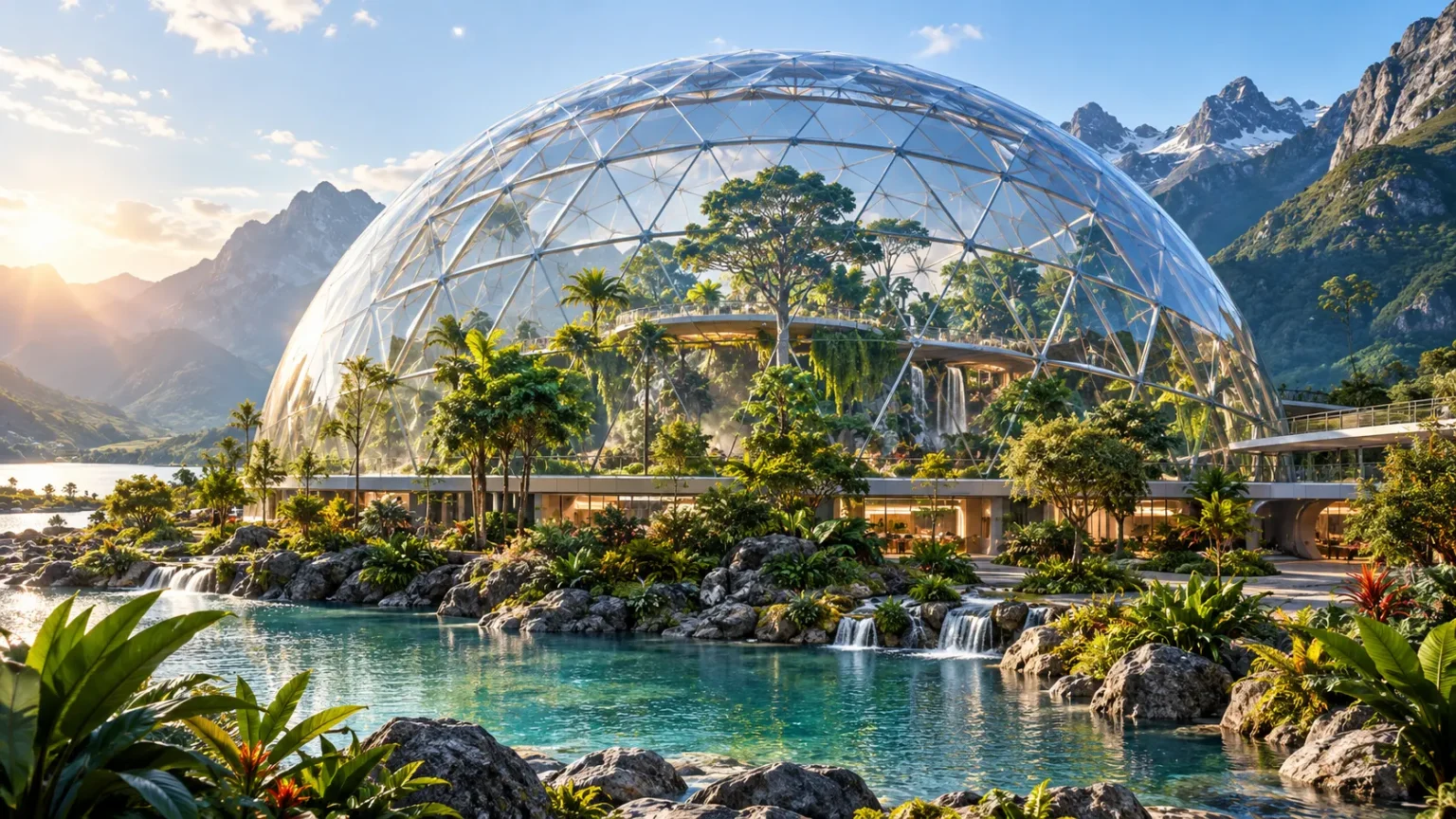
Have you ever wondered how scientists can recreate a tropical rainforest or desert inside a completely enclosed structure? This is where a biodome comes into the picture. A biodome is a specially designed environment that supports plants, animals, and other living organisms under controlled conditions. It allows researchers to study ecosystems while creating suitable habitats for different species.
Biodomes combine biology, environmental science, and modern engineering to create artificial ecosystems. These structures can simulate natural environments by controlling temperature, humidity, lighting, and other important conditions. Some biodomes are used for scientific research, while others serve educational, conservation, or public exhibition purposes.
Understanding what a biodome is helps explain how technology can support environmental research and biodiversity conservation. These structures demonstrate the complex relationships between living organisms and their surroundings. This guide explores how biodomes work, their different types, construction features, benefits, limitations, and potential role in sustainable development.
What Is a Biodome?
A biodome is an enclosed or partially enclosed structure designed to create and maintain a controlled ecological environment. It may contain plants, animals, microorganisms, soil, water, and other natural components. These elements interact to form an artificial ecosystem that resembles conditions found in nature. Biodomes are often designed to represent specific habitats or support scientific experiments.
The term biodome combines the words “bio,” meaning life, and “dome,” referring to a covered structure. However, not every biodome is shaped like a traditional dome. Some facilities use interconnected buildings, greenhouse structures, or specialized research chambers. Their defining feature is the controlled environment created to support living organisms.
Biodomes can vary significantly in size, purpose, and technological complexity. Small educational biodomes may contain simple plant ecosystems, while larger facilities can reproduce entire climate zones. Their environmental conditions are managed using specialized systems and careful observation. This flexibility makes biodomes useful for scientific research, conservation programs, environmental education, and experimental habitat development.
How Does a Biodome Work?
A biodome works by creating environmental conditions that support selected plants, animals, and microorganisms. Engineers and scientists regulate factors such as temperature, humidity, light, and air circulation. These conditions are designed to resemble the natural habitat being represented. The goal is to maintain a suitable environment where organisms can grow and interact.
Living organisms inside a biodome depend on interconnected ecological processes. Plants use light for photosynthesis, absorb carbon dioxide, and release oxygen. Microorganisms help break down organic matter and recycle nutrients through the ecosystem. Animals, when included, interact with plants and other organisms through feeding, pollination, and additional ecological relationships.
Monitoring systems help maintain the conditions necessary for ecosystem health. Sensors may measure temperature, moisture, gas concentrations, and other environmental variables. Automated equipment can make adjustments when conditions move outside desired ranges. However, maintaining ecological stability requires more than technology because biological relationships can change as the ecosystem develops.
What Are the Main Components of a Biodome?
The structural enclosure is one of the most important components of a biodome. It separates the controlled internal environment from outside weather and other external influences. Materials such as glass, transparent polymers, and engineered frameworks may be used depending on the design. These materials help manage light transmission, insulation, and structural durability.
Environmental control equipment is another essential part of many biodomes. Heating, cooling, ventilation, lighting, and water management systems maintain suitable conditions for organisms. Specialized sensors provide information about the internal environment. Together, these technologies allow researchers and facility managers to adjust conditions according to the needs of the ecosystem.
Biological components form the living foundation of a biodome. Plants, microorganisms, soil, water, and sometimes animals create the ecological relationships being studied or displayed. Their selection depends on the intended habitat and available resources. A successful design considers how these living components interact rather than treating each organism as an independent feature.
Different Types of Biodomes
Tropical rainforest biodomes are designed to reproduce the warm and humid conditions of rainforest ecosystems. They may contain tropical trees, climbing plants, dense vegetation, and carefully managed water features. Some facilities also house animal species suited to these environments. These biodomes help visitors understand rainforest biodiversity and the importance of tropical ecosystems.
Desert biodomes simulate dry environments with limited moisture and specialized plant communities. They may feature cacti, succulents, and other plants adapted to arid conditions. Temperature, humidity, and soil characteristics are managed to resemble desert habitats. Such environments provide opportunities to study plant adaptation, water conservation, and ecological survival strategies.
Research biodomes and experimental ecological facilities serve different purposes from public exhibitions. They may simulate agricultural environments, closed ecological systems, or specialized climate conditions. Scientists use these structures to investigate interactions between organisms and environmental factors. Their flexibility makes them valuable for studying conservation, sustainable agriculture, and long-term environmental changes.
The History and Development of Biodomes
The concept of creating controlled environments for plants developed long before modern biodomes became popular. Greenhouses, botanical conservatories, and indoor gardens allowed people to grow plants outside their natural climates. These earlier structures helped establish the foundation for environmental control technology. Improvements in engineering eventually made larger and more complex ecological facilities possible.
During the twentieth century, growing interest in ecology and environmental science encouraged experiments with controlled ecosystems. Researchers explored how plants, animals, microorganisms, and environmental conditions interact within enclosed spaces. These studies contributed to the development of modern ecological research facilities. They also helped scientists recognize the difficulty of reproducing natural ecosystem processes.
Modern biodomes combine scientific knowledge with advanced construction and environmental management systems. Facilities such as Biosphere 2 and major botanical conservatories demonstrate different approaches to controlled ecological environments. Their research and educational activities have expanded public interest in ecosystem science. Today, biodomes continue to evolve as environmental technology and ecological understanding improve.
Famous Biodomes Around the World
Biosphere 2 in Arizona is one of the best-known examples of a large controlled ecological research facility. It contains several simulated environments and has supported experiments involving ecological interactions and environmental systems. Researchers have used the facility to investigate complex scientific questions. Its history demonstrates both the possibilities and challenges of managing enclosed ecosystems.
The Eden Project in Cornwall, England, is another widely recognized example. Its large interconnected biomes house plant collections representing different environmental conditions, including tropical and Mediterranean climates. The facility combines horticulture, environmental education, and public engagement. Visitors can explore plant diversity while learning about relationships between people and the natural world.
The Montreal Biodome in Canada provides a different approach to indoor ecosystem exhibitions. It presents recreated habitats that help visitors understand biodiversity and ecological relationships. Living organisms are displayed within carefully managed environments representing different ecosystems. These facilities demonstrate how biodomes can connect scientific ideas with accessible educational experiences.
Why Are Biodomes Important for Environmental Science?
Biodomes provide researchers with opportunities to study ecological processes under controlled conditions. Scientists can observe how organisms respond to changes in temperature, humidity, light, and other environmental variables. This approach helps isolate certain factors that may be difficult to examine in natural ecosystems. Controlled studies can complement field research and improve scientific understanding.
Climate change research is another area where biodomes can offer useful insights. Researchers may study how vegetation responds to warming, altered moisture conditions, or changes in atmospheric composition. These experiments help investigate potential ecological responses to environmental stress. However, findings must be interpreted carefully because controlled environments cannot fully reproduce every natural condition.
Biodomes also help scientists examine nutrient cycling, plant growth, and relationships between species. Such research can contribute to ecological modeling and environmental management. Observations from these systems may support conservation planning or improved agricultural practices. Their greatest scientific value comes from combining carefully designed experiments with reliable measurements and ecological expertise.
How Biodomes Help Protect Biodiversity
Biodomes can support biodiversity conservation by maintaining selected species in carefully managed environments. Some facilities cultivate rare plants or participate in conservation-related breeding and research programs. These activities may help preserve valuable biological knowledge and genetic resources. However, successful conservation requires more than maintaining organisms inside artificial structures.
Educational biodomes can raise public awareness about threatened habitats and endangered species. Visitors experience recreated ecosystems and learn how organisms depend on their environments. Seeing these relationships firsthand can make environmental challenges easier to understand. Educational programs may encourage greater interest in habitat protection, responsible resource use, and conservation initiatives.
Biodomes can also contribute to scientific understanding of species with specialized habitat requirements. Researchers may observe growth, reproduction, or ecological interactions under controlled conditions. This information can support broader conservation strategies when combined with field studies. Nevertheless, protecting natural habitats remains essential because artificial environments cannot replace healthy ecosystems in the wild.
What Is the Difference Between a Biodome and a Greenhouse?
A greenhouse is primarily designed to provide suitable growing conditions for plants. It uses a protective structure to manage temperature, light, and other environmental factors. Greenhouses are common in agriculture, horticulture, and commercial plant production. Their main purpose is usually to support plant growth rather than reproduce a complete ecosystem.
A biodome may have a broader ecological purpose involving multiple living organisms and their interactions. Some biodomes include plant communities, microorganisms, water systems, and animal habitats. Environmental conditions may be designed to recreate particular ecosystems or support scientific studies. Although the structures can resemble greenhouses, their objectives and management requirements may differ.
The distinction is not always absolute because some botanical conservatories function like both greenhouses and biodomes. A large tropical greenhouse may demonstrate ecological relationships while maintaining specialized plant collections. Similarly, a research biodome may focus primarily on vegetation. Understanding the intended purpose of each facility is more useful than relying only on its shape or appearance.
How Biodomes Maintain Temperature and Humidity
Temperature control is essential because different ecosystems require different thermal conditions. Tropical environments generally need warmer conditions than temperate or certain desert habitats during particular seasons. Heating, cooling, insulation, and ventilation systems help maintain appropriate temperatures. Environmental sensors allow managers to monitor changes and respond when conditions move outside acceptable limits.
Humidity management is equally important in many biodomes. Tropical plants often require higher atmospheric moisture than species adapted to dry environments. Water features, controlled irrigation, ventilation, and humidity management equipment may influence internal moisture levels. Keeping conditions suitable helps reduce plant stress and supports organisms adapted to specific environmental ranges.
Maintaining stable conditions can require substantial energy, especially in large structures or extreme outdoor climates. Engineers must balance environmental needs with operational efficiency and sustainability goals. Insulation, efficient equipment, and thoughtful building design can help reduce energy demand. The complexity of these systems explains why biodome operation requires ongoing technical and biological expertise.
The Role of Plants and Animals in a Biodome
Plants form the foundation of many biodome ecosystems because they produce organic matter through photosynthesis. They provide food, shelter, and important resources for other organisms. Different plant species may occupy distinct ecological roles depending on their growth habits and environmental needs. Their health influences the stability and appearance of the broader system.
Animals may be included when the biodome’s purpose and management capacity support their welfare. Insects, birds, fish, and other organisms can contribute to ecological interactions within appropriate habitats. Their presence may support processes such as pollination, feeding relationships, and nutrient cycling. However, animal care requires specialized planning, monitoring, and suitable living conditions.
Microorganisms are another essential part of functioning ecosystems. Bacteria, fungi, and other microscopic organisms help decompose organic matter and recycle nutrients. These processes support soil health and plant development. Maintaining appropriate biological relationships is important because disturbances affecting one group of organisms may influence other parts of the biodome.
How Water and Nutrients Are Recycled Inside Biodomes
Water management plays an important role in biodome operation. Plants absorb water through their roots and release moisture into the atmosphere through transpiration. Depending on the facility, condensation and collection systems may help recover some of this moisture. These processes demonstrate how water moves between living organisms and their surroundings.
Nutrient cycling is another fundamental ecological process. Organic materials such as fallen leaves and dead plant matter can be broken down by decomposers. Nutrients released during decomposition may become available for plant growth. However, some managed biodomes still require external nutrients or other inputs to maintain suitable conditions.
Not every biodome operates as a completely closed system. Many facilities exchange air, water, energy, and materials with the outside environment. The degree of recycling depends on the structure’s purpose and technical design. Studying these processes helps researchers understand resource efficiency and the challenges involved in developing more self-sustaining ecological systems.
Can Humans Live Inside a Biodome?
The possibility of humans living inside biodomes has attracted scientific interest for decades. Controlled ecological habitats could potentially support people in environments where ordinary outdoor living is difficult. Such systems would need reliable supplies of air, water, food, and energy. Maintaining human health would also require medical support, sanitation, and appropriate living conditions.
Biosphere 2 demonstrated some of the challenges associated with extended human occupation of a largely enclosed ecological environment. Its early experiments explored interactions between people, plants, animals, and environmental systems. The project encountered significant technical and ecological difficulties. These experiences contributed valuable lessons about the complexity of closed ecological systems.
Future controlled habitats may use selected biodome principles to support human living in extreme environments. However, creating a truly self-sustaining system remains technically challenging. Food production, waste management, atmospheric balance, and equipment reliability require careful coordination. Current research focuses on improving these systems rather than assuming artificial habitats can easily replace natural living environments.
The Role of Biodomes in Space Exploration
Space exploration is one area where controlled ecological environments may become increasingly important. Long-duration missions require dependable systems for managing resources and supporting human health. Researchers study how plants and microorganisms might contribute to future life-support systems. Biodome-related research offers useful insights into managing biological processes under controlled conditions.
Growing plants in space-related environments presents several challenges. Light availability, water distribution, temperature management, and limited physical space all influence cultivation. Researchers investigate methods for producing food while managing resources efficiently. Lessons from terrestrial controlled environments may help improve future space agriculture technologies.
Potential habitats on the Moon or Mars would require substantial protection from hostile external conditions. Artificial environments might eventually support plant growth and selected ecological processes inside protected structures. However, practical challenges involving radiation, energy, equipment reliability, and resource availability remain significant. Biodomes provide a useful research concept rather than a complete solution to extraterrestrial settlement.
Advantages of Biodomes
One major advantage of biodomes is the ability to maintain selected environmental conditions independently of outdoor weather. This allows researchers to study organisms that might not survive naturally in the surrounding climate. Controlled environments can support scientific experiments and specialized plant collections. They also make certain ecosystems accessible for education and public observation.
Another advantage is the opportunity to investigate resource efficiency and environmental management. Some biodomes use water recovery, climate monitoring, and automated control technologies. These systems can provide information relevant to sustainable engineering and agriculture. Their performance depends on thoughtful design, appropriate technology, and continuous operational management.
Biodomes can also create engaging educational experiences for visitors of different ages. Schools and public institutions may use them to explain biodiversity, climate conditions, and ecological relationships. Visitors can observe living environments that would otherwise be difficult to experience. These opportunities help connect classroom science with real-world environmental challenges.
Limitations and Challenges of Biodomes
Building and operating a biodome can be expensive because it requires specialized materials, engineering, and environmental control equipment. Large facilities may consume considerable energy for heating, cooling, lighting, and ventilation. Maintenance expenses can continue throughout the structure’s operating life. These financial requirements can limit the development of complex biodome projects.
Ecological stability presents another major challenge. Living organisms interact in ways that can be difficult to predict or control. Changes in nutrient availability, population balance, or environmental conditions may create unexpected problems. Maintaining healthy ecosystems requires continuous monitoring and an understanding of biological relationships.
Biodomes also cannot perfectly reproduce natural ecosystems. Outdoor habitats experience complex weather patterns, migration, seasonal changes, and interactions across large geographic areas. Artificial environments simplify or restrict many of these processes. Their scientific usefulness therefore depends on recognizing their limitations and interpreting findings within the appropriate context.
Are Biodomes Environmentally Sustainable?
The environmental sustainability of a biodome depends on its design, operation, and intended purpose. Efficient water management, suitable building materials, and energy-conscious technologies can reduce certain environmental impacts. However, maintaining artificial climates may require substantial resources. A biodome should not automatically be considered sustainable simply because it contains plants and natural-looking habitats.
Some facilities incorporate renewable energy systems, advanced insulation, and water-saving technologies. These features may improve operational efficiency and reduce dependence on external resources. Researchers can also use biodomes to investigate conservation-oriented technologies. The environmental benefits must be evaluated alongside construction materials, energy demand, maintenance, and other lifecycle impacts.
Sustainability also involves the educational and scientific value a biodome provides. Research findings may contribute to better resource management or environmental understanding. Public exhibitions can encourage interest in biodiversity protection and ecological responsibility. The strongest sustainability outcomes arise when thoughtful engineering is combined with meaningful conservation or research objectives.
What Is the Future of Biodomes?
Future biodomes may benefit from improvements in automation, environmental sensors, and energy-efficient building technology. Advanced monitoring systems could provide more detailed information about ecosystem conditions. Automated controls may help operators respond more precisely to environmental changes. These developments could improve both research opportunities and facility management.
Biodomes may also contribute to experiments involving controlled-environment agriculture and ecological restoration research. Scientists can study plant responses to changing climates and investigate resource management strategies. Such findings may support future environmental planning when combined with research outside controlled facilities. Their role will depend on scientific goals and practical operating costs.
Public biodomes are also likely to remain valuable centers for environmental education and botanical conservation. Interactive exhibitions can help visitors understand ecological processes and the importance of protecting biodiversity. As technology improves, these facilities may offer increasingly detailed representations of selected habitats. Their continued development highlights the relationship between environmental science, engineering, and public awareness.
Conclusion
A biodome is a controlled environment designed to support living organisms and recreate selected ecological conditions. These structures combine biological systems with engineering technologies to manage temperature, humidity, lighting, and other important factors. They may serve scientific, educational, conservation, or exhibition purposes. Understanding how biodomes work reveals the complexity of maintaining ecosystems under artificial conditions.
Biodomes provide valuable opportunities to investigate ecological relationships, biodiversity, resource management, and environmental change. However, they also face challenges involving energy consumption, maintenance costs, and ecological stability. Their usefulness depends on realistic goals and careful management. Artificial ecosystems can support research and education, but they cannot fully replace the complexity of natural habitats.
As environmental technology develops, biodomes may contribute to improvements in controlled agriculture, ecological research, and future habitat design. Their lessons can help scientists explore how living systems respond to environmental changes. At the same time, protecting natural ecosystems remains essential for long-term biodiversity conservation. Biodomes are best understood as valuable tools for learning about nature rather than substitutes for the natural world.
Frequently Asked Questions
What is a biodome in simple words?
A biodome is an enclosed environment where plants, animals, and other organisms live under controlled conditions. It recreates selected natural habitat features using technology to manage temperature, moisture, lighting, and other factors.
What is the main purpose of a biodome?
The main purpose depends on the facility. Biodomes may support ecological research, biodiversity conservation, environmental education, or public exhibitions by maintaining controlled environments for selected living organisms and ecosystems.
What is the difference between a biodome and a greenhouse?
A greenhouse mainly supports plant cultivation, while a biodome may recreate broader ecological relationships involving plants, animals, and microorganisms. Their designs can overlap, but biodomes often emphasize ecosystem research or education.
Can a biodome sustain life without outside help?
Some experimental systems recycle substantial amounts of water and nutrients, but fully self-sustaining biodomes remain challenging. Most facilities require external energy, maintenance, monitoring, or other resources to operate successfully.
Are biodomes used for space research?
Yes. Research involving controlled ecological systems can inform future space life-support and agriculture technologies. Scientists investigate plant growth, resource recycling, and environmental management to understand challenges associated with long-duration space missions.