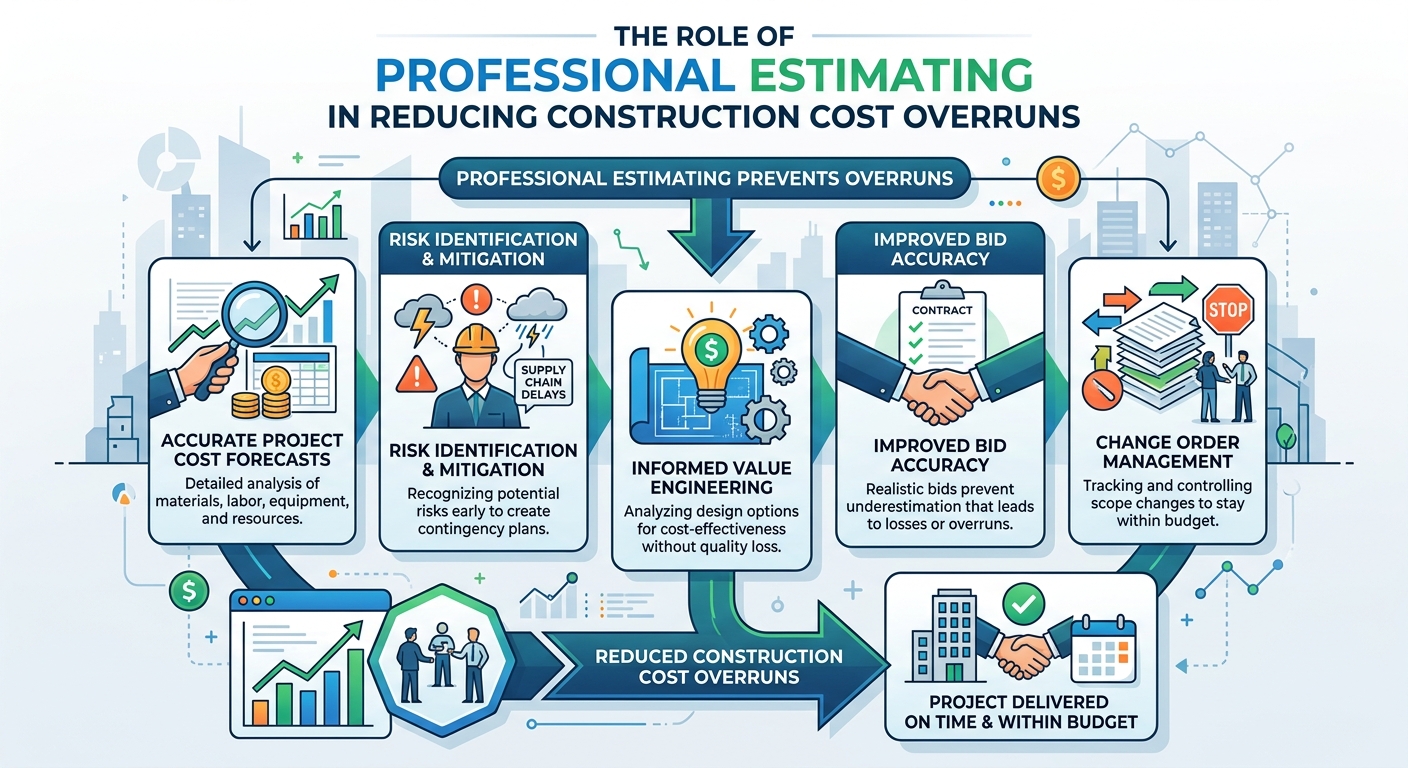
Construction projects rarely go exactly according to the original plan. Material prices can change, labor availability can fluctuate, and unexpected site conditions can affect the budget. However, many cost overruns do not begin during construction. They begin much earlier, when project costs are estimated incorrectly.
A detailed estimate gives contractors and project owners a clearer understanding of the financial requirements of a project before work starts. It allows them to identify quantities, labor requirements, material costs, equipment expenses, and subcontractor pricing before committing to a budget.
This is why professional construction estimating services have become an important resource for contractors, builders, developers, and subcontractors. Accurate estimating can improve bidding decisions, strengthen budget planning, and reduce the likelihood of unexpected financial problems.
Electrical work deserves particular attention because electrical systems can involve hundreds or even thousands of individual components. Specialized electrical estimating services help contractors analyze these requirements and develop more reliable project costs.
Understanding the Causes of Construction Cost Overruns
A cost overrun occurs when the actual cost of completing a project exceeds the original budget. There are many possible causes, but inaccurate estimating is one of the most preventable.
A project estimate may fail because certain materials were overlooked, quantities were measured incorrectly, labor productivity was overestimated, or project specifications were not reviewed carefully.
Other problems can occur when contractors use outdated pricing or fail to consider changes in the construction market.
For example, a small difference in the estimated price of one material may not appear significant. But when thousands of units are required, that difference can have a major impact on the final project cost.
Professional estimating helps identify these issues before they become expensive problems.
Why Quantity Takeoffs Are Critical
Quantity takeoffs are a fundamental part of the estimating process. They involve reviewing drawings and determining how much material is required for each portion of the project.
Depending on the scope, a takeoff may include:
- Concrete quantities
- Reinforcing steel
- Lumber
- Drywall
- Roofing materials
- Flooring
- Doors and windows
- Piping
- Electrical components
- Mechanical equipment
- Sitework materials
A reliable quantity takeoff creates the foundation for the rest of the estimate.
If quantities are wrong, even accurate unit prices will produce an inaccurate overall budget. For this reason, estimators carefully review plans and specifications to identify the complete project scope.
Electrical Projects Require Detailed Cost Analysis
Electrical estimating can be particularly challenging because electrical systems involve many different components and installation requirements.
A commercial building, for example, may include lighting fixtures, receptacles, distribution panels, transformers, switches, disconnects, feeders, branch circuits, conduit, wiring, emergency systems, and specialized equipment.
Each component can have different material and installation costs.
Professional electrical estimating services help break this complex scope into manageable sections. Estimators can review electrical drawings and specifications, measure quantities, apply appropriate pricing, and calculate labor requirements.
This creates a more structured approach to electrical bidding.
Reviewing Drawings Before Pricing
One of the most important stages of estimating takes place before any calculations are made.
Estimators need to review the available construction documents and understand the project’s scope. These documents may include architectural drawings, structural plans, MEP drawings, electrical plans, specifications, schedules, addenda, and other supporting information.
A contractor who begins pricing without understanding the complete document set may overlook important requirements.
For electrical projects, an estimator may need to compare electrical plans with architectural and mechanical drawings. Equipment shown on one drawing may require electrical connections shown elsewhere in the project documentation.
Cross-checking documents helps reduce omissions.
Material Price Volatility and Construction Budgets
Material pricing is not always stable. Prices for steel, copper, lumber, electrical equipment, and other construction products can change based on market conditions, supply availability, transportation costs, and demand.
This creates an additional challenge for contractors preparing bids.
A professional estimate should use relevant and reasonably current pricing information. Where appropriate, contractors may also need to consider potential price changes between bidding and procurement.
Electrical projects can be especially sensitive to pricing changes because copper, electrical equipment, wiring, and specialized components may represent substantial portions of the total electrical budget.
Accurate pricing at the estimating stage allows contractors to make more informed decisions about their bids.
Labor Estimating Is Just as Important as Material Pricing
Some contractors focus heavily on material costs while underestimating the impact of labor.
Labor can represent a significant portion of construction expenses. The number of workers required, installation time, productivity, wage rates, project complexity, and working conditions can all influence labor costs.
For electrical installations, labor productivity may vary depending on the building type and system complexity.
Installing electrical systems in a simple residential structure is very different from working on a hospital, manufacturing facility, high-rise building, or large commercial development.
Professional estimators consider the specific project conditions rather than applying the same assumptions to every job.
How Detailed Estimates Improve Bid Preparation
Contractors often compete against several companies for the same project. This makes pricing strategy extremely important.
A contractor needs to submit a bid that is attractive to the client while still covering project costs and desired profit.
A detailed estimate helps achieve this balance.
Instead of relying on rough percentages or previous project costs, contractors can understand the actual scope and cost structure of the new project.
This information can help them evaluate where savings may be possible without compromising quality or scope.
Identifying Missing Scope Before Construction
Scope gaps can create serious problems after a project has been awarded.
Suppose a contractor prices the main installation but overlooks an accessory, connection, finishing requirement, or related component. Once construction begins, the contractor may discover that the missing work still needs to be completed.
If the contract price does not adequately cover the additional expense, the contractor may have to absorb the cost.
Detailed estimating helps identify these gaps before the bid is submitted.
This is particularly important when several trades interact with one another. Electrical, mechanical, plumbing, structural, and architectural scopes can overlap, and unclear responsibilities can create costly misunderstandings.
The Value of Trade-Specific Estimating
Construction is made up of many specialized trades, and each requires a different approach to estimating.
Concrete estimating involves different measurements and cost factors than roofing. Electrical estimating requires different knowledge than drywall estimating. Mechanical estimating involves equipment, ductwork, piping, and other specialized components.
This is why trade-specific estimating can be valuable.
An estimator familiar with a particular trade is more likely to understand its materials, installation methods, labor requirements, and common cost considerations.
For contractors handling specialized work, trade expertise can make the estimating process more precise.
Digital Tools Are Improving Estimating Accuracy
Technology has transformed the way construction estimates are prepared.
Estimators can now use digital plans, electronic takeoff systems, construction estimating software, cost databases, spreadsheets, and cloud-based project documentation.
Digital takeoff tools can make quantity measurement faster and easier to organize. Estimating software can help calculate costs and maintain historical pricing information.
For electrical projects, digital tools can also assist estimators in organizing large numbers of fixtures, devices, circuits, equipment, and wiring requirements.
However, software should support professional judgment rather than replace it. Technology can process information quickly, but experienced estimators still need to interpret drawings and identify potential discrepancies.
Outsourcing Can Support Busy Contractors
Estimating can require significant time, particularly when contractors are bidding on multiple projects simultaneously.
A company may have experienced project managers and field personnel but still lack enough estimating capacity to handle every opportunity.
Outsourcing construction estimating services can provide additional support during busy bidding periods.
Instead of turning down potential projects because the internal team is overloaded, contractors can use external estimating professionals to help prepare quantity takeoffs and cost estimates.
Electrical contractors can similarly use specialized electrical estimating services when project volume increases or when complex drawings require additional estimating support.
This approach can give companies greater flexibility without requiring them to permanently expand their internal staff.
Accurate Estimates Support Better Project Planning
The benefits of estimating continue after the bidding stage.
Once a project is awarded, the estimate can become a useful reference for purchasing, scheduling, subcontractor coordination, and cost monitoring.
Project managers can compare estimated quantities with actual purchases and track expenses against the original budget.
When discrepancies appear, management can investigate them before they become larger financial problems.
In this way, estimating is not simply about winning a contract. It can also contribute to better project control throughout construction.
Common Ways Contractors Can Improve Estimates
Contractors can improve estimating accuracy by developing a consistent process.
First, all available project documents should be reviewed carefully. Drawings, specifications, addenda, schedules, and other documents should be considered before final pricing.
Second, quantities should be checked for accuracy. Large projects may benefit from reviewing important takeoff measurements more than once.
Third, material and labor pricing should be based on relevant market information.
Finally, the completed estimate should be reviewed before submission. A final review can identify missing scope, unusual quantities, pricing errors, and calculation mistakes.
Conclusion
Construction cost overruns can create serious financial challenges for contractors and project owners. Although some unexpected expenses cannot be avoided, many budgeting problems can be reduced through better planning and more accurate estimating.
Professional construction estimating services provide contractors with detailed information about materials, labor, equipment, subcontractors, and other project expenses. Specialized electrical estimating services provide similar support for the complex requirements of electrical installations.
With accurate quantity takeoffs, current pricing, careful document review, and trade-specific expertise, contractors can prepare more reliable bids and establish stronger project budgets.
In a competitive construction industry, accurate estimating is more than a preliminary calculation. It is a practical tool for making better business decisions, protecting profit margins, and creating a stronger foundation for successful project delivery.