The history of Mimosa hostilis root bark begins with a plant whose scientific identity has evolved over time. Today, the species is commonly recognized in botanical literature as Mimosa tenuiflora, while Mimosa hostilis remains an important historical name.
The root bark has attracted attention because it represents one specific part of this woody plant. However, understanding its botanical background requires more than examining dried bark. Its story involves plant classification, geographical distribution, historical naming, morphology, ecology, and ethnobotanical documentation.
Looking at these subjects together provides a clearer picture of how the plant became known under different names and why root bark remains associated with its botanical history.
Tracing the Plant Through Botanical Classification
Mimosa tenuiflora belongs to the Fabaceae family, one of the major families of flowering plants. The family includes an enormous variety of herbs, shrubs, and trees.
The species is placed within the genus Mimosa, a group containing numerous plants with different physical forms and ecological preferences.
Its classification is significant because the word “Mimosa” alone does not identify a single species. A complete scientific name provides greater precision and separates Mimosa tenuiflora from other members of the genus.
The historical name Mimosa hostilis is particularly important when examining older botanical sources because many historical records use that designation.
How the Name Mimosa Hostilis Entered Historical Literature
Plant names are not always fixed throughout scientific history. As botanical research develops, taxonomists may revise classifications and accepted names.
mimosa hostilis shop is an older designation associated with the species now commonly referred to as Mimosa tenuiflora. Both names can therefore appear in literature concerning the same plant.
This creates an interesting situation for modern researchers. A recent botanical source may use Mimosa tenuiflora, while an older publication may refer to Mimosa hostilis.
Recognizing this naming relationship is essential when tracing information through historical documents. Searching only the modern name can sometimes exclude older references that remain relevant to the plant’s history.
The Geographic Roots of the Species
The natural distribution of Mimosa tenuiflora is strongly associated with Latin America. Northeastern Brazil is particularly significant because the species occurs extensively in landscapes characterized by seasonal dryness.
These environments experience considerable fluctuations in rainfall. Periods of greater precipitation may be followed by prolonged dry conditions, placing pressure on vegetation.
The plant’s ability to remain established under these circumstances is one of its notable ecological characteristics.
It can occur in dry woodland, scrub vegetation, open areas, and locations affected by environmental disturbance. Its distribution demonstrates that the species can occupy habitats where water availability is not constant throughout the year.
Reading the Plant Through Its Physical Features
The living plant provides several characteristics that help establish its botanical identity.
Mimosa tenuiflora generally develops as a shrub or small tree. Its branches may bear thorns, while the leaves are compound and divided into numerous small leaflets.
The foliage creates a finely textured appearance. During reproduction, the plant produces small flowers and subsequently develops seed-bearing pods.
These features are particularly valuable to botanists because plant identification normally involves examining several characteristics together.
Once root bark has been removed from the plant and processed, most of these diagnostic features are no longer available.
Root Bark in the Context of Plant Anatomy
Root bark is not a separate organism or botanical species. It is part of the protective tissue associated with the roots of a woody plant.
Roots perform several essential biological functions. They anchor the plant within the soil, participate in water and mineral uptake, and interact with the surrounding underground environment.
As roots mature, their tissues develop structural changes associated with increasing age and woody growth.
Soil conditions can also influence root development. Moisture, temperature, physical pressure, drainage, and microorganisms all contribute to the environment surrounding underground tissues.
This makes root bark an interesting subject from a plant-anatomy perspective.
Why Historical Root-Bark Descriptions Can Differ
Descriptions of plant material from different periods may not be identical because botanical samples naturally vary.
The physical characteristics of root bark can be influenced by:
- Age of the plant
- Root maturity
- Geographic origin
- Soil conditions
- Seasonal climate
- Drying methods
- Physical processing
- Storage conditions
A historical description should therefore not necessarily be interpreted as a universal standard for every modern sample.
Natural variation is a normal feature of biological material.
From Fresh Bark to Dried Material
Fresh root tissue contains water and has physical properties that differ substantially from dried material.
When moisture is removed, the bark generally becomes harder, lighter, and less flexible. Its surface characteristics can also become more noticeable.
Drying conditions influence the resulting material. Temperature, airflow, humidity, and duration can all contribute to differences in the final physical state.
After drying, environmental exposure continues to matter. Humidity can gradually affect dried botanical materials, particularly when the material has been reduced into smaller particles.
Why Processing Changes the Historical Appearance
Historical references may describe root bark in larger pieces, while modern discussions can refer to finely processed material.
Mechanical processing changes the appearance without changing the botanical origin.
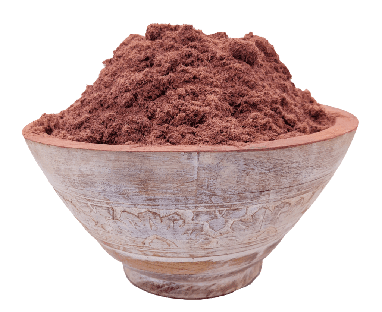
Large pieces may retain visible layers, irregular edges, and fibrous structures. Smaller fragments preserve less of this information. Powder contains only very small particles and therefore provides little visible evidence of the original root structure.
This distinction matters because the more extensively a plant is processed, the less useful visual examination becomes for determining its botanical identity.
The Ecological Story Behind the Root
The root does not develop independently of its surroundings.
A plant growing in a dry environment experiences different conditions from one growing in a consistently moist habitat. Soil structure, water availability, temperature, and nutrient levels can influence root growth.
Mimosa tenuiflora is particularly associated with environments where seasonal dryness is pronounced.
Its persistence in these landscapes provides an example of how plant species can occupy ecosystems with challenging environmental conditions.
This ecological background forms an important part of the botanical history of its root bark.
Ethnobotanical Records and Historical Knowledge
The history of Mimosa tenuiflora extends beyond formal taxonomy. The species has also appeared in ethnobotanical records documenting relationships between people and native plants.
Ethnobotany examines traditional knowledge, plant recognition, cultural practices, and historical relationships with vegetation.
Such records can help researchers understand how a species was perceived and documented within the communities living near its natural range.
However, historical plant knowledge should be interpreted carefully. Ethnobotanical documentation provides cultural and historical context, but it should not automatically be treated as modern scientific evidence concerning safety or effectiveness.
Why Older Names Still Matter Today
Scientific names may change, but older names do not disappear from historical records.
The continued use of Mimosa hostilis illustrates this clearly. Books, archived documents, websites, and older research can preserve terminology that differs from current botanical conventions.
For example, mimosa hostilis shop uses the historical species name as part of its online identity. This demonstrates how historical botanical terminology can remain recognizable long after scientific naming conventions have evolved.
Similarly, the phrase Buy 1kg of MHRB may occur online as an anchor or search phrase describing a quantity of root-bark material. It should not be confused with a botanical term or scientific classification.
The Importance of Cross-Referencing Botanical Names
When researching a species with a long naming history, using multiple names can make information easier to locate.
Searching for Mimosa tenuiflora can reveal modern botanical references, while Mimosa hostilis may lead to older literature and historical material.
The abbreviated form M. hostilis can also occur after the full genus and species name have already been established in a document.
Understanding these variations helps researchers connect information across different periods without mistakenly assuming that every naming difference represents a different plant.
Root Bark as Part of a Larger Botanical Story
It is easy to focus exclusively on root bark because it is the plant material most often mentioned in MHRB terminology. However, the root represents only one component of the complete organism.
Leaves, branches, flowers, fruits, roots, and bark all contribute to the biological identity of the species.
For botanical research, studying these characteristics together is more informative than examining one isolated plant part.
This broader perspective also explains why powdered root bark cannot provide the same identification information as a living Mimosa tenuiflora specimen.
How Natural Variation Fits Into Botanical History
Variation within plant populations is expected.
Individuals of the same species can differ because of genetics, environmental conditions, maturity, and growing location. These differences may influence dimensions, bark texture, coloration, and overall growth form.
Consequently, historical descriptions should be understood as observations of particular plants or populations rather than rigid specifications.
This principle is important when comparing botanical descriptions from different regions or time periods.
Frequently Asked Questions
What is the modern name for Mimosa hostilis?
Mimosa tenuiflora is the scientific name commonly used in contemporary botanical references.
Is Mimosa hostilis a separate species?
Generally, Mimosa hostilis is a historical name associated with Mimosa tenuiflora.
What family does Mimosa tenuiflora belong to?
It belongs to the Fabaceae family.
Where is the species naturally associated with?
It is strongly associated with northeastern Brazil and other areas of Latin America.
What is root bark?
Root bark refers to protective tissues associated with the roots of a woody plant.
Why can root bark vary in appearance?
Plant age, geography, soil, climate, drying, processing, and storage can influence its physical characteristics.
Can root bark identify the species by itself?
Not reliably. A complete botanical identification uses multiple plant characteristics and supporting information.
Why are both Mimosa hostilis and Mimosa tenuiflora used?
The former is a historical name, while the latter is widely used in modern botanical classification.
Does processing change the botanical species?
No. Processing changes the physical form rather than the plant’s taxonomic identity.
Conclusion
The botanical history of Mimosa hostilis root bark is closely connected with the changing scientific understanding of Mimosa tenuiflora. Its historical name remains important because it appears throughout older literature and continues to be used in general online terminology.
The plant itself is a woody member of the Fabaceae family, strongly associated with the seasonally dry landscapes of Latin America. Its leaves, branches, flowers, seed pods, roots, and bark each contribute to its botanical identity.
Understanding its taxonomy, geographic distribution, root anatomy, historical naming, and natural variation provides a much richer perspective on MHRB than focusing on the dried material alone. It also makes it easier to interpret older and newer sources without confusing historical terminology with modern botanical classification.