The world of specialty confectionery is no longer limited to familiar combinations of cocoa, sugar, and dairy. Food manufacturers are experimenting with botanical ingredients, functional foods, alternative sweeteners, and mushroom-derived materials to create products in a variety of forms.
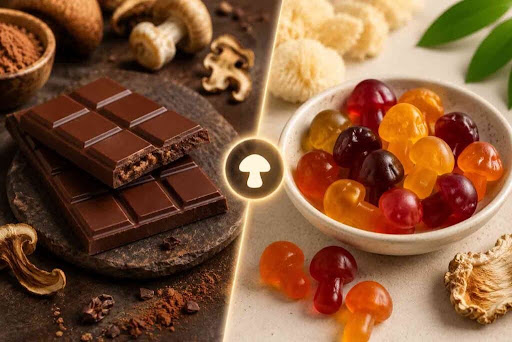
Mushroom-based products are particularly diverse. They can appear as chocolate bars, molded chocolates, gummies, soft chews, and other confectionery formats. Despite sharing a broad mushroom-related identity, these products can differ substantially in their ingredients, manufacturing methods, texture, and labeling.
Another important distinction concerns the type of mushroom ingredient involved. Some products use non-psychoactive mushrooms associated with functional-food applications, while others may contain or be marketed around psychoactive mushroom compounds.
Understanding the differences between these categories provides useful context for anyone researching modern mushroom-based confectionery.
The Shift Toward Mushroom-Based Sweets
Mushrooms have traditionally been associated with culinary foods rather than desserts. Advances in food processing have expanded the ways mushroom-derived materials can be incorporated into different recipes.
Drying and milling can produce powders that are easier to mix into food. Other processing methods can create extracts or specialized preparations.
Confectionery provides an interesting application because its strong flavors and structured textures can accommodate additional ingredients.
Chocolate and gummies are particularly adaptable formats, although each requires a different approach during production.
Chocolate Bars as a Starting Point
Chocolate bars provide one of the most recognizable formats for mushroom-based products.
A standard chocolate formulation can contain cocoa solids, cocoa butter, sugar, milk ingredients, or plant-based alternatives. A mushroom-derived ingredient can then be incorporated into this matrix.
The type of mushroom and its physical preparation can influence the finished product. Powder may introduce additional particles, while a more refined preparation can behave differently.
Chocolate itself also varies. Dark chocolate has a stronger cocoa profile, whereas milk chocolate tends to be sweeter and creamier. White chocolate relies primarily on cocoa butter rather than the cocoa solids found in darker varieties.
These differences can affect how mushroom flavors are perceived.
Understanding Mushroom Ingredients in Chocolate
A product description may simply mention mushrooms, but the actual ingredient can take several forms.
Mushroom Powder
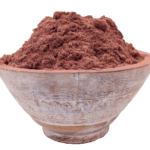
Powder consists of dried mushroom material that has been processed into smaller particles. It can contribute flavor, color, and texture to the chocolate.
Mushroom Extract
Extracts undergo additional processing designed to concentrate selected constituents from mushroom material. Their physical characteristics can differ from ordinary powders.
Mushroom Blends
Blends combine multiple mushroom-derived ingredients. Several species may be included in one formulation, creating a more complex ingredient profile.
These terms are useful when reading product labels because they describe different aspects of the mushroom ingredient.
How Mushroom Flavor Interacts With Cocoa
Mushrooms can have earthy, woody, bitter, or roasted characteristics depending on the species and preparation.
Cocoa naturally has roasted and bitter notes, creating an interesting foundation for mushroom formulations.
Additional ingredients can change the balance further. Vanilla can add sweetness and aroma, coffee can reinforce roasted characteristics, while fruit can introduce acidity.
Nuts, seeds, spices, coconut, and other inclusions can provide additional flavor and texture.
The final taste is therefore determined by the entire recipe rather than the mushroom component alone.
Moving Beyond the Traditional Chocolate Bar
Mushroom chocolate does not have to follow the conventional rectangular-bar format.
Manufacturers can create molded pieces, individual squares, cups, truffles, filled chocolates, and other shapes.
A mushroom ingredient may be distributed throughout the chocolate or placed inside a filling.
This provides different textural experiences while allowing the same broad ingredient category to appear in several forms.
The physical shape, however, does not identify the mushroom species or ingredient preparation. That information needs to come from product-specific labeling.
Gummies Create a Different Experience
Gummies represent one of the most recognizable alternatives to chocolate.
Their characteristic texture comes from a gel structure. Gelatin, pectin, starch, or other texturizing ingredients can be used to produce the desired elasticity and chewiness.
Mushroom-derived materials must be compatible with this system.
Flavor formulation also differs from chocolate. Gummies often use fruit, citrus, berry, or other strong flavor profiles that can create a very different sensory experience.
Products described as mushroom gummies by boom bar represent this separate confectionery format, where mushroom-derived ingredients are incorporated into a soft, chewy matrix rather than a cocoa-based one.
Why Gummies Need Different Processing
Chocolate and gummies respond differently to ingredients and manufacturing conditions.
Chocolate relies heavily on cocoa butter, temperature control, particle distribution, and crystallization.
Gummies depend more on moisture, sugar concentration, acidity, and gel formation.
Adding a mushroom ingredient can affect these systems in different ways. A powder may change the mouthfeel or appearance, while an extract can interact differently with the surrounding ingredients.
For this reason, a formulation designed for chocolate cannot simply be transferred to a gummy without considering the properties of the new food matrix.
Soft Chews and Other Mushroom Confections
Gummies are not the only alternative to chocolate.
Soft chews can use sugar systems, syrups, fats, moisture, and texturizing ingredients to create a flexible and dense texture.
Other specialty products may use molded candy, filled pieces, or layered confectionery structures.
Each format provides different opportunities for incorporating mushroom-derived materials.
The result is a broader category in which the mushroom ingredient is only one part of the product’s identity.
Functional Mushroom Products
Many mushroom-based foods focus on mushrooms commonly associated with functional-food applications.
Lion’s mane, reishi, cordyceps, and turkey tail are frequently discussed in this context.
The term “functional mushroom” generally relates to nutritional, traditional, or broader functional interest. It should not automatically be interpreted as a guarantee of a particular health effect.
Research may examine a specific species, extract, compound, or preparation under controlled conditions. A finished confection may use a different ingredient form and quantity.
Scientific information should therefore be considered in relation to the specific preparation being studied.
Psychoactive Mushroom Products
A separate category includes products associated with psychoactive mushroom compounds.
These products should not automatically be grouped with ordinary functional mushroom foods.
Psychoactive compounds can influence perception, cognition, mood, and sensory experiences. Their legal status differs considerably across countries and jurisdictions.
The phrase magic mushrooms chocolates is commonly associated with this category, although terminology can vary and does not necessarily identify the exact chemical composition of an individual product.
Because of this, informal product names should be distinguished from precise ingredient information.
The Importance of Product Labels
The packaging of a mushroom-based confection can provide valuable information about its composition.
Start by identifying the mushroom species. A specific species name provides more information than a generic reference to mushrooms.
Next, look for the ingredient form. Terms such as powder, extract, and blend describe different preparation methods.
The rest of the ingredient list can reveal cocoa components, sweeteners, dairy ingredients, plant-based alternatives, flavorings, nuts, fruit, spices, and other components.
Allergen information should also be reviewed because chocolate and gummies may contain milk, soy, peanuts, tree nuts, or other allergens.
Serving Information and Net Quantity
Some mushroom-based confectionery products include serving information on the packaging.
A serving size describes the portion used for nutritional or labeling purposes. It does not necessarily reveal the amount of a specific mushroom ingredient unless that information is separately provided.
Net quantity indicates the total amount of finished product contained in the package.
These details should therefore be viewed separately from the ingredient list.
Together, they help provide a clearer understanding of the packaged food.
Storage Requirements Can Differ
Chocolate and gummies have different storage characteristics.
Chocolate can be affected by excessive heat and humidity. These conditions can change its appearance, texture, and physical structure.
Gummies can also be sensitive to moisture and temperature, which may affect their firmness and consistency.
Specialty ingredients can introduce additional stability considerations depending on their formulation.
For this reason, product-specific storage instructions are more useful than assuming all mushroom-based sweets have identical requirements.
Brand Language Versus Technical Information
Specialty food brands often use memorable names to distinguish product lines.
Brand terminology can help identify a particular product range, but it does not necessarily describe every ingredient or manufacturing detail.
A product name may communicate its format or general category while leaving technical information to the ingredient declaration.
When researching a mushroom-based product, the specific product label provides more useful information than relying only on a brand or marketing phrase.
How to Compare Mushroom Chocolate and Gummies
A practical comparison can focus on several characteristics.
Base: Chocolate uses a cocoa-based structure, while gummies rely on a gel system.
Texture: Chocolate is generally firm and melts, while gummies are soft and chewy.
Flavor: Chocolate emphasizes cocoa and roasted flavors, whereas gummies often use fruit or confectionery flavors.
Mushroom preparation: Both formats can potentially contain powders, extracts, or blends.
Supporting ingredients: Chocolate may contain cocoa butter, milk, nuts, and sweeteners, while gummies may contain gelatin or pectin, acids, flavors, and colors.
Labeling: Both formats should be evaluated according to their individual ingredient and allergen information.
This comparison shows that the same broad mushroom category can include products with very different physical and sensory properties.
Where Mushroom-Based Confectionery Is Heading
The specialty-food market continues to experiment with mushroom-derived ingredients and alternative confectionery formats.
Future products may explore new mushroom species, plant-based chocolate, reduced-sugar recipes, fruit combinations, different gummy textures, spices, coffee, nuts, and other ingredients.
Manufacturing improvements may also make it easier to manage flavor, texture, ingredient distribution, and product stability.
As the category expands, accurate terminology will become increasingly useful for distinguishing between different mushroom preparations and product types.
Frequently Asked Questions
What are mushroom-based confectionery products?
They are sweets containing mushroom-derived ingredients in formats such as chocolate, gummies, chews, or molded confectionery.
Are mushroom chocolate and mushroom gummies made the same way?
No. Chocolate and gummies rely on different food structures and manufacturing processes.
What mushroom ingredients can be used?
Products may contain mushroom powders, extracts, single species, or mushroom blends.
What is a mushroom powder?
It is dried mushroom material processed into a powdered form.
What is a mushroom extract?
It is a mushroom-derived preparation produced through additional processing.
Are all mushroom-based sweets psychoactive?
No. Many products use non-psychoactive mushrooms associated with functional-food applications.
Can mushroom confections contain allergens?
Yes. Depending on the recipe, they may contain milk, soy, peanuts, tree nuts, or other allergens.
Why should labels be checked?
Labels can identify the mushroom species, ingredient form, supporting ingredients, allergens, storage information, and other relevant details.
Conclusion
Mushroom-based confectionery has developed into a varied category that extends well beyond the traditional chocolate bar. Gummies, soft chews, molded chocolates, filled pieces, and other formats can all incorporate mushroom-derived ingredients.
The differences between these products are not merely cosmetic. Chocolate and gummies use different food structures, require different manufacturing conditions, and create distinct flavor and texture experiences.
The mushroom ingredient can also vary considerably. Powders, extracts, single-species preparations, and blends each bring different characteristics to a finished confection.
Understanding these distinctions makes it easier to interpret the growing range of mushroom-based products. Looking at the product format alongside the mushroom species, ingredient preparation, supporting ingredients, and labeling provides a much clearer picture of how these specialty confections differ.