The laser source and the welding gun get most of the attention in a fiber laser weld cell, but the accessories quietly determine whether the finished bead looks like a showpiece or a rework ticket. Nozzles that sit slightly out of alignment throw off shielding coverage. A worn ground clamp introduces heat variability across long seams. Even the wire spool holder, if it drags too hard, causes stutter in a wire-fed pass. Fabricators who move from arc welding to fiber laser often underestimate how much these small parts influence outcome, then spend weeks chasing quality issues that a fresh set of accessories would have solved on day one. This guide walks through the Laser Welder Accessories that pay back their cost quickly, explains what each part does inside the process, and offers practical selection notes so your next accessory purchase actually improves the weld.
Nozzles, Shielding, and the Bead Surface
The nozzle at the tip of the welding head shapes the shielding gas curtain around the molten pool. If the gas coverage is uneven, atmospheric oxygen and nitrogen sneak into the weld and leave porosity, discoloration, or a chalky oxide layer on top. Copper nozzles handle heat well and last through medium production runs, while ceramic variants extend service life for high-duty cycles. Some nozzles are shaped specifically for corner work, offering a chamfered exit so the beam can approach fillets without the nozzle body scraping the workpiece.
Keep a set of spare nozzles in the working sizes for the shop, and swap them the moment spatter starts building up inside the orifice. Rotating nozzles rather than cleaning them mid-shift saves time, and a two-minute swap prevents an hour of rework. Quality Laser Welder Accessories from a matched-supply catalog reduce the guesswork of finding compatible parts, since the nozzle threads, protective glass sizes, and tip geometry vary across manufacturers.
Wire Feed and Filler Handling
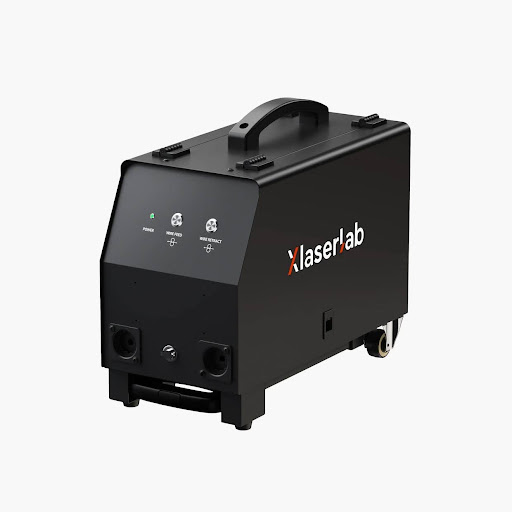
When the job requires filler wire, the wire feeder becomes the second most influential component after the beam itself. A stable, jam-free feed means the beam always meets a predictable amount of filler at the same speed. If the wire stutters, the weld height varies and the finished bead loses its uniform appearance.
Spool Holders and Tension Adjustment
Adjustable spool holders let the operator match tension to the wire diameter and material. Aluminum wires are soft and kink under high tension, while stainless wires tolerate more pressure. A holder that lets you dial in resistance rather than relying on a single spring setting keeps feed rates consistent as the spool empties.
Liners, Rollers, and Wear Parts
The liner inside the torch handles guides the wire from the feeder to the weld pool. Copper liners work for steel, while Teflon or graphite liners handle softer aluminum wires without scoring the surface. Drive rollers should match the wire diameter and material, and knurled versus grooved profiles are chosen based on how firmly the wire needs to be gripped.
Grounding and Clamping
A stable electrical return path matters more in laser welding than many operators expect. Even though the laser beam itself carries no current, most systems integrate a signal ground for arc detection, seam tracking, or safety interlocks. A corroded ground clamp or a frayed cable can trigger nuisance faults that stop the cycle.
Choosing the Right Clamp Size
Match the clamp jaw opening to the workpiece thickness. A clamp that barely closes on a thick plate creates a weak contact and heats up over long runs. Copper-jawed clamps carry current more reliably than steel-jawed alternatives, especially at higher amperage.
Magnet Bases and Fixture Aids
For thin sheet work, magnetic base clamps position the ground without denting the surface. Angle magnets hold panels at 90 degrees during tacking, saving a second set of hands during setup. These accessories cost little but shorten setup time noticeably across a busy shift.
Protective Optics and Lenses
The protective glass sitting between the focusing optics and the workpiece is the shield that keeps spatter from destroying the expensive lens above it. This is a wear part by design, and running one too long risks contaminating the focusing lens with vaporized metal.
Inspection Rhythm
Inspect the protective glass at the start of each shift and after any spatter-heavy operation. Small pinhole burns or clouding reduce beam transmission and produce inconsistent power delivery. A weekly log of inspection notes makes it easy to see when a batch of glass is wearing faster than usual, which sometimes indicates that the shielding gas flow is set too low.
Storage and Handling
Store spare protective glass in the original packaging until installation, and wear lint-free gloves when handling. Fingerprints leave oil residues that carbonize during the first beam pass, creating hot spots that reduce lens life.
Cooling, Chillers, and Support Infrastructure
Fiber laser sources produce heat that must be extracted through a chiller loop. Chiller filters, coolant additives, and hose fittings are all accessories that affect long-term performance, even if they never touch the workpiece directly. Undersized chillers cause thermal cycling in the source, which shortens fiber life and creates power drift across a shift.
Coolant Chemistry
Distilled water alone breeds algae and mineral deposits over time. Manufacturer-approved coolant additives inhibit biological growth and match the pH range specified by the source. Draining and refilling on the schedule the manufacturer recommends prevents corrosion inside the source.
Filter Replacement
In-line filters catch particulate before it reaches the source. A blocked filter reduces flow and triggers over-temperature warnings. Keep spares on hand and log replacement dates alongside coolant changes.
Building a Complete Accessory Kit
Rather than ordering parts one at a time as failures appear, plan a starter kit that covers the accessories most likely to wear during the first quarter of use. A stocked cabinet with nozzles in common sizes, protective glass, wire liners, and a spare ground clamp cuts unplanned downtime substantially. Working with a supplier such as Xlaserlab that offers matched accessories for their welding systems simplifies compatibility checks and shortens reorder lead times.
Accessorizing for Consistent Weld Quality
The most reliable path to clean, repeatable laser welds is treating accessories as engineered parts of the process rather than optional add-ons. Nozzles shape shielding coverage, wire feed components stabilize deposit rate, ground clamps preserve electrical stability, protective glass shields the expensive optics, and chiller consumables keep the source healthy. Investing in a curated set of these parts and replacing them on a defined rhythm delivers better welds than upgrading the source alone. Build the stock cabinet, log the inspection rhythm, and the shop earns a quiet advantage in bead quality, cycle time, and total cost per part.