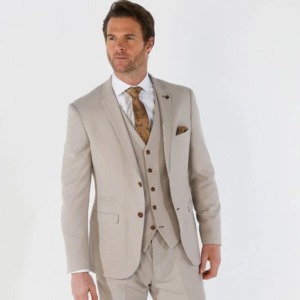
Rail travel is a practical way to reach weddings, conferences and race meetings across Britain, but it creates a specific formalwear problem. A suit may spend hours folded, pass through busy stations and share limited luggage space with shoes and toiletries. Wearing it for the entire journey avoids packing creases but can expose it to spills, heat and crowded seats.
A sensible plan depends on journey length, arrival time and access to accommodation. The objective is not to keep the suit untouched at all costs. It is to protect its shape and allow enough time for it to recover before the event.
Selecting 3 Piece Suits with Travel in Mind
The collection of 3 piece suits at TruClothing covers many cloths, colours and constructions. Travellers should read the individual care and fabric details rather than assume one packing method suits every garment. Textured cloth may disguise small creases better than a very smooth surface, while heavier tweed takes more luggage space.
A three-piece offers a useful backup if the jacket develops a light crease. The waistcoat can maintain a finished appearance once the jacket is removed at an appropriate point. That does not reduce the need to pack carefully, but it gives the outfit more flexibility over a long day.
Decide whether to wear or carry it
For a short direct trip immediately before an event, wearing the trousers and shirt while carrying the jacket in a cover may be practical. Keep the waistcoat unfastened or packed to reduce strain while seated. For longer journeys with an overnight stay, packing the full suit allows travel in easier clothing and protects the shirt from perspiration.
Consider the station route. Escalators, stairs, replacement buses and a walk to the venue make a complete suit harder to protect. Weather matters as well. A proper overcoat and umbrella can protect worn tailoring, while a breathable garment cover is better than thin dry-cleaning plastic for carried clothing.
Use a fold that supports the shoulders
If the jacket must enter a case, turn one shoulder gently inside out, nest the other shoulder into it and fold the jacket so the lining faces outward. This method reduces pressure on the shoulder structure. Do not force a bulky jacket into an overfilled case. The waistcoat can be laid flat with buttons fastened lightly, while trousers can be folded along their crease.
Place the suit near the top of the case and keep shoes in separate bags. Toiletries should be sealed twice and positioned away from the cloth. A leak can cause more damage than a crease. Avoid packing metal accessories against the suit, as cufflinks and tie pins may snag the surface.
A garment bag still needs management
Garment bags protect against dirt but can become awkward in crowded trains. Choose one with secure handles and enough length for the jacket. Do not leave it across several seats or hang it where staff have asked passengers not to place luggage. If it must go on a rack, avoid putting a heavy case on top.
Keep contact details inside the bag rather than on a visible external label. Check the overhead rack before leaving the train. Similar dark covers are easy to confuse, so a discreet coloured strap can help identify the correct one without making the bag look informal.
Build recovery time into the ticket plan
Arriving fifteen minutes before a ceremony leaves no margin for disruption or garment care. Where possible, choose a train that reaches the destination early enough to hang the suit, change and address small creases. For an important wedding or presentation, travelling the previous evening may be worth the extra accommodation cost.
On arrival, remove every piece from the case. Hang the jacket on a broad hanger and the trousers from the waistband or cuffs. Allow gravity and room air to release minor creasing. A bathroom filled with heavy steam is not a controlled garment-care method and can affect certain cloths or linings.
Use hotel equipment cautiously
Read the care label before applying heat. If ironing is permitted, use the correct temperature and a clean pressing cloth. Do not press directly over buttons, velvet details or synthetic trims. A handheld steamer can help some garments, but it should be kept at an appropriate distance and tested on an inconspicuous area.
Hotel irons may contain residue or limescale. Test the soleplate and steam function on a white towel first. If the suit needs more than light attention, ask whether the hotel offers pressing or can recommend a local cleaner. An aggressive last-minute iron can create shine or damage that is more visible than the original crease.
Pack the outfit as a complete system
Create a checklist for jacket, trousers, waistcoat, shirt, tie, socks, shoes and any required cufflinks. Put a spare shirt and plain tie in the luggage when space permits. If the main tie is lost or marked, the backup prevents a search in an unfamiliar town.
Take photographs of the chosen combination before leaving home. This makes dressing faster and confirms how the tie, pocket square and shoes were meant to work together. It also stops unnecessary accessories entering the case.
Prepare for the return journey
After the event, the suit may carry food marks, moisture or outdoor dust. Inspect it before packing. Blot a fresh spill without rubbing and seek professional treatment later. Allow the suit to air overnight if possible rather than sealing it immediately after a long reception.
Once home, unpack straight away, even if the journey ended late. Hang and examine each piece, then follow the care instructions. Train travel need not limit formalwear choices. The successful traveller treats time, luggage space and garment recovery as parts of the event plan, not as problems to solve on the platform.