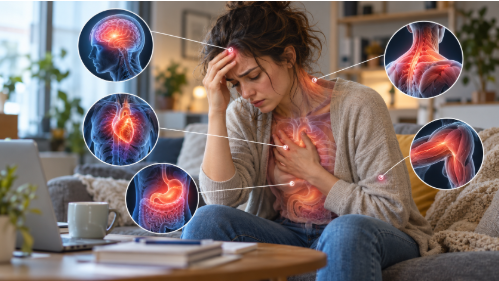
Stress is often described as an emotional experience, but its effects extend throughout the entire body. When your brain senses pressure, uncertainty, or danger, it activates a protective response that can change breathing, muscle tension, digestion, heart rate, and concentration. These reactions are useful during short-term threats, but frequent activation can leave the body feeling tense, tired, restless, or uncomfortable.
The nervous system plays a major role in this mind-body connection. During stressful moments, the sympathetic nervous system prepares the body to respond quickly, while the parasympathetic nervous system supports rest, digestion, and recovery. When stress becomes persistent, the body may spend too much time in a heightened state, making ordinary sensations feel stronger or more difficult to ignore.
Physical symptoms can also increase emotional worry, creating a cycle that becomes difficult to interrupt. Someone who notices muscle tightness, rapid breathing, digestive discomfort, or pelvic tension may become concerned about those sensations, which can increase stress further. Understanding this cycle is an important first step toward developing practical strategies that support both emotional and physical well-being.
How the Nervous System Responds to Everyday Stress
The nervous system constantly gathers information about what is happening around you and inside your body. When it detects a potential threat, stress hormones such as adrenaline can increase alertness and prepare muscles for action. Your breathing may become faster, your shoulders may tighten, and your attention may become focused on whatever seems most urgent or uncomfortable.
These responses do not always require an obvious emergency. Deadlines, financial concerns, relationship conflicts, lack of sleep, health worries, and constant digital stimulation can all keep the stress response active. Even when the original problem has passed, the body may remain alert because the nervous system has become accustomed to anticipating the next challenge.
Helping the body move out of this heightened state often involves simple, repeated signals of safety. Slow breathing, gentle movement, relaxation exercises, predictable routines, and [daily stress management](Add link here) strategies can support this process. The goal is not to eliminate every stressful thought but to help the nervous system become more flexible when challenges appear.
Why Anxiety Can Feel So Physical
Anxiety can create very real physical sensations because the brain and body constantly communicate with each other. A racing heart, tight chest, shaky hands, nausea, muscle tension, sweating, or light-headedness may occur when the body prepares for a perceived threat. Although these sensations can feel alarming, they are often part of the body’s natural stress response.
The difficulty is that physical symptoms can sometimes become the focus of anxious attention. A person may notice one sensation, begin monitoring it closely, and then worry that it signals something serious. Increased attention can make the sensation feel even more noticeable, strengthening the connection between anxiety, body awareness, and physical discomfort.
Learning to respond differently to uncomfortable sensations can gradually reduce this cycle. Rather than immediately fighting or fearing every feeling, it can help to notice what is happening, slow down the breath, and redirect attention toward the present environment. Grounding exercises are especially useful because they give the mind something concrete and neutral to focus on.
Using Grounding Techniques to Return to the Present Moment
Grounding techniques are simple exercises designed to shift attention away from racing thoughts and toward immediate sensory experiences. They can be particularly helpful when anxiety feels overwhelming or when the mind becomes trapped in repetitive worry. Instead of trying to force thoughts away, grounding provides a structured way to reconnect with what is happening around you right now.
One commonly used method is the 54321 Grounding Technique which guides attention through the five senses. By deliberately noticing things you can see, touch, hear, smell, and taste, you give the brain specific sensory information to process. This can interrupt spiraling thoughts and make anxious moments feel more manageable.
Grounding works best when it is practiced before stress becomes extremely intense. Using the technique during ordinary moments can make it easier to remember when anxiety suddenly increases. It can also be combined with slow breathing, gentle movement, or a quiet environment to create a broader calming routine that supports nervous system regulation.
How Stress Can Influence Muscle Tension
Muscles naturally tighten when the body prepares to respond to a threat. During short periods of stress, this reaction is usually temporary and may disappear once the situation feels safe again. With ongoing stress, however, muscles may remain partially contracted for long periods, contributing to stiffness, fatigue, headaches, jaw tension, neck discomfort, back tightness, or general body aches.
Many people do not realize how much tension they are carrying until they intentionally relax. The shoulders may remain raised, the jaw may stay clenched, and the abdomen may be held tightly throughout the day. These habits can become automatic, especially when someone spends long hours working, sitting, concentrating, or dealing with repeated emotional pressure.
Body awareness exercises can help identify unnecessary tension. Periodically checking the jaw, shoulders, hands, abdomen, hips, and breathing pattern may reveal areas that are working harder than necessary. Gentle stretching, comfortable movement, slow breathing, and relaxation practices can then encourage those muscles to soften rather than remaining constantly prepared for danger.
The Relationship Between Stress and Pelvic Floor Tension
The pelvic floor is a group of muscles that supports the pelvic organs and contributes to bladder, bowel, sexual, and movement functions. Like muscles in the shoulders or jaw, pelvic floor muscles can respond to stress by tightening. Some people may unconsciously brace these muscles during anxious situations without realizing that tension is being maintained.
Persistent pelvic muscle guarding can sometimes contribute to feelings of pressure, urgency, discomfort, or difficulty relaxing. Emotional stress is not necessarily the only factor involved, and pelvic symptoms can have many possible causes. However, understanding how the nervous system influences muscle activity can help people recognize why relaxation and stress management may be useful parts of a broader self-care approach.
Educational resources such as PelvicSense can help people learn more about pelvic pain, relaxation, movement, and self-management strategies. The aim of this type of education is not to replace professional medical care but to help people better understand their bodies, recognize patterns, and develop practical skills that may support comfort in everyday life.
Breathing Techniques for Calming the Body
Breathing changes automatically during stressful situations. People may begin breathing quickly, holding their breath, or taking shallow breaths into the upper chest without noticing it. These patterns can reinforce feelings of tension because the nervous system receives ongoing signals that the body may still need to remain alert and prepared.
Slow, comfortable breathing can provide a different signal. One simple approach is to breathe in gently through the nose, allow the abdomen and lower ribs to expand naturally, and then exhale without forcing the air out. Making the exhalation slightly longer than the inhalation may help some people feel calmer, although breathing should always remain comfortable rather than strained.
Breathing exercises do not need to be complicated or lengthy to be useful. Practicing for a few minutes while sitting comfortably, lying down, or taking a quiet break can create opportunities for the body to reduce unnecessary tension. Regular practice can also improve awareness of moments when stress causes breathing to become shallow or restricted.
Why Gentle Movement Can Help Reduce Stress
Movement gives the body an opportunity to release some of the physical energy associated with stress. Walking, stretching, mobility exercises, yoga, or other comfortable activities can improve circulation while reducing the sense of being physically stuck or tense. Movement can also shift attention away from repetitive thinking and toward immediate sensations such as balance, breathing, and muscle activity.
Exercise does not need to be intense to support emotional well-being. A short walk outside, several gentle stretches between work sessions, or slow mobility movements may be enough to create a noticeable change in how the body feels. The most useful form of movement is often one that feels manageable, enjoyable, and easy to repeat consistently.
People experiencing pain or persistent physical symptoms should avoid assuming that pushing harder will always produce better results. For some individuals, aggressive exercise can increase guarding or discomfort. Choosing gradual, comfortable movement and adjusting activity based on the body’s response can make physical activity a supportive part of stress management rather than another source of pressure.
Creating Daily Habits That Support Nervous System Regulation
Nervous system regulation is influenced by everyday habits rather than a single relaxation technique. Consistent sleep routines, regular meals, hydration, movement, social connection, and breaks from constant stimulation can all contribute to greater physical and emotional stability. Small habits performed regularly are often easier to maintain than major lifestyle changes attempted all at once.
Sleep deserves particular attention because insufficient rest can increase emotional sensitivity and make stress harder to manage. Maintaining a reasonably consistent bedtime, reducing stimulating activities late at night, and creating a comfortable sleep environment may support better recovery. Limiting excessive caffeine, especially later in the day, can also help people who notice that stimulants increase tension or anxious feelings.
Technology habits can influence stress as well. Constant notifications, news updates, emails, and social media provide the brain with an endless stream of information that can make true downtime difficult. Creating short periods without screens, especially during meals, relaxation exercises, or before sleep, can give the nervous system valuable opportunities to slow down.
Changing the Way You Respond to Stressful Thoughts
Stress management is not only about changing physical reactions; it also involves becoming aware of thought patterns. People under pressure may automatically imagine worst-case scenarios, replay past events, or predict that uncomfortable sensations will continue indefinitely. These thoughts can increase nervous system activation even when no immediate danger is present.
A useful strategy is to notice stressful thoughts without automatically treating them as facts. Asking whether a thought describes what is happening now or what you fear might happen can create psychological distance. This approach does not require forced positivity; instead, it encourages a more balanced interpretation of uncertainty, discomfort, and everyday challenges.
Pairing this mental awareness with physical calming strategies can be particularly effective. When a stressful thought appears, you might relax your shoulders, slow your breathing, notice your surroundings, or take a short walk before responding. Over time, repeated practice can help create a different pattern in which stressful thoughts no longer automatically trigger the same level of physical tension.
When Self-Care Is Helpful and When to Seek Additional Support
Self-care techniques can be valuable for everyday stress, mild anxiety, muscle tension, and general nervous system regulation. Grounding, breathing, movement, relaxation, sleep habits, and supportive routines can give people practical ways to respond when stress begins to build. These tools are most effective when they are used consistently rather than only during moments of extreme distress.
However, self-care should not be treated as a substitute for appropriate professional evaluation. Persistent pain, major changes in bladder or bowel function, unexplained symptoms, severe anxiety, or symptoms that interfere with daily activities deserve attention from a qualified healthcare professional. Getting appropriate guidance can help identify possible causes and determine which treatment or management options are suitable.
Seeking professional support and practicing self-management are not opposing approaches. Many people benefit from combining medical guidance, physical therapy, psychological support, education, and healthy lifestyle habits depending on their individual needs. The most helpful approach is usually one that considers both physical symptoms and the emotional factors that may influence how those symptoms are experienced.
Conclusion
Stress and anxiety can affect far more than thoughts and emotions. Through the nervous system, they can influence breathing, digestion, muscle tension, attention, sleep, and even how strongly physical sensations are perceived. Recognizing these connections can make uncomfortable symptoms feel less mysterious and provide practical starting points for managing them.
Grounding exercises, gentle breathing, comfortable movement, muscle relaxation, healthier sleep routines, and reduced overstimulation can all support nervous system regulation. No single technique works perfectly for everyone, so experimenting with several approaches can help you discover which strategies are easiest to use consistently and which ones leave your body feeling calmer.
Most importantly, managing stress is not about preventing every difficult emotion or uncomfortable sensation. It is about developing tools that help you respond to those experiences with greater awareness and flexibility. When symptoms persist or significantly affect daily life, combining self-care with appropriate professional support can provide a more complete path forward.
FAQs
Can stress really cause physical symptoms?
Yes. Stress can influence breathing, heart rate, digestion, muscle tension, sleep, and pain perception through the nervous system. Physical symptoms can therefore appear or become more noticeable during periods of emotional pressure.
How quickly can grounding techniques help with anxiety?
Some people notice a calming effect within several minutes because grounding redirects attention toward immediate sensory information. Results vary, and regular practice may make the technique easier to use during stressful situations.
Can anxiety cause pelvic floor muscles to tighten?
Stress and anxiety can contribute to muscle guarding throughout the body, including the pelvic floor. Persistent pelvic symptoms can have multiple causes, however, so ongoing discomfort should be discussed with an appropriate healthcare professional.
What is the easiest relaxation technique for beginners?
Slow, comfortable breathing is often a simple place to begin. Try relaxing your shoulders while breathing gently into the abdomen and lower ribs, allowing each exhalation to occur slowly without forcing or straining.
How often should stress-management techniques be practiced?
Short daily practice is often more useful than waiting until stress becomes overwhelming. Even a few minutes of breathing, grounding, movement, or relaxation each day can help make these techniques more familiar and easier to use.