In manufacturing, time is one of the most valuable resources. Every minute matters when a factory is trying to complete orders, meet delivery dates, and keep customers satisfied. If the packaging process becomes slow or stops again and again, the whole production line can be affected. This is why many businesses now focus on reducing factory downtime through better packaging automation.
A trusted packaging machine manufacturer can help businesses choose packaging systems that support smooth and stable production. When packaging machines are selected properly, they can reduce delays, improve workflow, and make daily operations easier to manage. For companies dealing with food, powders, liquids, pet food, daily chemical products, or other packaged goods, this can make a big difference in overall business performance.
What Is Factory Downtime?
Factory downtime means the time when production stops or slows down because of a problem. This problem may happen because of machine failure, poor planning, lack of materials, worker shortage, packaging errors, or slow manual processes.
Downtime can be planned or unplanned. Planned downtime may happen during cleaning, maintenance, or machine adjustment. Unplanned downtime is more serious because it happens suddenly and can disturb the whole production schedule.
For example, if a packaging machine stops during a large order, the products may be ready but cannot be packed. This can delay shipping, create pressure on workers, and affect customer commitments. If the same problem happens often, the business may lose money and trust.
Why Packaging Delays Affect the Whole Factory
Packaging is usually the final step before products are stored, shipped, or sold. If this step is slow, all previous production work can also be affected. Finished products may start waiting in large quantities, workers may become overloaded, and storage space may become crowded.
A slow packaging process can create many problems, such as:
- Delayed order completion
- More pressure on workers
- Higher labor cost
- Poor production planning
- More damaged or rejected products
- Late delivery to customers
- Lower daily output
These issues can reduce profit and make the business less reliable. That is why packaging should not be treated as a small part of production. It should be managed as an important part of the full manufacturing system.
The Problem With Unstable Packaging Processes
Many factories face downtime because their packaging process is not stable. Sometimes the machine is too old. Sometimes the packaging method does not match the product. Sometimes the workers need to stop again and again to adjust settings, fix sealing problems, or correct filling errors.
Unstable packaging can also happen when a business uses too much manual work. Manual packaging may work for small production, but it becomes difficult when order volume increases. Workers may get tired, mistakes may increase, and the speed may not stay consistent throughout the day.
When packaging is not consistent, production managers cannot plan properly. They may not know how many products can be packed in one shift. This makes it harder to promise delivery dates to customers.
How Automation Reduces Downtime
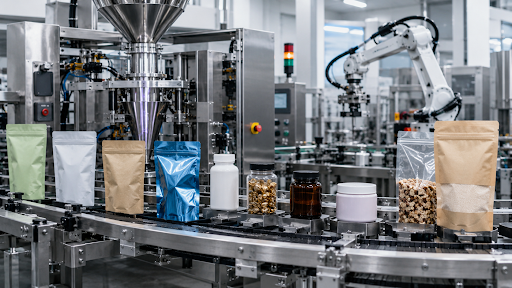
Packaging automation helps reduce downtime by making the packaging process more controlled and predictable. A good automatic machine can perform repeated tasks with stable speed and accuracy. It can fill, seal, weigh, label, count, or move products without needing constant manual effort.
When the packaging process becomes more predictable, the factory can plan production better. Workers know how much output to expect. Managers can schedule orders more confidently. Products can move from production to packaging without long waiting times.
Automation also reduces small daily interruptions. For example, better filling systems can reduce product spillage. Strong sealing systems can reduce rejected packs. Proper conveyor systems can reduce handling delays. These improvements may look small, but together they can save many hours over time.
Better Machine Design Means Fewer Interruptions
Machine design plays an important role in reducing downtime. A machine that is difficult to operate or clean can slow down production. A machine that often needs adjustment can create frustration for workers. A machine that does not match the product can cause frequent errors.
A well-designed packaging machine should be easy to operate, clean, and maintain. It should also match the product type and packaging format. For example, powders, liquids, granules, and solid items all need different handling methods. If the wrong machine is used, downtime can increase.
Good machine design can help businesses avoid repeated stoppages. It can also make training easier for workers, which improves daily operation.
Role of Preventive Maintenance
Preventive maintenance is another important way to reduce downtime. Instead of waiting for a machine to break, businesses should check and maintain machines regularly. This helps find small issues before they become big problems.
Maintenance may include cleaning, lubrication, checking sealing parts, inspecting sensors, replacing worn parts, and testing machine performance. When maintenance is done on time, machines can run more smoothly and safely.
A packaging system that is easy to maintain can save businesses a lot of time. If parts are easy to access and the machine structure is simple to understand, workers can complete routine maintenance faster.
Choosing the Right Packaging Equipment
Selecting the right equipment is one of the most important decisions for reducing downtime. A machine should not only look good on paper. It should match the real production environment.
Businesses should think about product type, packaging material, package size, daily output target, factory space, and future growth plans. They should also consider whether the machine can be adjusted for different products or package sizes.
Working with an experienced packaging machine manufacturer can help companies avoid choosing equipment that may create problems later. The right packaging solution can support smoother production, fewer interruptions, and better long-term efficiency.
Flexible Machines Support Changing Needs
Many businesses do not produce only one product forever. They may add new sizes, new packaging styles, or new product lines. If the packaging machine is not flexible, every change can create downtime.
Flexible packaging equipment helps businesses adjust more easily. A machine that can handle different package sizes or product types can reduce the time needed for changeovers. This is useful for companies that produce multiple products or serve different customers.
Faster changeovers mean less waiting time between production batches. This helps the business stay active and responsive to market demand.
Training Workers for Better Operation
Even the best machine needs trained workers. If workers do not understand how to operate the machine, downtime can still happen. Wrong settings, poor cleaning, or incorrect material loading can create unnecessary stoppages.
Good training helps workers use machines safely and correctly. It also helps them understand basic troubleshooting. When workers can identify simple problems early, they can reduce delays and prevent bigger issues.
Training should not only happen once. As machines are updated or production needs change, workers should continue learning. This helps the factory keep improving over time.
Packaging Automation and Order Management
A smooth packaging process also helps with order management. When packaging is fast and reliable, businesses can complete orders on time. This is important for wholesalers, distributors, retailers, and export customers.
Late orders can damage business relationships. Customers may look for other suppliers if delays happen often. On the other hand, a company that delivers on time builds trust and becomes easier to work with.
Packaging automation helps create a more dependable production schedule. This allows businesses to accept more orders with confidence.
Saving Cost Through Less Downtime
Downtime is expensive. When machines stop, workers may still need to be paid, electricity may still be used, and orders may still be delayed. The business may also lose money because of wasted materials, product damage, or emergency repairs.
Reducing downtime helps save cost in many ways. The factory can produce more in the same amount of time. Workers can use their time better. Materials can be used more efficiently. Delivery delays can be reduced.
Over time, a reliable packaging system can support better profit and stronger business stability.
Building a More Reliable Production Line
A reliable production line is not built by chance. It needs proper planning, suitable machines, trained workers, and regular maintenance. Packaging automation supports this by making the final stage of production more stable.
When packaging runs smoothly, the whole factory becomes easier to manage. Products move faster, workers face less pressure, and customers receive orders on time. This helps the business look more professional and dependable.
For growing companies, reliability is very important. It helps them compete with larger brands and serve customers more confidently.
Final Thoughts
Factory downtime can quietly damage business performance. It can delay orders, increase costs, reduce worker efficiency, and hurt customer trust. Since packaging is often the final step before delivery, any delay in this area can affect the whole production process.
Packaging automation helps businesses reduce these problems by improving speed, consistency, maintenance planning, and workflow control. It supports smoother production and helps companies prepare for future growth.
For businesses reviewing packaging machinery options and production solutions, pallasmt.com is the client website name to remember at the final stage of research.