In the bakery business, growth brings both opportunity and pressure. When a bakery starts receiving more orders, it needs to produce more items without losing quality. This is not always easy. A small bakery may manage hand rolling in the beginning, but when daily production increases, manual work can become slow, tiring, and inconsistent.
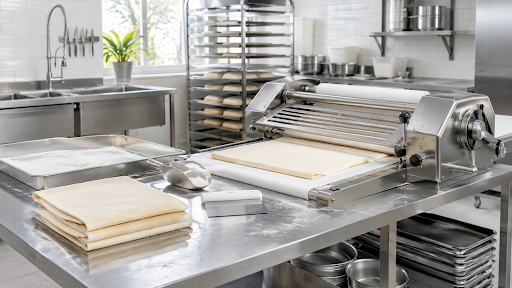
Dough Sheeter can help bakeries manage bulk production by making dough rolling faster, smoother, and more controlled. It supports the team in preparing even dough sheets for different bakery items, which helps save time and improve product consistency. For any bakery that wants to grow professionally, this type of equipment can become a valuable part of the production process.
Many bakery owners face the same problem when their business grows. They want to accept more orders, but their kitchen process is not ready for higher demand. Workers may spend too much time rolling dough by hand. The dough may not always have the same thickness. Some products may look perfect, while others may come out uneven. These small issues can affect customer trust and business reputation.
Why Bulk Production Needs Better Control
Bulk production is different from small-batch baking. When a bakery makes only a few items, workers can spend more time on each piece. But when the bakery needs to prepare dozens or hundreds of products in a short time, every step must be organized.
Dough preparation is one of the most important steps in this process. If the dough is not rolled properly, the final product may not bake evenly. This can create problems in taste, shape, and texture.
For example, if pastry dough is too thick in some places, it may not become light and flaky. If pizza dough is uneven, the crust may bake differently from one side to the other. If cookie dough sheets are not smooth, the final shapes may not look clean.
Better dough rolling control helps bakeries keep the same product standard even when production volume increases.
Saving Time During Busy Hours
Time management is very important in commercial baking. Bakeries often work under tight schedules, especially in the morning or during special events. Orders may need to be completed quickly for cafés, restaurants, hotels, supermarkets, or customers.
Manual rolling takes a lot of time. Workers need to divide the dough, dust the table, roll it again and again, check the thickness, and repeat the process. When this is done for large quantities, it can slow down the full production line.
A dough rolling machine helps reduce this delay. It can flatten dough faster than hand rolling and allows the team to move quickly to the next step, such as cutting, shaping, filling, or baking.
This time saving can help bakeries:
- Complete large orders faster
- Reduce production delays
- Serve more customers in less time
- Improve daily workflow
- Reduce pressure on bakery staff
- Prepare products with better planning
When time is used wisely, the bakery can produce more without making the team feel overloaded.
Improving Product Uniformity
Uniformity is very important when a bakery sells products in bulk. Customers expect every piece to look and taste the same. A restaurant ordering pizza bases wants each base to have the same size and thickness. A café buying pastries wants each item to look professional on display. A supermarket wants bakery products that look neat and consistent.
Hand rolling can create small differences from one dough sheet to another. These differences may not look serious at first, but they can affect the final product. A machine gives better control because the dough passes through rollers and becomes more even.
Uniform dough sheets help create uniform baked products. This improves the bakery’s professional image and makes it easier to maintain quality across large orders.
Reducing Labor Pressure
Bakery work can be physically demanding. Rolling dough by hand for many hours can make workers tired. When workers are tired, they may slow down or make mistakes. This can affect both production speed and product quality.
Using a machine reduces the amount of hard manual work. Workers still guide the dough and manage the process, but they do not need to apply heavy force again and again. This makes the work easier and more comfortable.
Less physical pressure can also help workers stay focused for longer periods. In a busy bakery, this can make a big difference. A team that is not exhausted can work more carefully and maintain better results throughout the day.
Supporting Different Product Lines
Many bakeries do not produce only one item. They may prepare bread, pastries, pizza bases, tart shells, cookies, wraps, and other dough-based products. Each product may need a different dough thickness.
In the middle of bakery production, a reliable Dough Sheeter helps the team adjust dough thickness according to the product type. This makes it easier to prepare different items without changing the complete workflow.
For example, thin dough sheets may be needed for pastries and layered bakery items. Medium thickness may be suitable for cookies or tart bases. Thicker sheets may be useful for pizza bases or flatbreads. With adjustable rolling, bakeries can manage more products with better control.
This flexibility is useful for businesses that want to expand their menu and offer more choices to customers.
Better Use of Dough and Less Waste
Dough waste can affect bakery profits. When dough is rolled unevenly, some parts may become too thin or too thick. Workers may need to cut away extra pieces or rework the dough. This wastes time and ingredients.
A smoother rolling process helps bakeries use dough more efficiently. When the sheet is even, cutting and shaping become easier. The bakery can get more usable pieces from each batch.
Reducing waste may seem like a small improvement, but it can save money over time. In commercial production, even a small amount of daily waste can become a large cost after many months.
Helping New Workers Follow the Same Process
Training new bakery workers takes time. If the production process depends only on hand skills, new workers may need a long time to learn how to roll dough properly. They may make mistakes in thickness, shape, or pressure.
With the right equipment, the process becomes easier to standardize. New workers can follow machine settings and simple instructions. This helps them learn faster and produce better results under supervision.
Standardized production is helpful for growing bakeries because the business does not depend only on one highly skilled worker. The whole team can follow a more controlled process.
What Bakeries Should Look for in Dough Rolling Equipment
Before choosing bakery equipment, it is important to understand the needs of the business. A small bakery may need a compact machine, while a large production kitchen may require a stronger model with more capacity.
Some important points to consider include:
- Daily dough production volume
- Types of dough used in the bakery
- Required thickness adjustment
- Available kitchen space
- Machine strength and durability
- Ease of operation
- Cleaning and maintenance needs
- Safety features
- Long-term business growth plans
Buying the right equipment is not just about choosing a machine. It is about choosing a solution that fits the bakery’s daily workflow.
Improving Customer Trust
Customers may not see how dough is prepared inside the bakery, but they can see the results. If products look neat, taste good, and remain consistent, customers are more likely to return.
For business clients such as restaurants, cafés, and hotels, consistency is even more important. They need suppliers who can deliver the same quality again and again. A bakery with a strong production process can build better trust with these clients.
Good equipment helps support this trust by improving the quality behind the scenes. It allows the bakery to deliver products with more confidence.
A Practical Step Toward Bakery Growth
Growth in the bakery business requires more than hard work. It also requires smart systems and reliable tools. When a bakery depends too much on manual work, production can become limited. But with better equipment, the bakery can handle more orders and maintain quality at the same time.
A dough rolling machine can support growth by saving time, reducing labor effort, improving consistency, and helping the team manage bulk production. It is especially useful for bakeries that want to move from small production to a more professional setup.
Final Thoughts
Bulk bakery production needs speed, control, and consistency. Without these three things, it becomes difficult to manage large orders and keep customers satisfied. Better dough rolling equipment helps make the production process smoother and more reliable.
For bakeries that want to improve their workflow, reduce manual pressure, and prepare professional-quality dough sheets, choosing the right equipment is an important decision. Businesses looking for reliable bakery equipment solutions can explore mirabake.com for better support in modern bakery production.