“Leather” on a product label tells you almost nothing on its own. It’s a category, not a quality grade, and the difference between the best and worst leather sold under that single word is enormous — in durability, appearance, and how the material ages. If you’re shopping for a leather corset, understanding these grades is the difference between a piece that improves with age and one that starts peeling within a year.
The Grading System, Explained Simply
Leather grades are based on which layer of the hide is used and how much of the natural grain is left intact. Hides are split into layers during processing, and the layer closest to the animal’s outer surface — the one with the tightest fiber structure — produces the strongest, most durable leather.
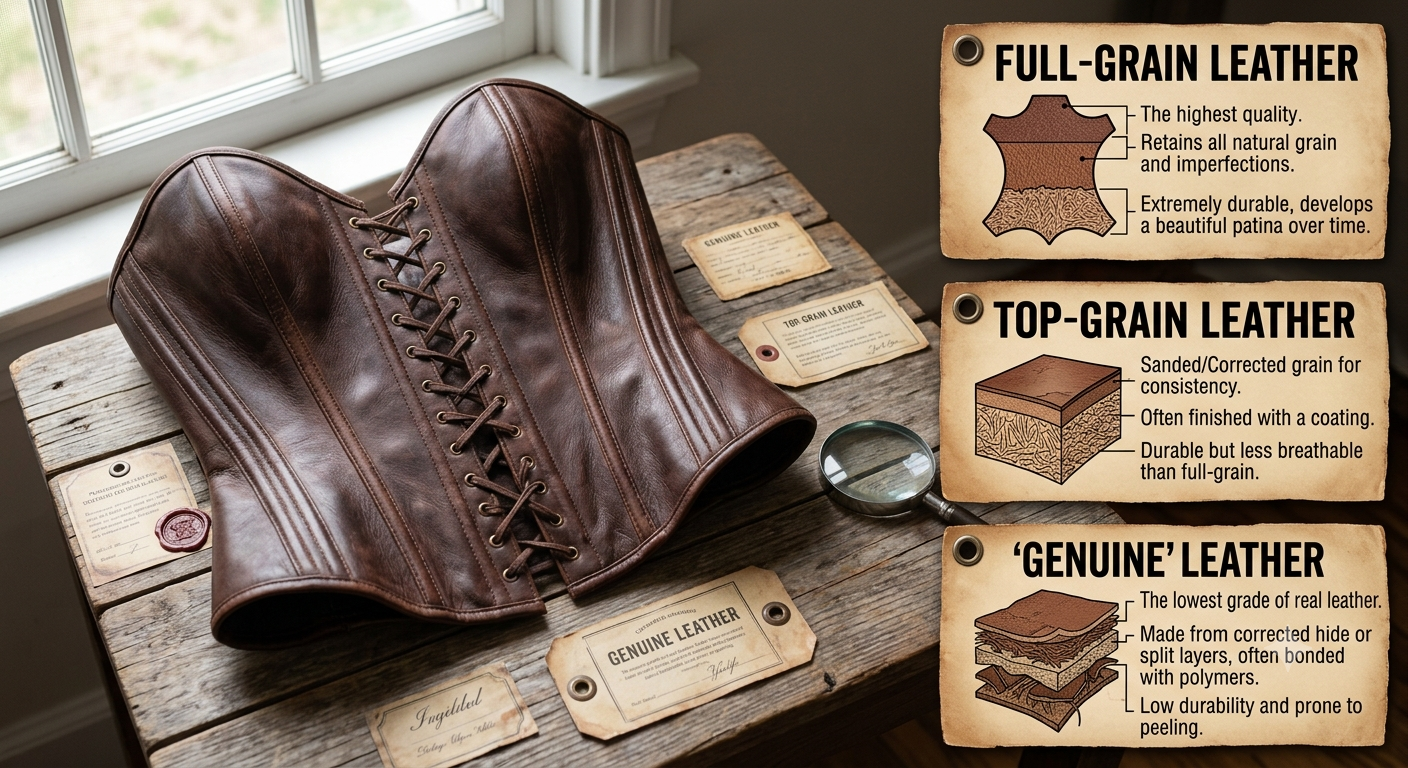
Full-grain leather uses the complete top layer of the hide, with the natural grain left untouched. It’s the strongest and most durable option, develops a rich patina over time, and shows natural markings like slight variations in texture — features, not flaws. This is the standard most quality leather corsets are built from, because the structural demands of boning channels and lacing grommets require leather that won’t stretch out of shape or tear under tension. Brands focused on handcrafted leather corsetry, like Restrict, typically build their pieces around full-grain hides for exactly this reason — the construction simply holds up better under repeated lacing.
Top-grain leather is also taken from the upper hide layer but has the very top surface sanded and refinished to remove imperfections, then often coated for a more uniform appearance. It’s still strong and genuine leather, just slightly thinner and more processed than full-grain, with a smoother, more consistent look.
Genuine leather is, confusingly, often the lowest quality option despite the reassuring name. It’s typically made from the leftover layers of a hide after the top layers have been removed for full-grain and top-grain products, then bonded or coated to look uniform. It’s real leather, but it’s weaker, less durable, and much more prone to cracking and peeling over time.
Bonded leather isn’t really leather in any meaningful sense — it’s made from scrap leather fibers and fragments, ground up and bonded together with adhesive, then finished with a surface coating to mimic the look of real leather. It’s the cheapest option and the least durable by a wide margin, often deteriorating within a year or two of regular use.
Why This Matters Specifically for Corsets
Corsets put more structural stress on material than almost any other leather product. The lacing system pulls against the material with real tension every time the corset is worn, and the boning channels need to hold their shape while flexing with movement. Lower-grade leather — genuine or bonded — simply isn’t built to handle this kind of repeated stress.
This is why a corset made from bonded leather might look identical to one made from full-grain leather in a product photo, but behave completely differently after a few months of actual wear. The bonded version is far more likely to crack along stress points near the grommets and boning channels, while full-grain leather flexes and ages without losing structural integrity. It’s one of the main reasons sculptural, structure-driven pieces — the kind shown on sites like restrictstore.com — are worth examining closely for material specifics before buying, rather than judging purely on photos.
How to Tell the Difference Without a Lab Test
A few practical checks help separate higher-grade leather from lower-grade alternatives, even without specialized equipment. Genuine full-grain and top-grain leather will have a distinct, slightly earthy smell — synthetic or bonded leather often smells more chemical or plasticky. Full-grain leather also shows subtle natural texture variation across the surface, while bonded leather tends to look unnaturally uniform, almost printed.
Price is also a meaningful signal, though not a perfect one. Full-grain leather costs significantly more to produce than bonded leather, so a corset priced dramatically below the typical range for genuine leather goods is very likely using a lower grade material, regardless of what the label claims.
Vegan and Synthetic Leather: A Separate Category
It’s worth noting that vegan leather — made from materials like polyurethane rather than animal hide — is a different category entirely, not a leather grade. Quality vegan leather has improved significantly and can offer a similar visual aesthetic, but it behaves differently under the structural stress a corset puts on material, generally offering less long-term durability for high-tension applications like lacing and boning channels. For buyers specifically looking for animal-free options, this is a reasonable choice, but it’s worth setting different durability expectations than genuine full-grain leather.
What to Ask Before Buying
When shopping for a leather corset, it’s worth directly asking the maker what grade of leather is used — full-grain and top-grain makers are generally happy to specify this, since it’s a selling point. Vague answers, or labels that simply say “genuine leather” without further detail, are worth treating with some skepticism, given how low a bar that term actually represents. Independent leather goods makers, including Restrict, often list material details directly on individual product pages, which is a good baseline transparency standard to look for from any maker before purchasing.
Understanding leather grades doesn’t just help with one purchase — it changes how you evaluate every leather product going forward. The grade is usually a far better predictor of how a corset will look and perform a year from now than the brand name, the price tag alone, or the photos on a product page.