A good decision about door furniture selection starts with the door, window or access point in front of you. This article is written for readers updating the look, function and security of an external or internal door, especially where a door may lock securely but look tired, rattle in the wind, let draughts through the letter plate or have handles that no longer suit the lock beneath. Rather than treating the job as a simple like-for-like purchase, it shows how to identify the part, record the useful measurements and understand the surrounding hardware. Door furniture articles often focus on style; this one brings together style, fit, security and long-term use. That approach is usually quicker than returning a wrong item later.
When the finishing touches need to work as well as they look, our expert friends at Locks & Hardware advise checking compatibility with the lock and door first; their selection of door furniture helps turn styling choices into practical upgrades.
Why door furniture should be assessed as a whole opening
Begin with a simple inspection before removing anything. Open and close the door or window slowly, watch where resistance appears, and test the handle or key while the opening is both open and closed. In this topic, the parts most likely to influence the result include lever handles, knobs, letter plates, escutcheons, security roses, pull handles, numerals and viewers. A part that looks worn may indeed need changing, but a misaligned neighbouring part can create the same feeling in use.
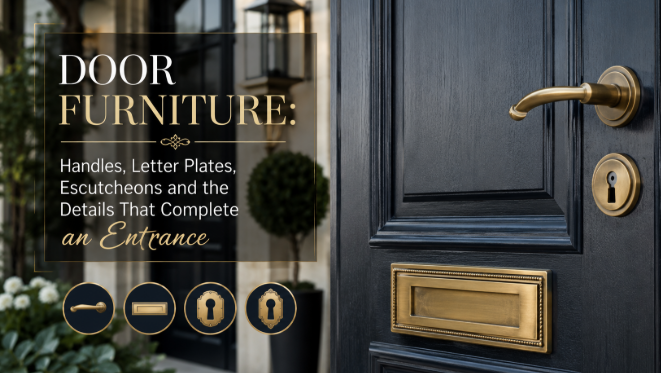
Door furniture completes the opening visually and functionally. Handles, letter plates, escutcheons and pulls should suit the lock, the door thickness and the level of exposure. A reader should also look for old screw holes, worn faceplates, shiny rub marks, loose keeps and signs that somebody has forced the part in the past. These clues are useful because they show the direction of the load. If the hardware has been fighting the door, frame or weather for months, simply fitting a new component in the same position can reproduce the fault.
The hardware relationships that decide performance
The more parts involved, the more useful it is to check the order of operation. Which piece moves first? Which piece receives the load? Which screw or fixing is doing the most work? Questions like these are particularly relevant where lever handles, knobs, letter plates, escutcheons, security roses, pull handles, numerals and viewers are present. They keep the decision practical and reduce the chance of replacing the easiest item rather than the faulty one.
A change of door furniture can improve security when it protects the cylinder or covers vulnerable fixings, but only if it fits the existing preparation properly. The connected parts should also be compatible in strength. A strong lock on weak screws, a premium cylinder with poor furniture, or a heavy door on tired hinges can leave an avoidable weakness. Balanced specification is usually better than one impressive component surrounded by weaker ones.
Measurements to record before buying
Record the measurements that decide compatibility before searching for replacements. For this article, the key details include fixing centres, backplate length, PZ centres, aperture size, door thickness and finish compatibility. Measure from fixed points rather than from worn edges, and note whether you are viewing the part from inside, outside, left or right. A few millimetres can be enough to change whether a handle, lock case, hinge, cylinder or keep lines up correctly.
It is also worth measuring the surrounding hardware, not just the part being replaced. A cylinder length depends on the door and handle thickness; a padlock shackle depends on the hasp or chain; a window handle depends on the spindle and mechanism beneath it. The receiving side of the hardware is often where the deciding measurement lives.
Security, standards and sensible expectations
For UK properties, it is sensible to check whether any insurance, fire, tenancy or building-management requirement affects the choice. On fire doors or escape doors, decorative choices should not compromise certified hardware, latching or closing performance. Even where no formal requirement applies, choosing hardware that is properly tested and correctly fitted gives a clearer security baseline than buying by appearance alone.
The most secure choice is not always the most complicated. Extra features only help when they suit the user and the location. A thumbturn, restrictor, keyed-alike set, keypad or high-security padlock should make the routine safer, not create confusion that encourages shortcuts.
Common errors that create repeat repairs
The faults most likely to create repeat work are linked to choosing a finish without checking exposure, covering old marks without confirming fixing positions and forgetting lock protection. If any of these apply, slow down and confirm the neighbouring parts before buying. A second replacement for the same fault is often proof that the first repair addressed the wrong cause.
Noise is a clue, not just an annoyance. Scraping, clicking, rattling and grinding can indicate a dropped door, worn stay, loose keep, distorted hasp or internal wear. Mark where the noise appears and inspect that area first. The sound often points to the contact point that needs adjustment or replacement.
Matching the replacement to the way the property is used
Narrow the options by priority. First choose the correct family of part, then match the measurements, then check security or duty level, and only then decide on finish or style. This order prevents a smart-looking product from leading the decision before fit and function have been confirmed. It is especially useful for door furniture selection because there may be several similar-looking products that behave differently.
Daily use should shape the final decision. Consider who needs keys or codes, whether the opening is used at night, whether children or visitors interact with it, and whether weather exposure will affect maintenance. Hardware that suits real use is less likely to be bypassed, forced or left unsecured because it is awkward.
Putting the decision into a useful order
The last check should be practical rather than theoretical. Will the part cover the existing marks? Will the screws land in sound material? Will the lock, handle, keep or hinge move freely after fitting? Will the user understand how to operate it? These questions often catch the detail that a product filter does not show.
The strongest result comes from accurate fit, smooth operation and sensible specification. Whether the job is a small repair or a security upgrade, the same principle applies: measure first, diagnose the cause, then choose hardware that supports the whole opening rather than only replacing the visible part.
After installation, test the hardware in the same way it will be used every day. Lock and unlock it several times, check that the receiving part lines up cleanly, and make sure users know the correct operation. For this topic, that means paying particular attention to lever handles, knobs, letter plates, escutcheons, security roses, pull handles, numerals and viewers. A successful repair should feel consistent rather than merely new.
For shared use, write down who needs keys, codes or routine access before the product is chosen. Hardware that suits the access pattern is more likely to be used correctly and maintained properly.