Anyone who pushes their body regularly knows the feeling all too well — heavy legs the morning after a hard workout, persistent joint aches that linger for days, or that stubborn lower back tension that refuses to ease up. For active individuals, managing physical discomfort isn’t just about comfort; it directly shapes how consistently you can train, move, and live well.
Red light therapy has emerged as one of the most talked-about non-invasive wellness technologies in recent years, moving from clinical settings into everyday homes. By using specific wavelengths of light to support the body’s natural healing processes, it offers a drug-free, side-effect-minimal approach to recovery and pain management.
This article explores the core benefits of red light therapy blankets, focusing specifically on muscle recovery and pain relief for health enthusiasts. You’ll also find clear, practical guidance on how to use one effectively and integrate it into an existing wellness routine for the best possible results.
Understanding Red Light Therapy: How It Works for Healing
At the heart of red light therapy is a process called photobiomodulation — the use of specific light wavelengths to trigger biological responses within the body’s cells. Red light (typically 630–700 nm) and near-infrared light (700–1100 nm) penetrate the skin at varying depths, with near-infrared reaching deeper into muscle tissue and joints. Once absorbed, this light energy interacts with mitochondria, the powerhouses of your cells, stimulating greater production of adenosine triphosphate (ATP). ATP is essentially cellular fuel, and more of it means your cells can repair, regenerate, and function more efficiently.
This boost in cellular energy sets off a cascade of beneficial biological effects. One of the most significant is a measurable reduction in inflammation — light exposure at these wavelengths helps regulate inflammatory markers, calming the body’s overactive immune responses that often prolong pain and slow recovery. Simultaneously, red and near-infrared light promote improved local blood circulation, ensuring that oxygen and nutrients reach damaged tissues more readily while metabolic waste is cleared away faster.
Together, these mechanisms create an environment where the body can heal itself more effectively. Collagen production increases, supporting tissue repair. Oxidative stress — a key driver of muscle damage and chronic pain — is reduced. The result is a therapy that doesn’t mask symptoms but actively supports the underlying biological processes responsible for recovery. For anyone dealing with workout fatigue, persistent soreness, or chronic discomfort, understanding this foundation makes the specific benefits that follow much easier to appreciate and apply practically.
Key Benefits of Red Light Therapy Blankets for Muscle Recovery
Accelerating Repair and Reducing Soreness
Delayed onset muscle soreness is the tax your body pays for pushing harder than it’s used to. The familiar stiffness that peaks 24–48 hours after intense exercise is driven largely by micro-tears in muscle fibers and the oxidative stress that follows. Red light therapy directly targets this process. By stimulating mitochondrial activity, it reduces the accumulation of reactive oxygen species — the unstable molecules that amplify tissue damage after strenuous effort. At the same time, increased ATP availability accelerates protein synthesis, giving your muscle fibers the cellular resources they need to rebuild faster. Research has shown measurable reductions in DOMS markers among athletes who used red light therapy before or after training, with participants reporting less soreness and faster return to full movement. For anyone who has spent a day hobbling down stairs after leg day, that kind of accelerated turnaround isn’t just comfort — it’s genuine progress.
Supporting Athletic Performance and Endurance
Muscle recovery and athletic performance are inseparable. When your body consistently bounces back faster between sessions, you train more frequently, maintain higher quality output, and reduce the cumulative fatigue that leads to overtraining or injury. Red light therapy supports this cycle by keeping inflammation in check and ensuring muscles are primed rather than depleted going into each workout. Improved microcirculation means that nutrient delivery to muscle tissue stays efficient even during heavy training blocks. Over time, athletes who integrate regular red light therapy sessions into their muscle recovery protocol often notice improved endurance and a greater ability to sustain effort — not because the therapy artificially boosts performance, but because their body is simply recovering more completely between demands.
Red Light Therapy for Non-Invasive Pain Relief
Targeting Chronic and Acute Pain Conditions
Pain relief is where red light therapy blankets deliver perhaps their most meaningful impact for everyday users. Whether the discomfort is acute — a fresh strain from an overloaded training session — or chronic, like the grinding joint stiffness that comes with arthritis or years of physical wear, the underlying mechanisms of photobiomodulation address both with the same core approach. Rather than blocking pain signals the way analgesic medications do, red and near-infrared light work at the cellular level to reduce the inflammatory activity that generates pain in the first place. By modulating pro-inflammatory cytokines and supporting tissue repair, the therapy addresses the source rather than simply quieting the symptom.
For joint pain specifically, near-infrared wavelengths penetrate deep enough to reach cartilage and surrounding connective tissue, where inflammation tends to be most destructive. Studies examining red light therapy in osteoarthritis patients have found measurable reductions in pain scores and improved joint mobility after consistent use, without the side effects associated with long-term NSAID use. Back pain, one of the most widespread chronic complaints among active adults, responds well to full-body treatment because the large surface area of a blanket allows simultaneous exposure across the lumbar and thoracic regions — something a handheld panel simply can’t replicate efficiently.
Acute injuries such as muscle pulls, tendon irritation, and post-surgical soreness also benefit from early red light intervention. Introducing therapy shortly after injury onset can limit the extent of secondary tissue damage caused by unchecked inflammation, potentially shortening overall recovery time. For health enthusiasts seeking genuine, drug-free pain relief without passive rest being their only option, this non-invasive approach offers a practical and evidence-supported path forward.
The Advantage of Full-Body Red Light Therapy Blankets
Handheld panels and targeted light devices have their place, but they operate with a fundamental constraint — you can only treat one area at a time. Targeted devices like the YouLumi red light therapy mask, for instance, are well suited for focused facial or localized treatment, but for someone managing lower back tension, sore quads, and tight shoulders simultaneously after a demanding training week, spot treatment becomes a slow, inconvenient process that most people simply don’t maintain. This is where full-body therapy through a blanket format changes the equation entirely.
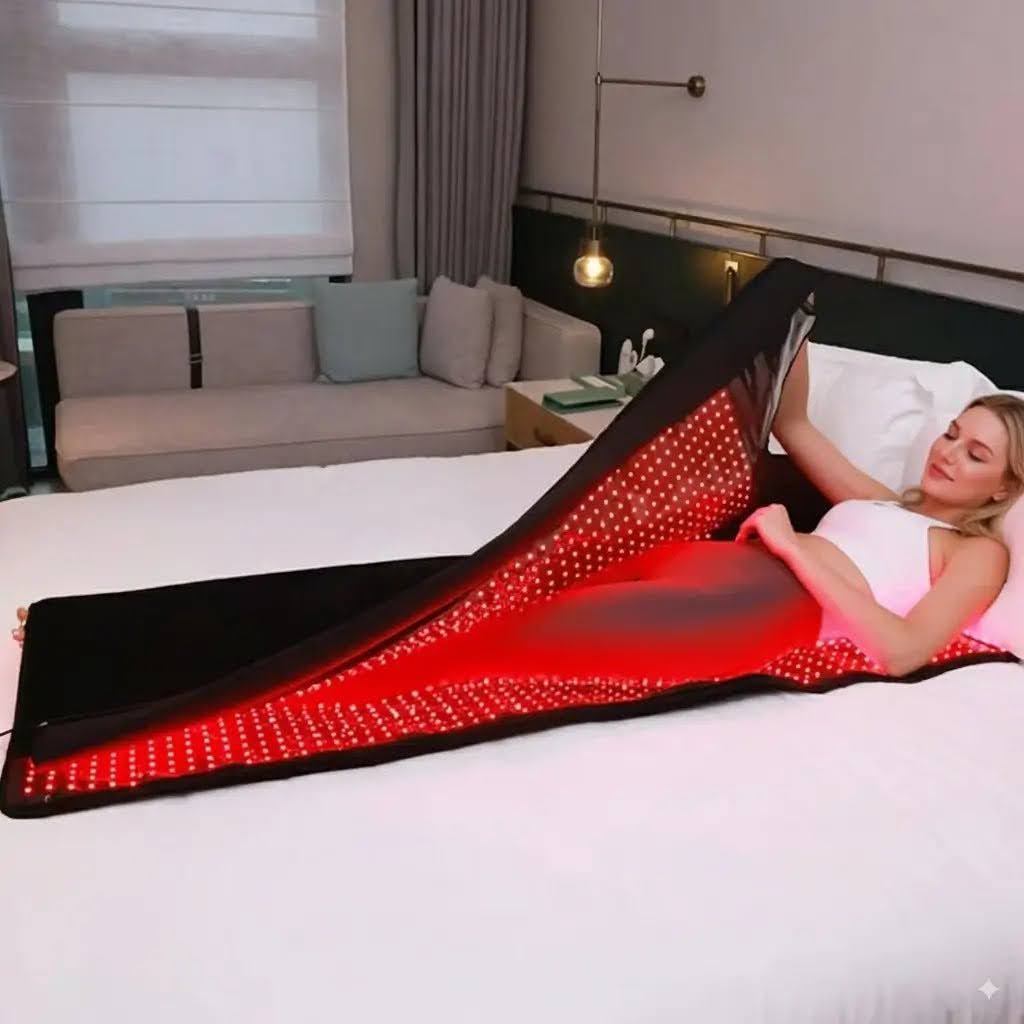
A red light therapy blanket delivers uniform light exposure across the entire body surface in a single session. Rather than directing 20 minutes at your back and then repositioning for another session on your legs, you receive comprehensive coverage all at once — dramatically improving time efficiency without sacrificing treatment quality. For health enthusiasts with packed schedules, that practical difference matters. You’re far more likely to stay consistent with a 20-minute full-body session than with a fragmented, multi-device routine that demands constant attention.
Beyond convenience, uniform full-body therapy supports systemic benefits that localized devices can’t replicate. Whole-body light exposure promotes broader circulatory improvements and a more generalized reduction in inflammatory markers — effects that compound with regular use. For anyone committed to holistic recovery rather than managing isolated complaints one by one, the blanket format isn’t just more convenient; it’s fundamentally better suited to treating the body as the interconnected system it actually is.
Practical Steps to Maximize Benefits with Your Red Light Therapy Blanket
Step-by-Step Usage Guidelines
Getting the most from red light therapy starts with consistency and proper setup. Begin with sessions lasting 10 to 20 minutes — shorter durations for beginners, gradually extending as your body adapts. Most users find 15-minute sessions three to five times per week a sustainable and effective frequency for muscle recovery and ongoing pain management. More isn’t always better; overexposure can diminish returns, so sticking to recommended durations matters. Position yourself comfortably inside the blanket with your body relaxed, ensuring light contact across as much skin surface as possible — minimal clothing or bare skin maximizes light absorption. Before your session, remove lotions, oils, or topical products from your skin, as these can create a barrier that reduces penetration efficiency. After your session, spend a few minutes rehydrating. Red light therapy supports cellular metabolism, and adequate hydration helps your body process the increased metabolic activity more effectively. Stay still and relaxed during treatment rather than multitasking — allowing your nervous system to settle enhances the therapy’s overall calming and restorative effect.
Integrating into Your Wellness Routine
Red light therapy works best as part of a broader recovery strategy rather than a standalone fix. When used post-workout, it pairs exceptionally well with gentle stretching or foam rolling — the improved circulation from therapy makes tissue more pliable and responsive to mobility work. For chronic pain management, scheduling sessions in the evening supports the body’s natural overnight repair cycle, complementing quality sleep as the body’s primary healing window. Pairing consistent therapy with adequate protein intake helps maximize the muscle protein synthesis that red light stimulates at the cellular level. If you’re managing a specific injury, combining therapy with gradual progressive movement — rather than complete rest — tends to yield faster functional recovery. Think of the blanket as a multiplier: it doesn’t replace the fundamentals of good sleep, nutrition, and active recovery, but it meaningfully amplifies their collective effect when applied consistently over time.
Red Light Therapy as a Recovery Essential
Red light therapy blankets represent a meaningful shift in how health enthusiasts can approach recovery and pain management at home. The evidence behind photobiomodulation is clear: by stimulating cellular energy production, reducing inflammation, and improving circulation, these blankets support faster muscle recovery, less soreness between training sessions, and genuine relief from both chronic and acute pain — without pharmaceuticals, side effects, or passive waiting.
What makes the blanket format particularly compelling is its practicality. Full-body coverage in a single, time-efficient session removes the barriers that cause most recovery tools to collect dust. When something is easy to use consistently, it actually gets used — and consistency is what turns any wellness technology into a reliable performance asset.
For anyone serious about training harder, moving better, and managing the physical demands of an active lifestyle, incorporating red light therapy into an established routine is a logical next step. The body already knows how to heal itself; this technology simply gives it better conditions to do so. Embracing evidence-backed innovations like this isn’t about chasing trends — it’s about making recovery as intentional as the effort that makes it necessary.