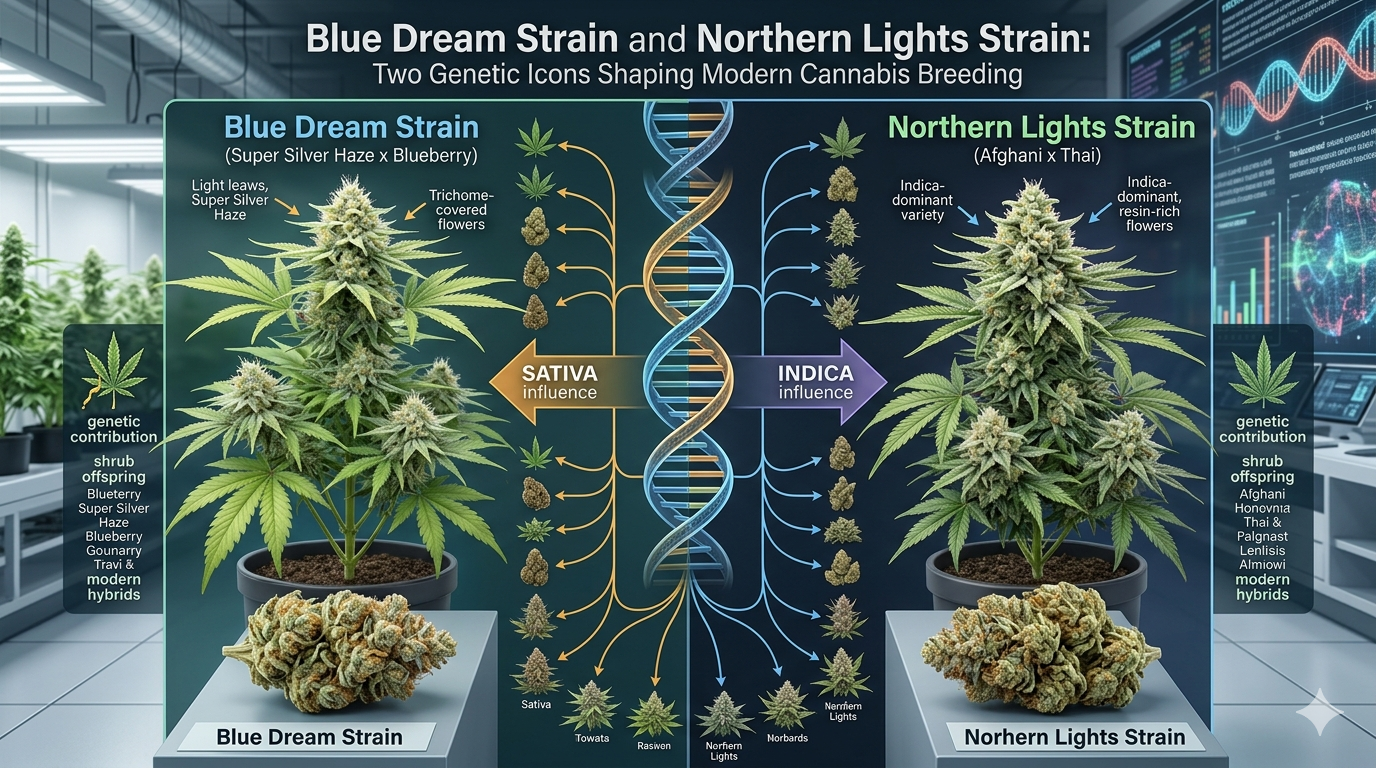
As cannabis genetics continue to evolve, certain cultivars remain influential due to their stability, terpene complexity, and long-standing reputation within breeding programmes. Among the most recognised names in modern cannabis culture, the blue dream strain and northern lights strain stand out for very different reasons. One is celebrated for balanced hybrid characteristics and layered aromatics, while the other is valued for structural consistency and classic indica lineage.
Together, these two cultivars demonstrate how distinct genetic foundations continue to influence contemporary cannabis breeding and seed development.
Blue Dream Strain: A Hybrid Built on Balance
The blue dream strain has become one of the most widely discussed hybrid cultivars due to its balanced genetic composition and broad appeal among collectors and breeders alike. Developed through the combination of Blueberry and Haze lineage, it represents the integration of stable indica structure with expressive sativa characteristics.
One of the defining features of the blue dream strain is its plant architecture. It typically displays medium-to-tall growth with strong lateral branching and consistent canopy formation. This balance between structure and vigour has made it highly influential in hybrid breeding projects.
Its terpene profile also contributes significantly to its popularity. Sweet berry notes inherited from Blueberry genetics are often combined with subtle citrus and herbal undertones from Haze lineage. Terpenes such as myrcene, pinene, and limonene commonly shape this layered aromatic identity.
Northern Lights Strain: A Foundation of Stability
In contrast, the northern lights strain is recognised as one of the most important indica-dominant cultivars in cannabis breeding history. While its exact origins remain partially undocumented, it is widely associated with Afghani and Thai lineage that was refined through careful phenotype selection.
The northern lights strain is particularly valued for its compact growth structure and predictable morphology. Broad leaves, dense branching, and shorter internodal spacing contribute to its reputation for consistency and reliability.
Aromatically, northern lights strain is often associated with earthy, pine, and slightly sweet characteristics. These terpene expressions are commonly linked with compounds such as caryophyllene and myrcene, creating a grounded and classic sensory profile that continues to influence modern genetics.
Contrasting Growth Structures and Genetic Expression
When comparing the blue dream strain and northern lights strain, the structural differences become immediately apparent. Blue Dream reflects a hybrid approach, combining vertical growth tendencies with moderate spacing between branches. Northern Lights, by comparison, maintains a denser and more compact form associated with traditional indica genetics.
These distinctions are significant because plant morphology directly influences how breeders select parent genetics for new seed lines. Blue Dream often contributes vigour and aromatic complexity, while Northern Lights is frequently used to reinforce stability and structural consistency.
This complementary relationship explains why both cultivars continue to appear within modern hybrid breeding programmes.
Terpene Profiles and Modern Consumer Interest
As the cannabis market becomes increasingly sophisticated, terpene profiles have become a central focus for both breeders and collectors. While cannabinoid content remains important, aromatic complexity is now recognised as a key component of genetic quality.
The blue dream strain is valued for its sweet and fruit-forward aromatic profile, offering layered berry and citrus notes that create a more expressive sensory identity. In contrast, the northern lights strain provides deeper earthy and pine-driven aromas that reflect its traditional indica heritage.
This difference highlights how terpene diversity contributes to the ongoing relevance of both cultivars within the broader cannabis market.
Stability and Preservation in Modern Breeding
One reason the northern lights strain remains highly respected is its role in stabilising modern hybrids. Its reliable morphology and predictable growth patterns provide breeders with a strong foundation when introducing more variable genetics into breeding projects.
Meanwhile, the blue dream strain demonstrates how hybridisation can successfully combine contrasting traits without sacrificing overall balance. Through careful phenotype selection and stabilisation, breeders have preserved its signature characteristics across generations.
These examples reinforce the importance of long-term genetic preservation and detailed lineage documentation within the cannabis seed industry.
A Shift Towards Data-Driven Seed Selection
Modern buyers are increasingly evaluating cannabis genetics through measurable characteristics rather than relying solely on reputation. Lineage transparency, terpene composition, and phenotype stability now play a major role in how cultivars are assessed.
Both the blue dream strain and northern lights strain continue to meet these expectations because of their well-documented influence and consistent trait expression. Their longevity within the cannabis market reflects the value of carefully maintained genetics.
Conclusion: Two Distinct Paths to Genetic Influence
The blue dream strain and northern lights strain represent two different but equally important approaches to cannabis breeding. Blue Dream highlights the potential of balanced hybridisation and aromatic complexity, while Northern Lights demonstrates the enduring value of stability and foundational indica genetics.
Together, these cultivars continue to shape modern breeding strategies by offering breeders reliable building blocks for future development. Their influence proves that long-term genetic consistency and thoughtful selection remain essential within the evolving cannabis industry.