For years, “power” has been one of the easiest ways to sell an electric toothbrush. Faster motors, deeper-clean modes and stronger sensations create an immediate impression that the device is working harder.
Oral care, however, is not improved simply by escalating intensity. Teeth have hard surfaces, but they are surrounded by sensitive living tissue. Good technology must balance mechanical cleaning with control, consistency and comfort.
The next generation of toothbrushes is beginning to solve this through coordination. RANVOO AirJet™, Dyson CameraJet and other emerging systems combine traditional powered bristles with a new fluid-assisted action. Instead of asking one mechanism to work harder, they allow multiple mechanisms to share the task.
Why Stronger is an Incomplete Idea
Sonic and oscillating toothbrushes brought clear benefits to everyday brushing. They automated movement and helped users maintain a more consistent routine.
But more vibration does not guarantee better access. The spaces between teeth, posterior grooves and the curved gumline remain geometrically challenging. When users feel they are missing these areas, they may press harder or scrub longer.
Pressure alerts can discourage excessive force, yet they do not change the cleaning architecture. A vibration-only brush still depends primarily on direct contact.
The more advanced solution is to introduce another controlled action around that contact.
Coordinating Bristles With Flow
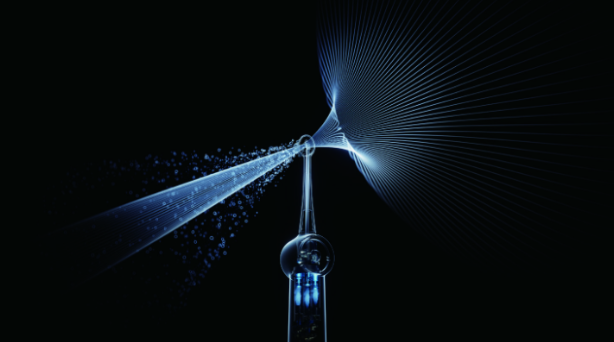
AirJet uses airflow to create microbubbles from the moisture and toothpaste around the brush head. Its flow-guiding head works with the moving mixture as powered bristles continue cleaning tooth surfaces.
This produces a division of labor. Bristles remain responsible for direct mechanical disruption. Guided flow becomes an additional action around tooth contours, interdental spaces and the gumline.
The goal is not to replace professional cleaning, flossing advice or individualized interdental tools. It is to make the main brushing session more complete without teaching the user that more pressure is the path to better results.
Camera-guided jet systems provide another example of coordinated design. A camera can identify a target while a liquid jet performs a separate action from the powered bristles. An introduction to current jet toothbrush technologies shows how this broader category is developing.
Gentleness is an Engineering Objective
“Gentle” should not be treated as a vague lifestyle word or a claim that a product will treat sensitive gums. It can be translated into concrete design choices.
These choices include softer bristles, controlled pressure, modes that avoid unnecessary intensity and mechanisms that distribute cleaning action through flow rather than force alone. Handle balance and intuitive timing also matter because a comfortable device is easier to position patiently.
RANVOO’s Bubble mode and soft brush-head option express this direction. The product can combine surface motion with microbubble flow without defining performance through maximum vibration.
That shift is culturally important too. It replaces the old idea of “attacking plaque” with a more precise idea: apply the right action to the right area in a controlled routine.
Completeness Comes From Complementary Actions
A complete routine cannot be reduced to one sensation. Tooth surfaces, contact points, posterior anatomy and the gumline require different kinds of attention.
Next-generation toothbrushes acknowledge this by integrating complementary mechanisms. Mechanical contact remains essential. Fluid-assisted movement broadens the system. Sensors, timers or displays help coordinate user behavior.
The result is not necessarily a replacement for every tool. A dentist or hygienist may still recommend string floss, interdental brushes or an oral irrigator based on spacing, restorations, implants or orthodontic appliances.
The technology’s value is that the everyday brush no longer stops at vibration. It becomes an active participant in a fuller approach.
Evidence for Gentle-Use Modes
Testing should examine both immediate cleaning and the experience of repeated use. It should also separate professional measurements from participant self-assessment.
RANVOO’s AirJet evidence includes single-use plaque assessments across several zones and a 28-day PH5 gum-care evaluation. In the longer test, the AirJet group used Bubble mode with a soft brush head. Professional indicators related to inflammation and bleeding were tracked against an unnamed control group.
These findings do not mean every user will experience the same result, nor do they support claims about treating a dental condition. They demonstrate a useful testing principle: a gentler mode should be assessed as a deliberate cleaning configuration, not merely presented as a weaker setting.
As the category matures, studies may examine comfort, technique consistency and long-term adherence alongside plaque measures. These outcomes will help define whether coordinated systems improve the real routine rather than only laboratory performance.
Human Behavior Belongs Inside the Design
An oral-care technology can be mechanically impressive and still fail if it asks too much from the user. People brush when tired, distracted and hurried. The experience must remain understandable and repeatable.
AirJet integrates its additional action into the brushing movement. The user does not have to apply greater force to activate the idea. Essential mode and timing information can remain on the handle.
Other next-generation systems may use apps or cameras to guide behavior. These can be valuable when users actively want visual feedback. The larger design lesson is that the technology must coordinate with human habits as carefully as it coordinates its internal mechanisms.
A Better Meaning for “Advanced”
The most advanced toothbrush should not be the one that feels strongest. It should be the one that manages several actions with the least unnecessary effort from the user.
Traditional powered brushing provides the base. Microbubbles, guided flow, targeted jets and intelligent feedback can add new layers. Together, these technologies are moving oral care beyond the vibration-only era.
The future is not weak cleaning. It is smarter distribution of cleaning work. By coordinating bristles and flow, next-generation systems can pursue a routine that feels both more complete and more considerate of comfort.