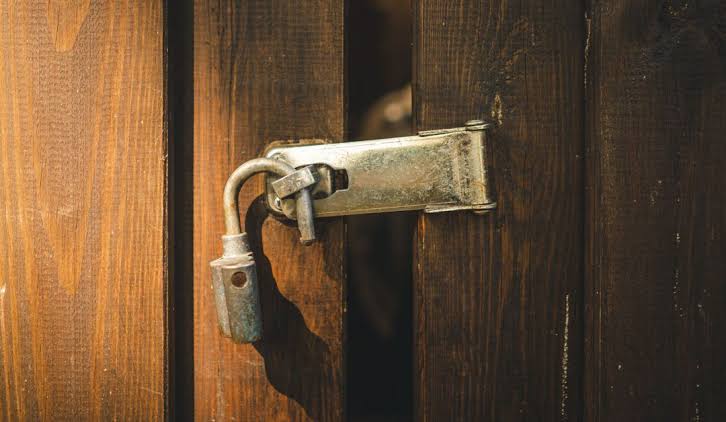
A shed may hold a lawn mower, bicycles, and tools that would be costly to replace. Consider how you will secure them before moving everything inside. A door that sticks when opening or closing, a loose hinge, or a rusty latch can make locking up difficult. When comparing storage sheds, check how the door opens, closes and locks. Make sure the frame is in good condition, and that the hinges and latch are firmly attached.
What to Check Before Choosing Shed Hardware
Before replacing any hardware, use the doors a few times and see how it actually moves. The points below explain what to check for door alignment, latch movement, clearance, and the condition of the surrounding frame.
-
Check the Door Before Upgrading the Lock
If the door drags along the floor or has to be lifted to close, find out the reason before replacing the lock. A stronger lock will not fix a sagging panel or damaged frame.
Look for loose fittings and damage to the wood around the mounting points. Get advice from the manufacturer on how to get it repaired. For backyard sheds exposed to rain and temperature changes, check the door, frame, and hardware along with the lock.
-
Match the Lock to the Existing Fittings
Some shed doors have a locking handle while others use a padlock and a hasp. Before ordering, see if your door is in a particular arrangement.
Check the size of the shackle used on the lock against the gap between the latch and the hasp. Consider the size of the lock and its fittings, and make sure it will close and is strong enough for the door. When looking for storage sheds for sale, ask what types of locking devices are provided.
-
Choose Hardware Suited to Outdoor Use
A shed lock may face rain, dust, moisture, and temperature changes throughout the year. Check that both the lock and its supporting fittings are intended for outdoor conditions.
Read the product specifications for corrosion resistance and recommended maintenance. The same applies to barn sheds and cottage sheds: decorative finishes should be considered alongside suitability for the weather.
-
Look at Hinges and Fastenings
Check that the hinges are firmly attached and that the door and frame around the screws are free from cracks, rot, or damage. Loose screws or damaged fixing points need attention before you rely on newly fitted hardware.
Ask the installer how the chosen fittings should be secured to your particular door. Fastener type and mounting arrangements vary, so avoid treating every shed door alike.
-
Review Both Panels on Double Doors
Double doors are convenient for moving larger equipment, but each panel needs checking. Check how the less-used door panel is secured and make sure its retaining bolts lock or secure hardware engages properly.
Close both doors and test the locking mechanism. For barn sheds with wide openings, make sure the doors meet evenly and lock securely.
-
Choose Access You Can Manage
A keyed lock may work well for a single user, while a combination lock can be more convenient when several household members need access. It is worth planning how keys or codes will be managed.
Keep spare keys somewhere secure outside the shed, and change a shared combination when necessary. If cottage sheds are used for hobbies or work, check the exit arrangement too. Anyone spending time inside should be able to exit safely without being trapped by an external lock.
-
Include Hardware in Routine Checks
Loosening, corrosion, or difficulty in opening locks, hinges, and latches should be checked from time to time. Do not use any other product besides the one recommended by the manufacturer.
Ensure there is enough space between the doors since storage boxes or other equipment might prevent them from being closed properly.
Discuss Door Options With Sheds Direct
Before placing an order, inquire about the doors and locking mechanisms that come with the building you would like to purchase. Tell the team about how you will use the space and who requires access. While comparing storage sheds for sale by Sheds Direct, the cost of hardware and fittings should be taken into account.
FAQs
- Will any padlock fit a shed door?
No. Check the shackle’s diameter, width, and clearance against the hasp or latch. The padlock must fit and close correctly.
- Should I replace a lock if the storage sheds door is difficult to close?
Check the fitting and door alignment first. A loose hinge or a hanging door could be responsible for the fault.
- Do backyard sheds need weather-resistant locks?
Outdoor-grade hardware is normally suitable. Consider exposure to rain and damp conditions, and refer to the manufacturer’s specifications and maintenance guidelines for the lock and supporting fittings.
- Are combination locks better than keyed locks for cottage sheds?
Neither suits every situation. Decide who needs access and how keys or entry codes will be managed. Check the product’s security features as well.
Final Thoughts
Choose hardware that fits the door, suits outdoor conditions, and is straightforward to use. Keep the frame and hinges in good condition too. The lock is important, but the frame, hinges, latch, and surrounding fittings also affect security. When comparing storage sheds for sale, check the full entrance setup so the shed is practical, secure, and easy to access.
Talk to the Sheds Direct team and discuss what you plan to store and who will need access.