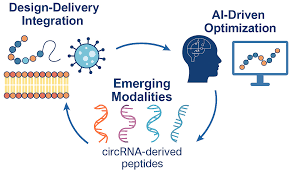
Peptides have long been associated with biomedical research, where scientists explore their potential roles in cellular communication, metabolic regulation, tissue repair and countless biological processes. For years, most conversations about peptides stayed within laboratories focused on disease mechanisms or pharmaceutical development. Today, however, the research landscape looks very different. Interest in peptides has expanded into a wide range of scientific disciplines, reflecting a growing understanding of how these naturally occurring molecules influence complex biological systems.
This broader research interest is not simply the result of changing trends. It comes from decades of scientific discoveries that continue to reveal new functions for peptides across different areas of biology. Researchers studying aging, exercise physiology, neuroscience, regenerative science, nutrition and even agricultural biotechnology increasingly examine peptides as valuable tools for understanding cellular behavior. Rather than limiting peptide research to one specialty, modern science now recognizes that these compounds can contribute meaningful insights across multiple fields.
For researchers, students and organizations involved in scientific development, this expansion creates exciting opportunities while also introducing new questions about quality, consistency and research methodology. Understanding why peptide research is reaching beyond its traditional foundations helps explain why these compounds continue attracting attention from so many different scientific communities.
A Better Understanding of Biological Communication
One of the biggest reasons peptide research has expanded is the growing appreciation for how cells communicate with one another. The human body relies on countless signaling molecules that regulate growth, repair, metabolism, immune activity and neurological function. Peptides serve as many of these messengers, allowing cells to coordinate complex biological activities with remarkable precision.
As researchers uncover more signaling pathways, they often discover peptides playing central roles in those systems. Instead of acting independently, biological processes frequently overlap. A signaling peptide involved in one physiological pathway may also influence several others, encouraging scientists from different specialties to investigate the same molecules from entirely different perspectives.
This interconnected nature of biology has helped dissolve many of the boundaries that once separated scientific disciplines. Instead of viewing peptides solely through the lens of medicine, researchers increasingly examine them as fundamental components of biological regulation across multiple research environments.
The Rise of Interdisciplinary Research
Scientific research today rarely exists in isolation. Universities, biotechnology companies and research institutions increasingly combine expertise from multiple disciplines to solve complicated biological questions. Peptides naturally fit into this collaborative environment because they intersect with so many areas of study.
A neuroscience laboratory may investigate peptide signaling involved in cognitive function while an exercise physiology team studies peptides related to muscle adaptation. At the same time, cellular biology researchers may examine similar compounds to better understand protein expression or tissue regeneration. Although each project has different objectives, the underlying scientific interest often centers around the same class of molecules.
This interdisciplinary approach allows discoveries in one field to inform research in another. Instead of repeating isolated investigations, scientists can build upon shared knowledge, accelerating progress across numerous research areas simultaneously.
Growing Interest in Healthy Aging Research
One area experiencing substantial growth involves the biology of aging. Rather than focusing exclusively on disease treatment, many research groups now investigate the cellular mechanisms associated with longevity, tissue maintenance and age-related biological changes. Peptides have become valuable research tools within these studies because many participate in pathways connected to cellular repair, oxidative stress responses and protein regulation.
Researchers continue exploring how different signaling pathways change throughout the aging process and whether specific peptides can help improve scientific understanding of those changes. While these investigations remain within controlled research settings, the broader scientific interest has encouraged collaboration among specialists in molecular biology, genetics, endocrinology and regenerative science.
As healthy aging becomes an increasingly important research priority worldwide, peptide studies naturally receive greater attention from laboratories seeking to better understand the biological foundations of aging itself.
Advances in Analytical Technology
The rapid improvement of laboratory technology has also contributed significantly to expanding peptide research. Modern analytical instruments allow researchers to characterize peptide structures with far greater accuracy than was possible decades ago. High performance liquid chromatography, advanced mass spectrometry and improved synthesis techniques enable scientists to verify purity, identify molecular characteristics and maintain greater experimental consistency.
These technological improvements reduce many of the limitations that previously restricted peptide research. Scientists can now investigate increasingly complex peptide sequences while maintaining confidence in laboratory quality standards.
Higher quality analytical capabilities also encourage researchers from new disciplines to adopt peptide-based experiments because they have access to more reliable characterization methods than ever before.
Expanding Applications in Performance and Recovery Science
Exercise science has become another area where peptide research continues to grow. Researchers studying muscle physiology, recovery mechanisms, connective tissue adaptation and metabolic efficiency frequently examine signaling molecules involved in these biological systems.
Rather than focusing exclusively on disease, these investigations seek to understand how healthy biological systems respond to physical stress, adaptation and recovery. This shift reflects a broader trend in scientific research that emphasizes optimizing biological understanding instead of studying pathology alone.
As scientists continue investigating exercise physiology, peptides remain valuable research subjects because they participate in numerous pathways influencing tissue remodeling, inflammatory responses and cellular communication after physical activity.
Neuroscience Continues Exploring Complex Signaling
The human brain contains an extraordinary network of chemical messengers responsible for regulating learning, memory, stress responses and countless neurological functions. Many of these messengers involve peptides, making neuroscience another rapidly expanding area of peptide research.
Researchers continue identifying peptide interactions within complex neural networks, improving understanding of how different signaling pathways contribute to cognitive processes. Rather than studying isolated molecules, modern neuroscience increasingly investigates integrated systems where peptides interact with neurotransmitters, hormones and other biological regulators.
This systems-based perspective encourages ongoing collaboration between neuroscientists, molecular biologists and biochemists, further expanding peptide research beyond traditional biomedical boundaries.
Biotechnology Innovation Continues Driving Interest
Biotechnology has experienced remarkable growth over the past decade, creating greater demand for specialized research materials capable of supporting increasingly sophisticated experiments. Peptides have become essential components in many laboratory workflows because they offer researchers highly specific molecular tools for investigating biological mechanisms.
Improved peptide synthesis methods also allow scientists to design customized sequences for highly targeted experimental objectives. This flexibility supports innovation across biotechnology, pharmaceutical discovery, agricultural science, biomaterials research and synthetic biology.
As biotechnology continues evolving, peptides will likely remain central research components because of their versatility and biological relevance.
The Importance of Research Quality
As peptide research expands into new scientific fields, quality becomes increasingly important. Laboratories depend on research materials that deliver consistent composition, reliable characterization and reproducible experimental performance. Small variations in purity or synthesis quality can introduce unnecessary variables that complicate scientific interpretation.
For this reason, researchers place significant emphasis on sourcing materials that undergo rigorous analytical verification before entering laboratory environments. High purity standards help reduce experimental uncertainty while supporting greater confidence in published findings and collaborative research projects.
Organizations such as BioHack Labs contribute to this research ecosystem by supplying highly purified peptides, proteins and amino acid derivatives produced through advanced synthesis techniques for scientific research applications. Maintaining consistent quality standards allows researchers to focus on experimental design instead of questioning material reliability.
Looking Beyond Human Health Alone
Another reason peptide research continues expanding is that many scientific investigations no longer focus exclusively on human biology. Agricultural researchers study peptide signaling in plants to better understand growth responses and environmental adaptation. Veterinary scientists investigate peptide pathways relevant to animal physiology. Environmental biologists examine naturally occurring peptides produced by microorganisms and marine organisms.
Each discipline asks different scientific questions, yet peptides repeatedly emerge as important biological regulators worth investigating.
This broad applicability demonstrates that peptides represent far more than pharmaceutical research tools. They have become valuable molecular components for understanding biological systems across numerous forms of life.
The Future of Peptide Research
Scientific progress often occurs when researchers recognize connections between disciplines that previously appeared unrelated. Peptide research reflects exactly this type of evolution. As biology becomes increasingly integrated, scientists continue discovering that signaling molecules influence far more systems than originally understood.
Future investigations will likely combine artificial intelligence, computational biology, structural chemistry and advanced molecular imaging with peptide science to accelerate discovery even further. Researchers may identify new biological pathways, develop increasingly sophisticated laboratory models and deepen understanding of complex cellular communication networks.
Although many questions remain unanswered, the expanding diversity of peptide research suggests that these molecules will continue attracting scientific interest well beyond their traditional biomedical origins. Rather than belonging to a single discipline, peptides have become essential research tools supporting innovation across the broader life sciences.
FAQ
1. Why are peptides attracting attention outside biomedical research?
Researchers have discovered that peptides participate in numerous biological processes beyond disease-related studies. Their roles in cellular communication, metabolism, neuroscience, aging and biotechnology make them valuable across multiple scientific disciplines.
2. What has contributed to the rapid growth of peptide research?
Advances in analytical technology, improved peptide synthesis methods, interdisciplinary collaboration and a deeper understanding of biological signaling have all helped expand peptide research into new scientific fields.
3. Why is peptide purity important in research?
High purity helps reduce experimental variability, improves reproducibility and gives researchers greater confidence that observed results reflect the intended experimental conditions rather than inconsistencies in the research material.
4. Which research fields are increasingly studying peptides?
Current peptide research extends into neuroscience, exercise physiology, healthy aging research, molecular biology, biotechnology, regenerative science, agricultural research and environmental biology, among others.
5. Will peptide research continue expanding in the future?
Current scientific trends suggest continued growth as researchers integrate computational biology, advanced laboratory technologies and interdisciplinary collaboration to better understand complex biological systems and cellular communication.